USAID
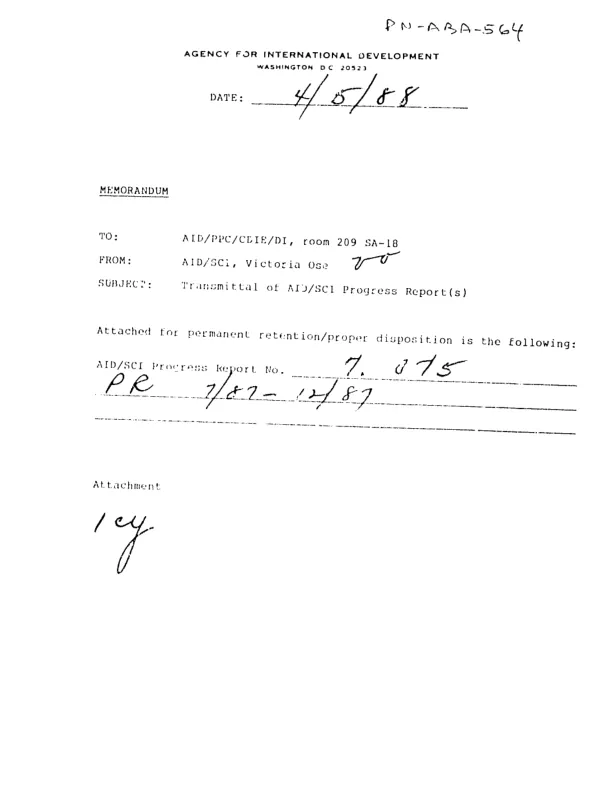
AID/SCI Progress Report
The Agency for International Development (AID) has been conducting research on the properties of a novel enzyme, referred to as E/N material.
2018 · 8 pages
Sign in to readA free account is required to download.
Abstract
The enzyme was isolated from a specific type of bacteria and has been found to have potential applications in the field of biotechnology. Initial studies on the E/N material were conducted to determine its optimal conditions for activity. The enzyme was found to be most active in a saline medium, with a pH range of 4.5-5.5. The optimal temperature for enzyme activity was determined to be around 37°C, with a reaction time of 10-15 minutes. Further studies were conducted to investigate the relationship between the volume of cold distilled water and the number of adult rats used in the experiment. The results showed that the best results were obtained when the volume of cold distilled water was 12 times the number of adult rats used. The enzyme was also tested for its proteolytic activity, and the results showed that it was able to break down proteins in a concentration-dependent manner. The enzyme was found to be most active at a concentration of 1.5 mg/mL, with a reaction time of 2-3 hours. Electrophoresis was performed on the E/N material to separate the different components. The results showed two distinct bands, one at 29,000 IU/mL and the other at 14,000 IU/mL. The larger band was found to be more active than the smaller band. The E/N material was also tested for its sensitivity to various chemicals, including SDS and lysozyme. The results showed that the enzyme was sensitive to both chemicals, with a significant decrease in activity observed after treatment. The enzyme was also tested for its ability to break down proteins in a "in vivo" and "in vitro" setting. The results showed that the enzyme was able to break down proteins in both settings, with a significant increase in activity observed after treatment. The E/N material has potential applications in the field of biotechnology, including the development of new enzymes and the treatment of various diseases. Further research is needed to fully understand the properties and potential applications of this novel enzyme. The enzyme was isolated from a specific type of bacteria and has been found to have potential applications in the field of biotechnology. The enzyme was found to be most active in a saline medium, with a pH range of 4.5-5.5. The optimal temperature for enzyme activity was determined to be around 37°C, with a reaction time of 10-15 minutes.