USAID DEC
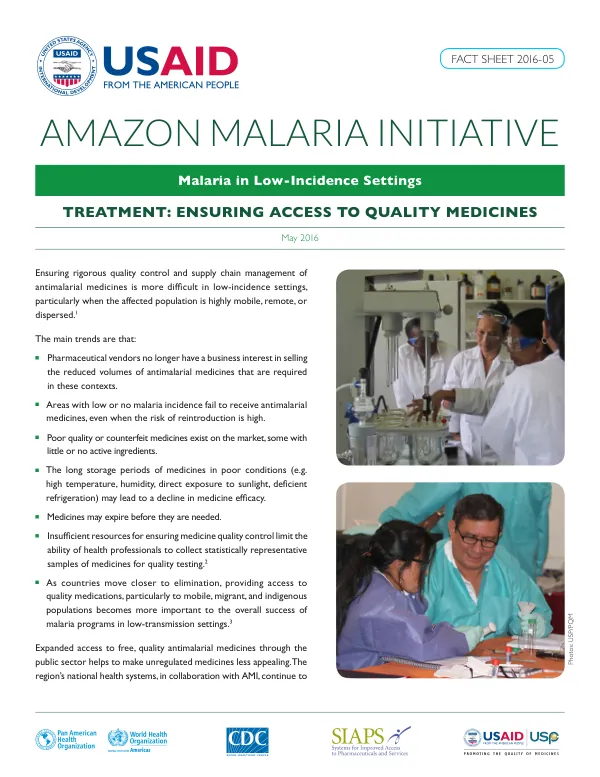
Amazon Malaria Initiative FACT SHEET 2016-05 Ensuring rigorous quality control and supply chain management of antimalarial medicines is more difficult in low-incidence settings, particularly when the affected population is highly mobile, remote, or dispersed
Sign inMANAGEMENT SCIENCES FOR HEALTH
Amazon Malaria Initiative FACT SHEET 2016-05 Ensuring rigorous quality control and supply chain management of antimalarial medicines is more difficult in low-incidence settings, particularly when the affected population is highly mobile, remote, or dispersed
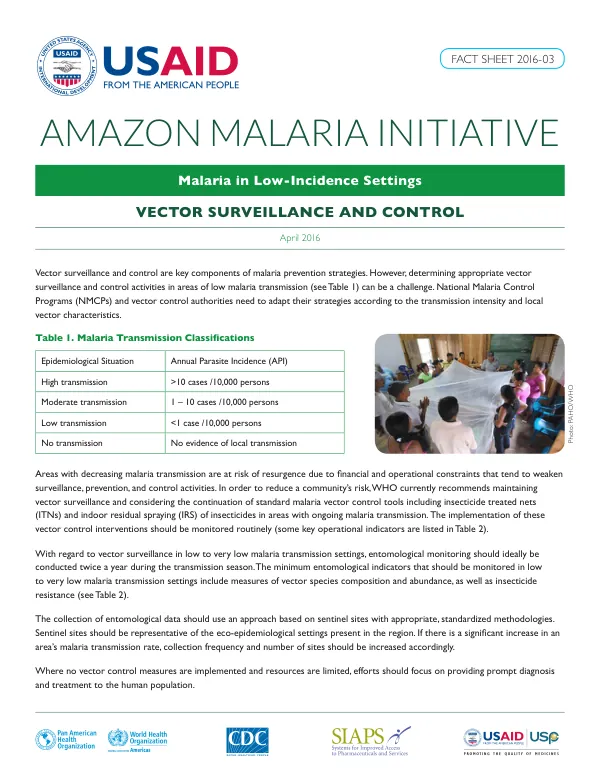
The Amazon Malaria Initiative (AMI) addresses challenges in low-incidence settings where ensuring rigorous quality control and supply chain management of antimalarial medicines is more difficult.
2016 · 2 pages
Sign in to readA free account is required to download.
Abstract
In these contexts, pharmaceutical vendors no longer have a business interest in selling reduced volumes of antimalarial medicines, resulting in areas with low or no malaria incidence failing to receive these medicines, even when the risk of reintroduction is high. Poor quality or counterfeit medicines exist on the market, some with little or no active ingredients. Long storage periods of medicines in poor conditions, such as high temperature, humidity, direct exposure to sunlight, and deficient refrigeration, may lead to a decline in medicine efficacy. Medicines may also expire before they are needed. Insufficient resources for ensuring medicine quality control limit the ability of health professionals to collect statistically representative samples of medicines for quality testing. As countries move closer to elimination, providing access to quality medications, particularly to mobile, migrant, and indigenous populations, becomes more important to the overall success of malaria programs in low-transmission settings. Expanded access to free, quality antimalarial medicines through the public sector helps to make unregulated medicines less appealing. The region's national health systems, in collaboration with AMI, continue to improve pharmaceutical access and storage conditions of antimalarial medicines. AMI works with health systems to improve key populations' access to prevention, diagnosis, and quality treatment. For example, AMI has facilitated the joint procurement of antimalarial medicines through the Pan American Health Organization (PAHO/WHO) Strategic Fund and created reference standards for the procurement of medicines in low-incidence areas. AMI also provides trainings, manuals, and supplies to countries' medicine regulatory agencies and official medicine control laboratories. The Global Technical Strategy for Malaria 2016-2030 emphasizes the importance of providing access to quality medications, particularly to mobile, migrant, and indigenous populations, in low-transmission settings. AMI's efforts to improve pharmaceutical access and storage conditions of antimalarial medicines, as well as its work with health systems to improve key populations' access to prevention, diagnosis, and quality treatment, are critical to the overall success of malaria programs in these settings.
Related documents