USAID
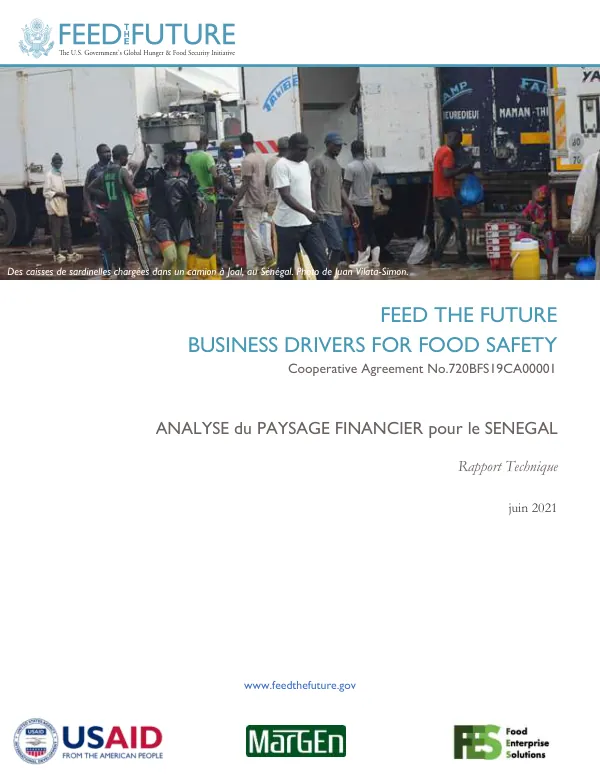
Analyse du Paysage Financier pour le Senegal: Rapport Technique
The agricultural sector in Senegal contributes significantly to the country's economy, accounting for 15-16% of the Gross Domestic Product (GDP).
2021 · 19 pages
Sign in to readA free account is required to download.
Abstract
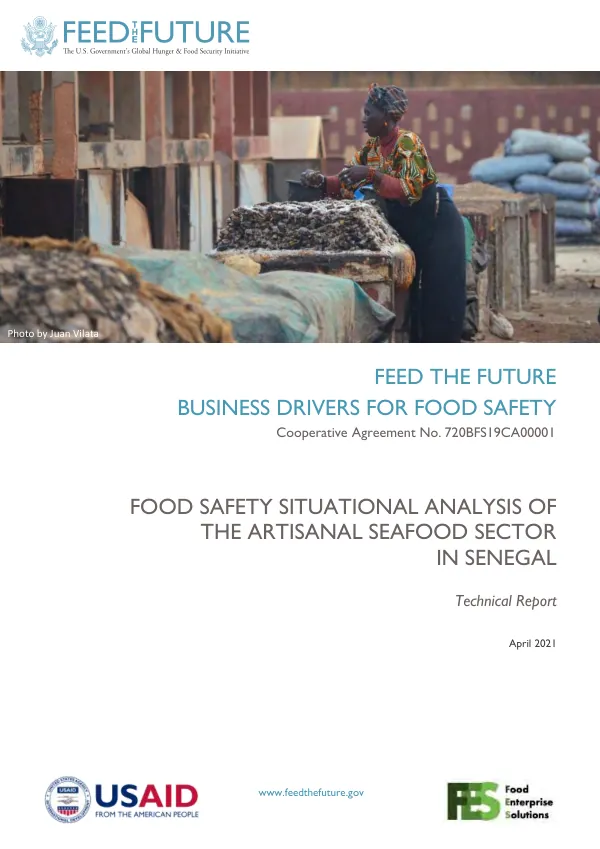
The agro-industry is still in its early stages, with a size of around 5% of the GDP in 2015. This disparity creates challenges for the private sector in terms of financing. The perishable food products, including fish, meat, dairy, poultry, and fruits and vegetables, are a source of food and income for the Senegalese population, particularly for rural and disadvantaged urban populations who engage in low-income activities to survive. The constraints to the development of the private sector in this area include limited access to arable land and irrigation facilities, difficult access to financing, and inadequate agricultural insurance mechanisms. Additionally, there are weak links between small farmers and commercial buyers, particularly for transformation infrastructure. Senegal can also improve the quality of basic services offered to exporters. The Feed the Future Business Drivers for Food Safety (BD4FS) project, funded by the United States Agency for International Development (USAID) and implemented by Food Enterprise Solutions (FES), is a multi-country effort that works with agro-food actors to co-design and implement incentive strategies to accelerate the adoption of food safety practices in local food systems. One of the missions of BD4FS is to provide technical assistance and capacity building to growing food enterprises (GFEs) to enable them to become drivers of food safety. Recognizing the financing challenges faced by GFEs, BD4FS initiated a financial landscape analysis (FLA) in Senegal to map the country's financial landscape in relation to GFEs working in the value chains of perishable foods, particularly the transformation sub-sector. The overall objective of the study is to improve food safety and find innovative financing solutions for the development of micro, small, and medium-sized enterprises (MSMEs) in the food sector. The long-term objective is to reduce losses due to contamination of perishable foods to increase revenues and improve food safety. The specific objectives of the study are: 1. To identify the constraints to access to financing. 2. To identify the types of financial and non-financial services and institutions most relevant. 3. To identify potential synergies and partnerships with BD4FS. To achieve these objectives, the study employed a qualitative approach, considering the diversity of the value chains investigated and the variety of themes addressed. Due to the COVID-19 pandemic and the time required for conducting surveys, the study was limited to the Dakar and Thiès regions. The researchers also participated in relevant meetings related to the chosen value chains and the study topic. The study's methodology consisted of six steps: 1. Conducting a documentary review, including a review of the most recent and exhaustive literature on the Senegalese economy, the financial system, and the sectors of perishable products studied. 2. Analyzing and presenting the agro-food value chains: fish products, meat products, dairy products, poultry products, and fruits and vegetables. 3. Identifying the main actors and institutions in the value chains. 4. Analyzing the current financing modalities and the regulatory environment of financial institutions. 5. Identifying the gaps, risks, and alternatives in the formal or informal financial system. 6. Presenting the results and recommendations for improving access to financing and investment throughout the value chains (production, transformation, cold chain, transport, and storage). The study aimed to provide a comprehensive understanding of the financial landscape in Senegal, particularly in relation to the agro-food sector, and to identify potential solutions to improve access to financing and investment for MSMEs in the food sector.
Related documents