EUROPEAN UNION
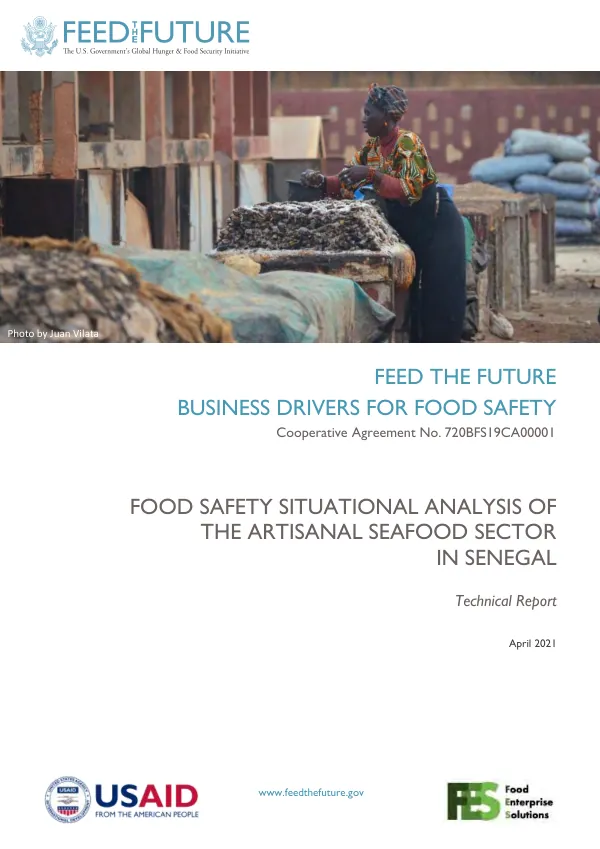
Food Safety Situational Analysis of the Artisanal Seafood Sector in Senegal
The artisanal seafood sector in Senegal is a complex and economically important sector, with a vast number of communities and livelihoods dependent on it.
2021 · 54 pages
Sign in to readA free account is required to download.
Abstract
The sector faces significant challenges, including food safety issues along the value chain from processing to pre-consumer. Seafood-borne health hazards are a major concern, with issues such as contamination, spoilage, and improper handling contributing to the problem. The economic importance of the artisanal seafood sector in Senegal cannot be overstated. According to the Food and Agriculture Organization of the United Nations (FAO), the sector generates significant revenue and provides employment opportunities for thousands of people. However, the sector is also characterized by limited market access, inadequate infrastructure, and a lack of formal training for fishers and processors. The nutritional importance of seafood in Senegal cannot be ignored. Seafood is a vital source of protein for many Senegalese people, particularly in coastal communities where access to other protein sources is limited. However, the sector's reliance on artisanal fishing methods and traditional processing techniques can lead to contamination and spoilage, compromising the safety and quality of the seafood. Stock sustainability is another critical issue in the artisanal seafood sector in Senegal. Overfishing, destructive fishing practices, and habitat degradation are all contributing to the decline of fish stocks and the degradation of marine ecosystems. The sector's reliance on small-scale fishing vessels and traditional gear can also lead to bycatch and discarding, further exacerbating the problem. The Food Safety Situational Analysis (FSSA) conducted by Food Enterprise Solutions (FES) identified several key challenges in the adoption of food safety practices in the artisanal seafood sector in Senegal. These challenges include limited awareness and understanding of food safety principles, inadequate training and capacity building, and a lack of regulatory frameworks and enforcement mechanisms. The FSSA also identified several lessons learned from other food safety initiatives in Senegal. These lessons include the importance of engaging local stakeholders and communities in the development and implementation of food safety initiatives, the need for targeted training and capacity building programs, and the importance of establishing clear regulatory frameworks and enforcement mechanisms. The Feed the Future Business Drivers for Food Safety (BD4FS) project aims to address the food safety challenges in the artisanal seafood sector in Senegal. The project's objectives include identifying the hazards and feasibility of curbing actions, enabling actions through training and capacity building, and providing economic self-sustainability through market linkage facilitation. The project's geographic focus is on the artisanal seafood sector in Senegal, with a particular emphasis on the Petite Côte region. The project's timeframes are not specified, but it is expected to run for several years, with regular evaluations and assessments to monitor progress and identify areas for improvement. The project's recommendations include the establishment of clear regulatory frameworks and enforcement mechanisms, the provision of targeted training and capacity building programs, and the development of market linkage facilitation initiatives to support small-scale fishers and processors.
Related documents