USAID DEC
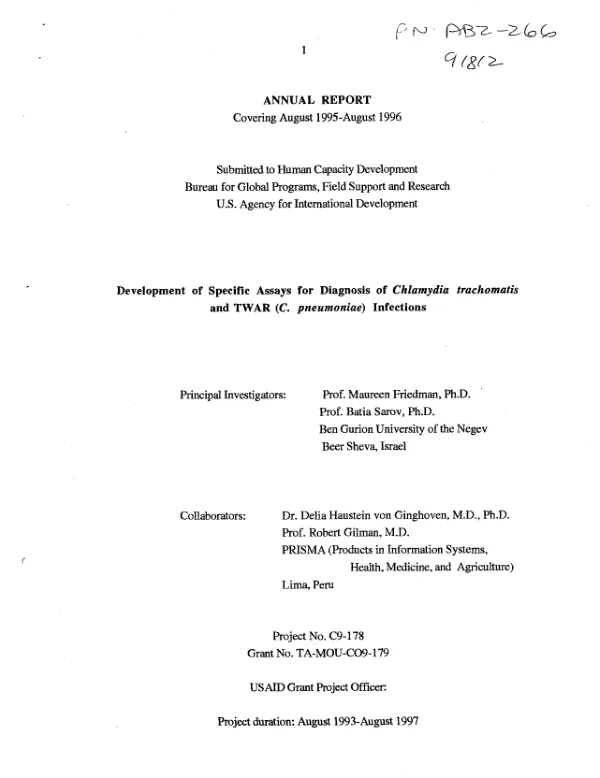
Annual report covering August 1995-August 1996 : development of specific assays for diagnosis of Chlamydia trachomatis and TWAR (C. pneumoniae) infections
Sign inBEN GURION UNIVERSITY OF THE NEGEV
Annual report covering August 1995-August 1996 : development of specific assays for diagnosis of Chlamydia trachomatis and TWAR (C. pneumoniae) infections
Chlamydia are intracellular bacterial pathogens which cause a variety of serious diseases in the eye and in the genito-urinary and respiratory tracts, and may be responsible for some heart disease and certain forms of arthritis.
Friedman, Maureen; Sarov, Batia · 1996
Sign in to readA free account is required to download.
Abstract
The purpose of the project Development of specific assays for diagnosis of Chlamydia trachomatis and TWAR (Chlamydia pneumonia) infections", implemented by Ben Gurion University of Negev, Israel, is to develop both serologic and agent detection assays which will be capable of distinguishing between infections with these two organisms which have some genus-specific (common) attributes and some species-specific attributes. During the first year of this grant, collection of paired serum samples and throat swabs from patients with community acquired pneumonia (CAP) in Israel (n=330) was completed. In parallel, serum samples and cervical swabs were collected from women with suspected pelvic inflammatory disease (PID) (n=175) and with cervicitis (n=101). These samples were tested by accepted techniques for evidence of chlamydial infection and were used to calibrate the new techniques which the researchers are developing in their laboratories. Researchers have completed the development of an ELISA technique for differentiation of antibodies produced against the two pathogens and used it to test the close to 300 serum samples collected from children with respiratory infections or health controls in Peru and Bolivia. Peruvian collaborators have also collected serum, urine, and cervical samples from women at high altitudes and from women attending gynecologic clinics in Lima. As a result of three productive exchange visits, Chlamydia detection methods, based on specific PCR genome detection which was developed by the study, are now in use in Peru, as is the ELISA serologic technique. Implementation of the new techniques has expanded the capabilities of the collaborators" laboratory, and application of the methods to samples obtained in Peru will help determine the extent of illness caused by both respiratory and sexually transmitted chlamydial infections, which it is hoped will lead to effective interventions and improvement in the health of various communities in this developing region. (Author abstract)
Related documents
Documents in this collection
 2003
2003USAID DEC
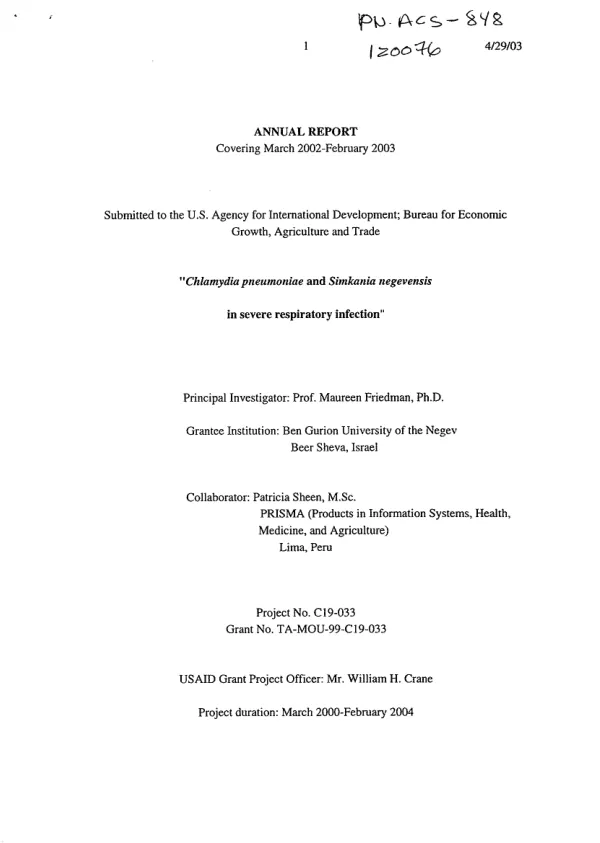
Annual report covering March 2002-February 2003 : "Chlamydia pneumoniae and Simkania negevensis in severe respiratory infection"
Open record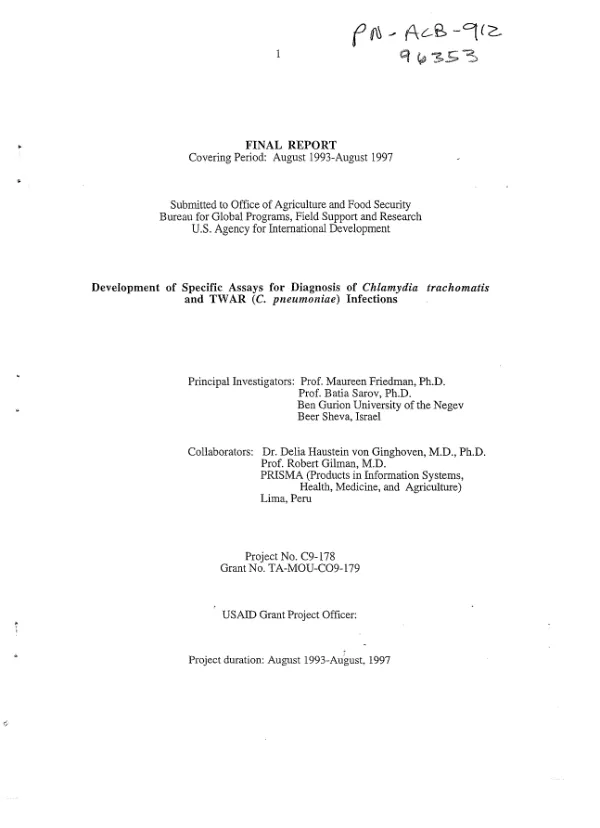 1997
1997USAID DEC
![Annual report no. 1 : November 15, 2002-November 15, 2003 -- assessment of new strategies for screening of blood for HCV [hepatitis C virus]](https://covers.devme.ai/gen/23676.webp)