IREX
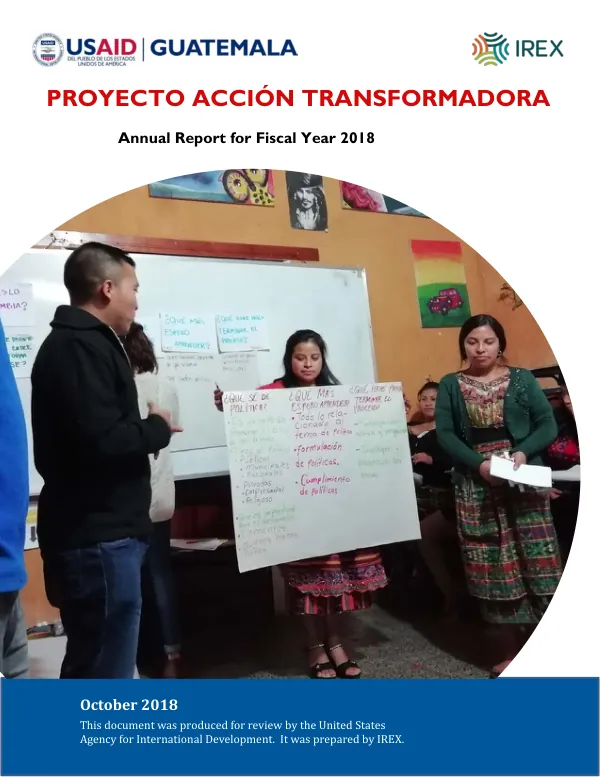
Annual Report for Fiscal Year 2018
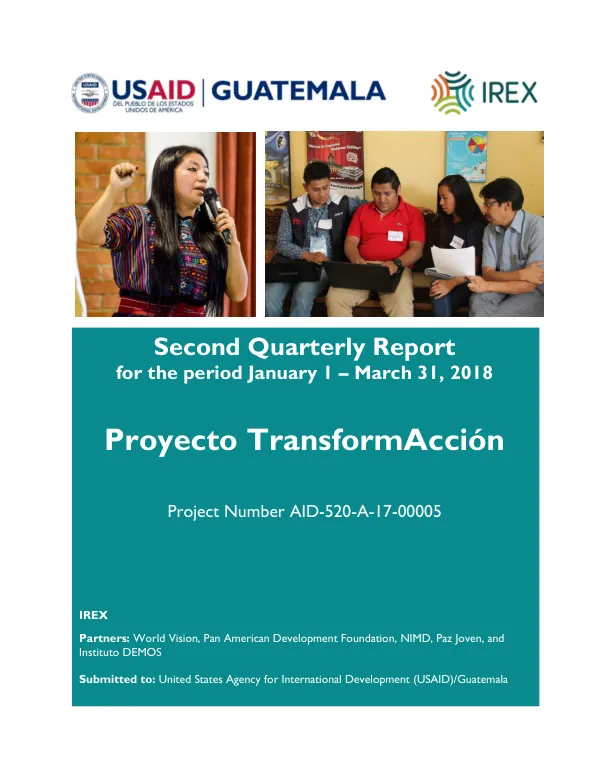
The Transformative Action Project, a cooperative agreement between IREX and the United States Agency for International Development, aimed to develop young political leaders in Guatemala.
2018 · 74 pages
Sign in to readA free account is required to download.
Abstract
The project's primary objective was to create new spaces and opportunities for the development of young leaders in three profiles: potential leaders, developing leaders, and leaders in action. The project's first year of implementation focused on foundational training for potential leaders, scholarships for developing leaders, and strengthening leaders in action. Foundational training for potential leaders involved the development of a 10-module curriculum using an active, highly participatory methodology that incorporated a gender and inclusion approach. Implementing partners World Vision and Paz Joven completed foundational training in three departments, reaching 349 potential leaders. Feedback from youth participants was very positive, with some youth becoming more active in local municipalities as a result of this training. The scholarship program for developing leaders recruited, selected, and supported 275 youth, including 146 women, one trans individual, 110 indigenous people, 19 LGTBI individuals, and nine youth with disabilities. Of these, 123 students completed political training through certificate courses implemented by Asuntos del Sur, Asolides, Chi Pixab', and NIMD. Another 127 youth leaders completed the Demos short course on Information & Communications Technology. Follow-up support efforts for these scholarship students were developed and put in place to maintain contact through mentoring and inclusion in the project network. A Youth Leadership/Advisory Committee of 16 youth convened regular monthly meetings to provide advice and recommendations regarding project activities and training content, carry out a youth leadership assessment, build connections, and lay the groundwork for the project network. IREX worked with NIMD and PADF to carry out an initial assessment to identify 13 organizations as the focus for organizational strengthening efforts, developed a shared strategy and theory of change to orient this work, and convened youth from these organizations in two initial encounters. Monitoring, evaluation, and learning were critical components of the project. A final version of the Monitoring, Evaluation, and Learning Plan was approved by USAID, and evaluation instruments were developed, shared with partners through training sessions, and implemented to populate the project's database in the MelSys virtual platform. Project and partner staff directly observed and monitored activities in the field and provided feedback and recommendations to improve implementation. Initial efforts to implement a collaboration, learning, and adaptation (CLA) approach were also underway, with a focus on regrouping and reorganizing project activities to better meet the needs of youth leaders. The project's geographic focus was on Guatemala, with a specific emphasis on the departments of Quetzaltenango, Totonicapán, and Guatemala. The project's timeframes were from August 7, 2017, to August 6, 2022, with the first year of implementation focusing on foundational training, scholarships, and strengthening leaders in action. The project's recommendations included continuing to support the development of young leaders, strengthening organizational capacity, and promoting collaboration and learning among project partners.