ROBERT NATHAN ASSOCIATES
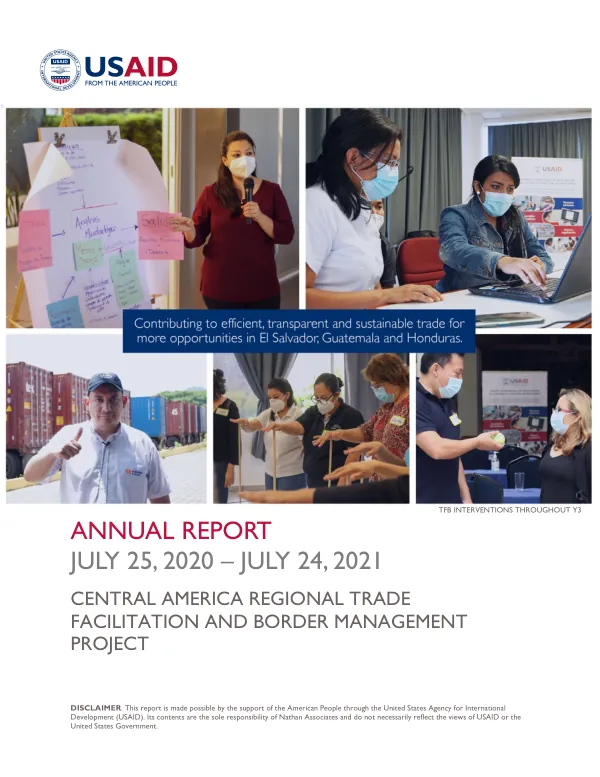
TFB Y3 Annual Report
The Central America Regional Trade Facilitation and Border Management Program (TFB) is a five-year initiative that supports the implementation of key elements under the World Trade Organization (WTO) Trade Facilitation Agreement (TFA) and the Central American Trade Facilitation and Competitiveness Strategy.
2021 · 58 pages
Sign in to readA free account is required to download.
Abstract
The program aims to enhance regional integration, improve border management, and facilitate trade in the region. The program's first component focuses on enhancing regional integration, with the goal of reducing the cost and time associated with trade transactions. This is achieved through a range of activities, including the optimization of border processes, support for customs union integration, and the development of an integrated border management certification system. The program also aims to improve border control systems and facilities, as well as sanitary registration processes and interconnectivity of systems. The second component of the program focuses on the comprehensive implementation of the WTO Trade Facilitation Agreement, supported by the Central American Integration System (SICA). This component includes activities such as strengthening national trade facilitation committees, implementing and improving Authorized Economic Operator (AEO) programs, and promoting private sector engagement in trade facilitation efforts. The program's geographic coverage includes El Salvador, Guatemala, and Honduras, with a reporting period from July 25, 2020, to July 24, 2021. The program is implemented by Nathan Associates Inc., with a contract number of 72051918C00002. Key results from the third year of the program include the optimization of border processes, with a 25% reduction in the time required for customs clearance. The program also supported the implementation of AEO programs, with 15 companies certified as AEOs in the reporting period. In addition, the program promoted private sector engagement in trade facilitation efforts, with 20 companies participating in trade facilitation workshops and training sessions. The program's monitoring and evaluation framework includes a range of indicators, including the time required for customs clearance, the number of AEOs certified, and the level of private sector engagement in trade facilitation efforts. The program's progress is reported quarterly, with a comprehensive annual report submitted to USAID. The program's implementation is supported by a range of stakeholders, including government agencies, private sector companies, and civil society organizations. The program's success is measured by its ability to reduce the cost and time associated with trade transactions, improve border management, and facilitate trade in the region. The program's budget for the reporting period was $5.5 million, with a total of 15 consultants hired to support the program's activities. The program's staff included 10 long-term staff members, with a total of 5 consultants in the selection and hiring process at the end of the reporting period. The program's lessons learned include the importance of engaging with private sector companies and civil society organizations in trade facilitation efforts, as well as the need for a comprehensive monitoring and evaluation framework to track progress and identify areas for improvement. The program's progress is reported in the annexes, which include a range of tables and figures that provide detailed information on the program's activities and outcomes.