ASSOCIATION OF SOUTHEAST ASIAN NATIONS
Artificial reefs for marine habitat enhancement in Southeast Asia
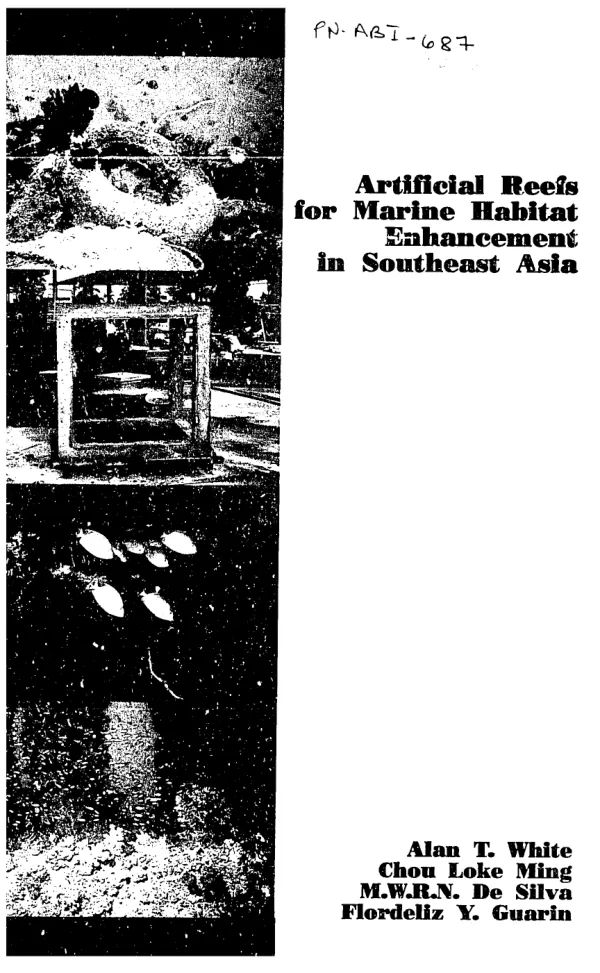
Artificial reefs are structures that serve as shelter and habitat, source of food, breeding area, and shoreline protection.
White, Alan T.; Ming, Chou Loke · 1970
Sign in to readA free account is required to download.
Abstract
These structures -- old tires and cars, barges, bamboo, concrete blocks, and fiberglass are among the materials that have been used -- are normally placed in marine areas with low productivity or where the habitat has been degraded. Intended as a primer, this report highlights the potential role of artificial reefs as a means for fisheries management and habitat enhancement in Southeast Asia. It provides many practical examples of how artificial reefs have been used effectively and of their limitations. Specific topics include: (1) history of artificial reef structures; (2) ecology of natural and artificial reefs (fish yields, type of space and habitat created, fish attraction vs. actual production); (3) site selection, structures and design (fish aggregating devices, artificial reefs on the bottom, large structures, shoreline structures); (4) socioeconomic valuation; (5) management systems (community control, planning considerations).
Connected topics