GERMAN AGENCY FOR TECHNICAL COOPERATION (GTZ)
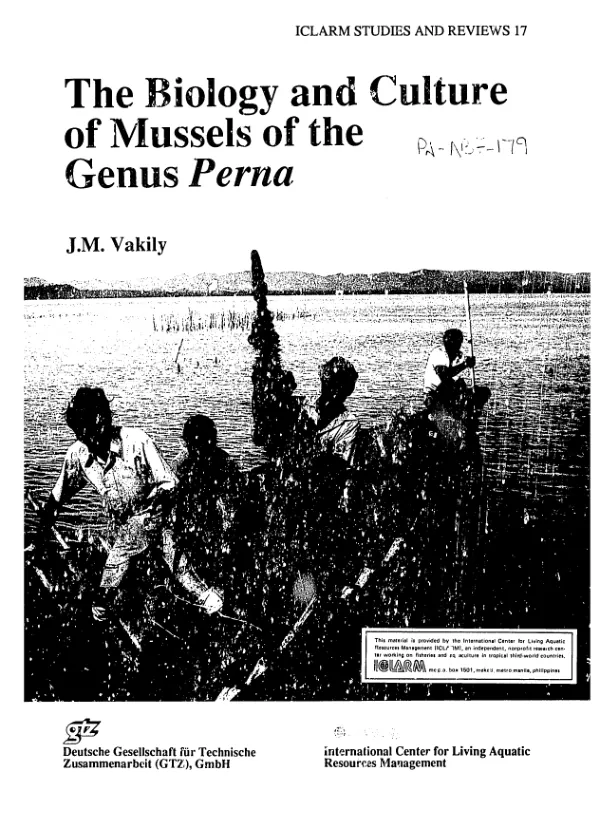
Biology and culture of mussels of the genus Perna
Mussels of the genus Perna are an inexpensive, nutritious source of animal protein and are potentially an abundant resource for coastal aquaculture for tropical countries.
Vakily, J. M. · 1970
Sign in to readA free account is required to download.
Abstract
However, only three countries -- the Philippines, Thailand, and New Zealand -- are currently farming Perna on an intensive commercial scale. This report summarizes present knowledge on the biology and culture of Perna. A first section describes the biology and ecology of the three species of Perna (P. viridis, P. canaliculus, and P. perna), while a second overviews culture systems, emphasizing such advanced techniques as raft and longline systems. The remaining sections discuss postharvest handling of live and processed mussels, public health and economic aspects, future research needs, and the outlook for the mussel industry. While biological problems pose no significant barrier to mussel culture, certain socioeconomic factors must be addressed before industrial-scale production can be considered. For instance, consumer acceptance of mussel products is generally low, due to the sanitation problems often encountered in mussel culture (causing sporadic outbreaks of disease) and to the negative image of mussels as the "poor man"s oyster." This leaves the mussel industry with a dilemma. To keep the price of the end product low, the mussel farmer"s profit margin must kept minimal; this, however, deters improvements in quality and production, which in turn hinders the opening of new markets. Equally constraining is a marketing system that favors middlemen at the expense of mussel farmers. An integrated approach to overcoming these constraints is suggested, focusing on quality control and adequate economic returns to mussel farmers.
Related documents