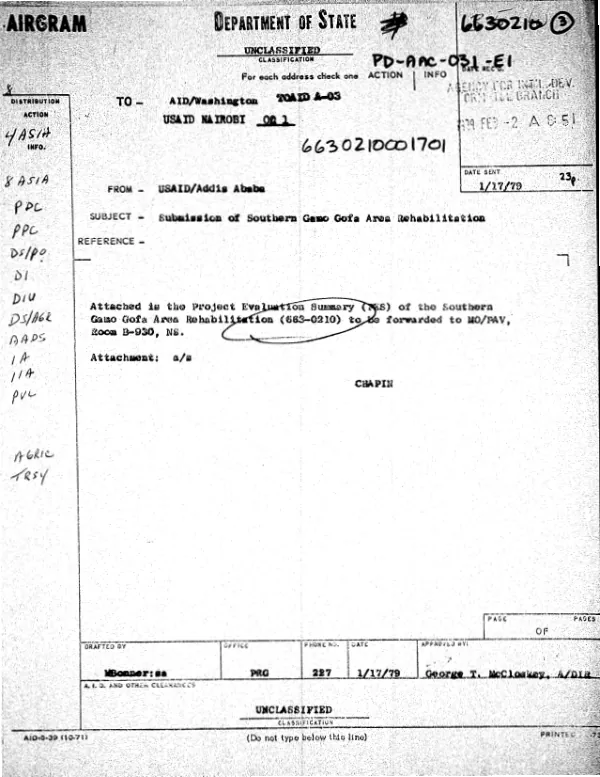
![Dori integrated rural development (PVO, OPG) [PES - A1, F1]](https://covers.devme.ai/gen/12122.webp) 1979
1979USAID DEC
USAID. MISSION TO TANZANIA
Despite a steadily worsening economy, the project"s innovative bottom-up "process" approach has engendered good progress.
Luche, Thomas C. · 1981
Abstract
A long-term regional plan, six district strategy papers, and village land use plans have helped to define problems grasped only vaguely in the past. Recognition of the grave impediments to increasing agricultural yields has lead to emphasis on a land use approach involving a full range of agricultural concerns from farming to forestry. Constraints to small rural business development were studied and a program was begun involving greater agricultural production (see above), use of farm products in local manufacturing, and greater inflows of outside investment capital. Some 76 village projects (51% locally suggested) have been initiated. Due to equipment delays, however, only 85 of 476 miles of roads were rehabilitated; deterioration continues. Water projects have been confined to building nine shallow wells and two boreholes and to rehabilitating one water system; irrigation work is planned. Training is on target. Three regional officials are receiving U.S. degree training, six others are in short-term programs, and 34 are on study tours. Over 24 seminars were held and all 53 villages received small project assistance. It is recommended that: (1) the Tanzanian government and the contractor publish the detailed regional plan, seek investment funds from other donors, hire another professional agriculturalist, present a road construction plan to USAID/T, and design water projects to address rehabilitation/maintenance problems; (2) USAID/T update procurement plans, specify project implementation responsibility, assign an experienced full-time project manager, make efforts to retain personnel, consider including the Masai Districts in the project, provide added funding for water projects, and extend the project to 6/83 (or to 12/82 if a follow-on project is planned); and that (3) all parties re-evaluate the relevancy of current project activities.
Connected topics
Classification