USAID DEC
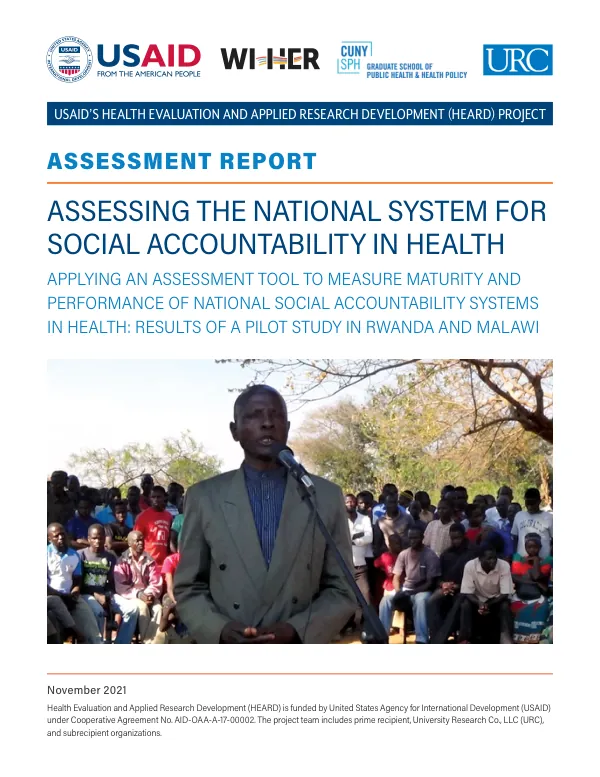
Assessing the National System for Social Accountability in Health: Applying an Assessment Tool to Measure Maturity and Performance of National Social Accountability Systems in Health: Results of a Pilot Study in Rwanda and Malawi
Sign inJOHNS HOPKINS UNIVERSITY
Assessing the National System for Social Accountability in Health: Applying an Assessment Tool to Measure Maturity and Performance of National Social Accountability Systems in Health: Results of a Pilot Study in Rwanda and Malawi
The National Social Accountability System in Health Assessment Tool (NSASHAT) is a framework designed to provide country governments with a snapshot of the status of their national Social Accountability in Health.
2021 · 144 pages
Sign in to readA free account is required to download.
Abstract
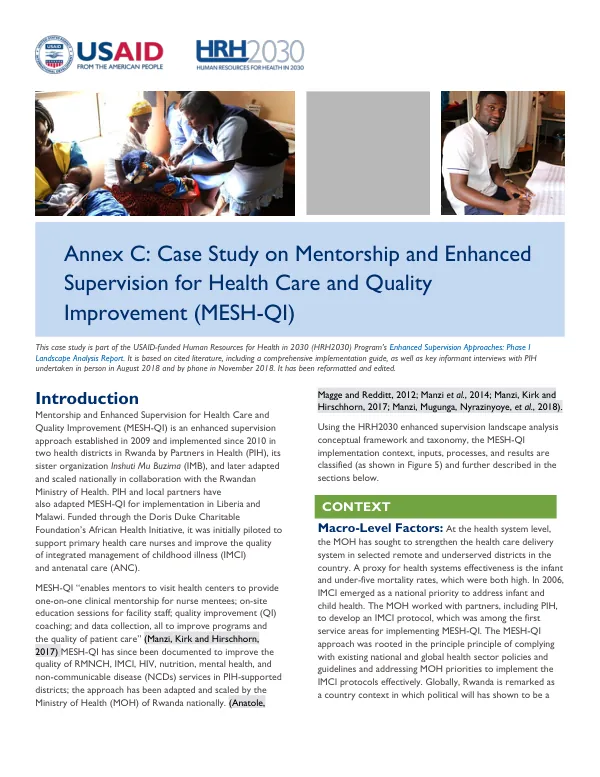
Social accountability is a critical element of good governance and a foundational component of universal health coverage, aiming to ensure healthy lives and promote well-being for all. The tool is based on an Accountability Measurement Framework developed by Martin Hilber, which helps practitioners assess how local and national accountabilities are met. The NSASHAT assesses the national Social Accountability System in Health through five key domains: Performance, Marginalized Groups, and Assessing NSASH in other regions. The tool provides a scoring process for each domain to highlight gaps and strengths, informing national governments and their partners to improve their Social Accountability in Health and strengthen collaboration between rights holders and duty bearers. The pilot study of the NSASHAT was conducted in Rwanda and Malawi, with the goal of testing the tool's effectiveness in measuring the performance of national Social Accountability Systems in Health. The study involved key informant interviews and focus group discussions with various stakeholders, including government officials, civil society organizations, and international partners. The results of the pilot study indicate that the NSASHAT is a useful tool for assessing the national Social Accountability System in Health. The tool provides a comprehensive framework for evaluating the performance of national Social Accountability Systems in Health, highlighting areas of strength and weakness. The study also highlights the importance of engaging marginalized groups in the assessment process, as they often have unique perspectives and experiences that can inform the development of effective Social Accountability Systems in Health. The NSASHAT has the potential to be a valuable resource for national governments and their partners seeking to strengthen their Social Accountability Systems in Health. The tool can help identify areas of improvement and provide a framework for developing effective strategies to address these gaps. By leveraging the success of local and national Social Accountability projects, governments can work towards ensuring universal health coverage and promoting well-being for all. The study's findings suggest that the NSASHAT can be a useful tool for assessing the national Social Accountability System in Health in other regions. The tool's framework and scoring process can be adapted to suit the specific needs and contexts of different countries. By applying the NSASHAT in other regions, governments can gain a better understanding of their national Social Accountability Systems in Health and develop effective strategies to improve their performance. The NSASHAT is a critical component of the Health Evaluation and Applied Research Development (HEARD) Project, which aims to strengthen the responsiveness and accountability of health systems in low- and low-middle-income countries. The project is funded by the United States Agency for International Development (USAID) and is implemented by the University Research Co. (URC) and its partners. The HEARD Project has made significant contributions to the development of the NSASHAT, including the testing of the tool in Rwanda and Malawi. The project's findings and recommendations have informed the development of the NSASHAT and have highlighted the importance of engaging marginalized groups in the assessment process.