MÉDECINS SANS FRONTIÈRES
At Tanzania’s Refugee Camps, Local Health Teams Take the Lead
The Nyarugusu, Nduta, and Mtendeli refugee camps in Tanzania's Kigoma region are home to over 220,000 people, primarily from Burundi.
2021 · 3 pages
Sign in to readA free account is required to download.
Abstract
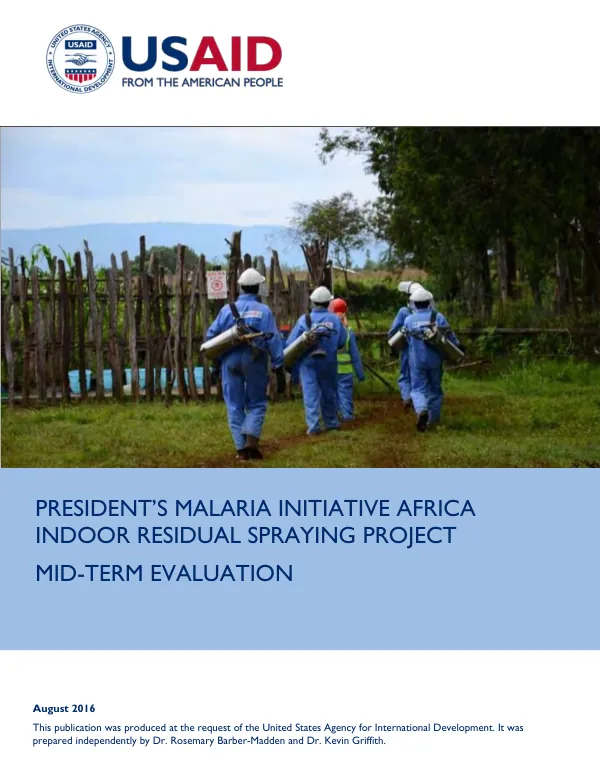
Refugees living in these camps face multiple health challenges, including malaria, with pregnant women and children under five particularly at risk. Malaria prevention is critical to protect these vulnerable groups from illness. The Tanzania National Malaria Control Program requested that the U.S. President's Malaria Initiative (PMI) study the feasibility of indoor residual spraying (IRS) within the camp environment. A 2019 study found that structures within the camps were eligible for IRS. Starting in late 2019, PMI through VectorLink sprayed Mtendeli camp in Kakonko district, Nyarugusu camp in Kasulu District, and Nduta camp in Kibondo District. To strengthen local capacity, PMI VectorLink Tanzania transitioned leadership to the District IRS Technical Teams (DITTs) to lead spraying within the refugee camps. The DITTs received IRS training materials and conducted supervisor training classes with remote oversight from PMI VectorLink. The DITTs also held supportive supervision spray operator training. For the spray campaign, IRS supervision was handled by the DITT staff with PMI VectorLink providing technical assistance when needed. The Tanzania Ministry of Home Affairs and the United Nations High Commissioner for Refugees (UNHCR) recognized the importance of recruiting camp residents to play a role in IRS. They hired 50 percent of the mobilizers, security guards, water fetchers, and washers to be camp residents, who were able to communicate the importance of IRS in their native language. This approach helped to increase IRS acceptance within the camps. The implementation of IRS has made a substantial impact in malaria prevention. In the Mtendeli refugee camp, malaria prevalence fell from 63 percent in 2018 to 15 percent in 2021. During the same time frame, malaria prevalence in Nyarugusu refugee camp decreased from 43 percent to 12 percent. Nduta refugee camp saw a smaller decrease, with a trend consistent with Kibondo district. The project was able to protect a vulnerable population of 224,393 people (98 percent) within the three refugee camps, with 10,346 pregnant women and 50,368 children under five among those protected.
Related documents