DELOITTE CONSULTING, LLP
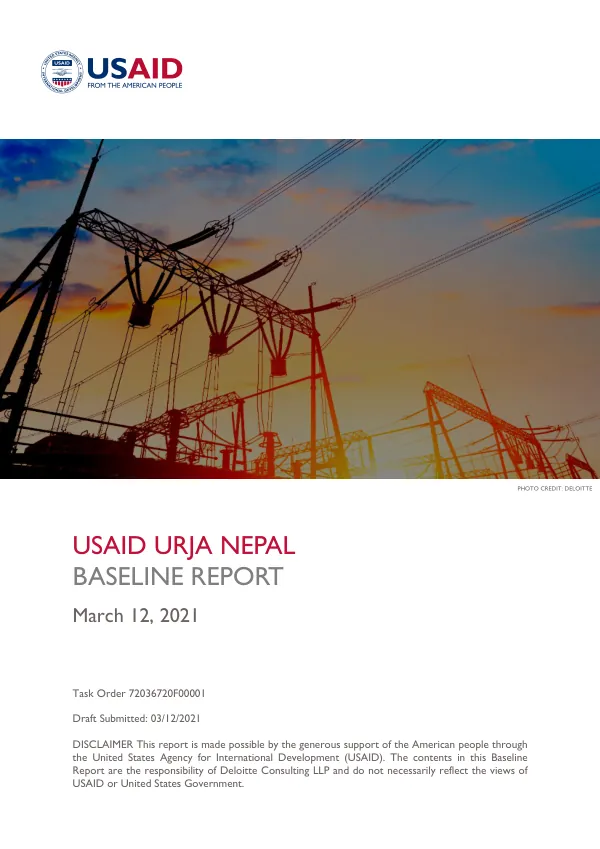
Baseline Report: USAID Urja Nepal Project
Nepal is endowed with immense potential for electricity generation from hydropower as well as substantial opportunities for electricity generation from solar and wind resources.
2021 · 46 pages
Sign in to readA free account is required to download.
Abstract
Development of quality sectoral policies and regulatory frameworks, building strong electric utilities, strong private sector engagement, and a robust cross-border power trading platform are all essential to capitalize on Nepal's energy potential and ultimately to contribute towards the country's prosperity. USAID's Urja Nepal project has been designed to assist the Government of Nepal (GoN) to establish effective regulatory and technical operational systems and policies to develop and strengthen the country's energy sector. Urja Nepal is implemented by Deloitte Consulting LLP with the goal of creating a viable and stable energy sector in Nepal, characterized by affordable, reliable, and secure power and an enabling private sector investment regime. The project will promote the development of critical building blocks for a viable and stable energy market by facilitating policy changes, supporting scaled-up technological improvements, encouraging competitive procurements, private sector participation, and cross-border energy trade through four objectives: Utility Performance and Relevant Sector Policies are Improved, Advanced Energy Systems Deployed, Increased Private Sector Engagement, and Cross Border Electricity Trade between Nepal and its Neighbors Advanced. Urja Nepal is designed to closely align and support the core pillars of United State Government's (USG's) Asia Enhancing Development and Growth through Energy Initiative (Asia EDGE): utility modernization, increased deployment of advanced energy technologies, transparent, best value procurement, and regional energy trade and integration. The project will create opportunities for the transformation of Nepalese energy sector and support Asia EDGE's efforts to create long-term expansions of energy security through energy sector reforms, technological improvements, and fostering of sustainable and secure energy markets for increased diversification and access to energy. The potential for Nepal's natural resources to drive its economic growth through accelerated domestic and export-led development has been widely recognized for decades. However, Nepal's complex political landscape and the impact of major natural disasters, including the 2015 earthquake, has delayed meaningful progress for many years. Today, the case for transformative progress in Nepal's electricity sector is arguably stronger than it has ever been. Driven by recent economic challenges, improved technical maturity, and a growing consensus among the institutional bodies driving the needed reforms, the GoN appears ready to progress from discussion to implementation. Urja Nepal has set aggressive goals to support Nepal as it continues to strive to provide the affordable, reliable, and sustainable power necessary to drive economic growth. The project's theory of change is based on the assumption that if the energy sector is run on a commercial basis, and if the sector is planned, regulated, and managed to minimize system costs, risks, and environmental impact, and if the sector reduces cost and increases transparency through competitive procurement, and if the Nepali public and private sectors are better equipped to take advantage of regional market opportunities, then Nepal will have a financially viable electricity sector that provides affordable, reliable, and secure power, and enables the entry of private investment into the Nepali market. Urja Nepal's results framework depicts the project's targeted outputs, outcomes, and impacts. The project's performance indicators include one output and eleven outcome indicators, with seven standard foreign assistance indicators and five custom indicators, while eight indicators are linked to the Asia EDGE program. The project's methodology for the collection of data and establishment of the baselines of each of the twelve performance indicators is guided by the Performance Indicator Reference Sheet (PIRS) in the Monitoring, Evaluation, and Learning (MEL) plan of the project.
Related documents