ROBERT NATHAN ASSOCIATES
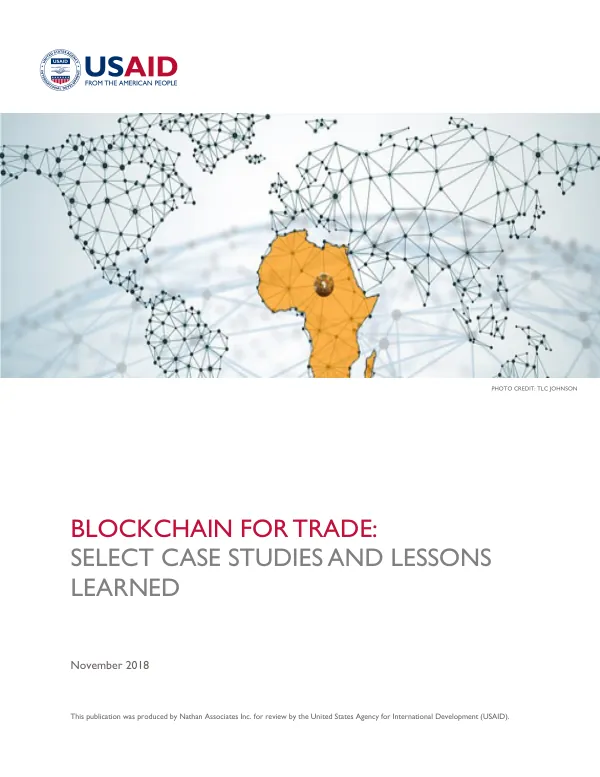
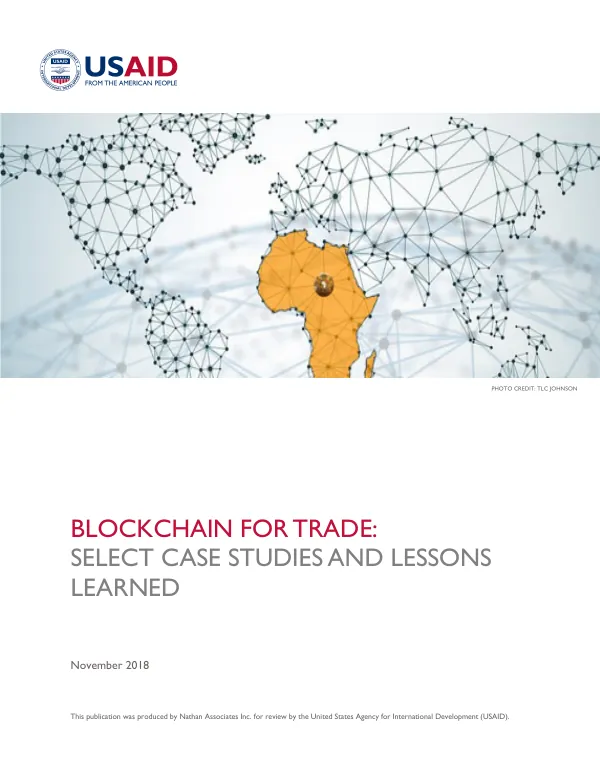
Blockchain for Trade: Select Case Studies and Lessons Learned
Blockchain technology has been increasingly used to realize efficiencies in the conduct of international trade.
2018 · 59 pages
Sign in to readA free account is required to download.
Abstract
This paper analyzes the use of blockchain in trade and assesses its feasibility in an international development context. The paper begins with a detailed explanation of blockchain technology, its types, and its most common platforms. Blockchain technology is a digital ledger that records transactions across a network of computers. It uses a consensus mechanism to validate transactions, ensuring the integrity and security of the data. There are several types of blockchain networks, including permissioned, permissionless, private, and public blockchains. Permissioned blockchains allow only a restricted set of users to access and validate transactions, while permissionless blockchains allow anyone with an internet connection to participate. The paper analyzes the stages of implementation of various global examples of blockchain projects across four broad application categories: trade finance, supply chains, traceability, and other applications. The case studies evaluate the benefits of blockchain in each context, as well as the challenges and key considerations faced during implementation. One of the key challenges in implementing blockchain technology is its inefficiency compared to other database technologies. For example, Wave's CEO, Gadi Ruschin, mentions that blockchain is the most inefficient database other than a notebook. However, many industry stakeholders are testing the technology to solve real issues in their respective industries. The paper highlights the importance of considering the maturity of the technology with respect to application in trade. It also emphasizes the need to evaluate blockchain platforms over paper-based and centralized solutions from a cost-benefit and implementation standpoint. The case studies presented in the paper include supply chain transparency, traceability, trade finance, and trade portal applications. These case studies demonstrate the potential benefits of blockchain technology in improving the efficiency and security of international trade. The paper concludes by highlighting the key aspects that need to be considered with respect to blockchain implementation that can assist USAID in its programming for blockchain implementation. These considerations include the need to evaluate the feasibility of blockchain technology in different contexts, the importance of considering the maturity of the technology, and the need to evaluate blockchain platforms over paper-based and centralized solutions. The paper also emphasizes the need for a nuanced understanding of blockchain technology and its potential applications in international trade. It highlights the importance of considering the challenges and key considerations faced during implementation, as well as the potential benefits of blockchain technology in improving the efficiency and security of international trade. The case studies presented in the paper demonstrate the potential benefits of blockchain technology in improving the efficiency and security of international trade. They highlight the importance of considering the maturity of the technology with respect to application in trade and the need to evaluate blockchain platforms over paper-based and centralized solutions. The paper concludes by emphasizing the need for further research and development in the area of blockchain technology and its applications in international trade. It highlights the potential benefits of blockchain technology in improving the efficiency and security of international trade and emphasizes the need for a nuanced understanding of the technology and its potential applications. The paper also highlights the importance of considering the geographic and cultural context in which blockchain technology is being implemented. It emphasizes the need to evaluate the feasibility of blockchain technology in different contexts and to consider the potential challenges and key considerations faced during implementation. The paper concludes by emphasizing the need for a collaborative approach to the development and implementation of blockchain technology in international trade. It highlights the importance of working with industry stakeholders, governments, and other organizations to develop and implement blockchain technology in a way that is effective and efficient. The paper also emphasizes the need for ongoing evaluation and monitoring of the implementation of blockchain technology in international trade. It highlights the importance of assessing the effectiveness and efficiency of blockchain technology in different contexts and of identifying areas for improvement. The paper concludes by emphasizing the potential benefits of blockchain technology in improving the efficiency and security of international trade. It highlights the importance of considering the maturity of the technology with respect to application in trade and the need to evaluate blockchain platforms over paper-based and centralized solutions.
Related documents