USAID DEC
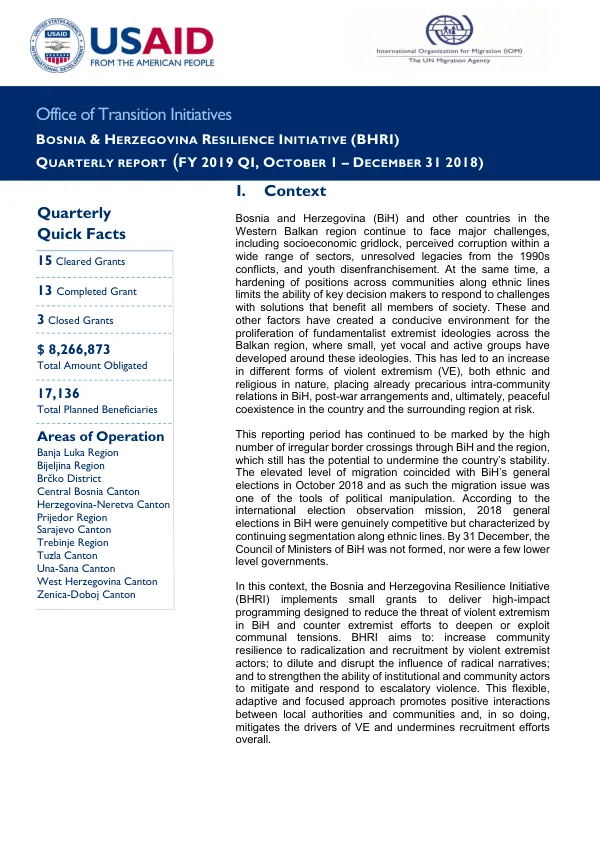
BOSNIA & HERZEGOVINA RESILIENCE INITIATIVE (BHRI) QUARTERLY REPORT (FY 2019 QI, OCTOBER 1 – DECEMBER 31 2018)
Sign inUSAID
BOSNIA & HERZEGOVINA RESILIENCE INITIATIVE (BHRI) QUARTERLY REPORT (FY 2019 QI, OCTOBER 1 – DECEMBER 31 2018)
Bosnia and Herzegovina Resilience Initiative (BHRI) implements small grants to deliver high-impact programming designed to reduce the threat of violent extremism in Bosnia and Herzegovina (BiH) and counter extremist efforts to deepen or exploit communal tensions.
2019 · 3 pages
Sign in to readA free account is required to download.
Abstract
BHRI aims to increase community resilience to radicalization and recruitment by violent extremist actors, dilute and disrupt the influence of radical narratives, and strengthen the ability of institutional and community actors to mitigate and respond to escalatory violence. During the reporting period, a total of 32 activities were under implementation across BiH, with three highlighted below. The Veterans' Stories of War and its Consequences project brings youth to interact with war veterans from opposing armed forces during storytelling workshops on the wartime mentality, atrocities, and the consequences of violence. This activity is developing space for compassion among young people, averting the focus from responsibility and blame to empathy. The project is implemented in five communities rife with grievances born out of war-time atrocities at the local level with an aim to increase the participants' resilience to violent extremist influence and recruitment. The Unpacking Communities Stigmatized by Violent Extremism project is being implemented in two of BiH's most stigmatized communities when it comes to radicalization, violence, and violent extremism. The two communities suffer from extremely negative public perceptions and prejudice in relation to religiously motivated violent extremism and extreme ethno-nationalism respectively. To increase resilience to radicalization and recruitment by VE actors in these communities, BHRI is in the process of bringing marginalized youth from these areas together and creating a short documentary about their lives, interactions with one another, and the everyday challenges they face as a consequence of where they live. The Online Youth Activism to Prevent Violent Extremism project supports a youth-initiated and youth-led online campaign to engage their peers in a conversation about the prevention of radicalization and VE in communities across the country. By adapting photographs of animals into clever and thought-provoking memes that address topics of peace, cooperation, and tolerance, this project is spreading a positive alternative to radicalizing and VE narratives in BiH's online space. During the reporting period, BHRI has worked with the youth leaders behind the campaign to provide them with technical and analytical skills to understand and grow their viewer-base, to increase engagement with their online content, and to strengthen the impact of their messaging. The First BHRI Strategic Review Session (SRS) was organized to identify lessons learned to date and to clarify the program's focus as it builds on previous programming and moves into new areas. The SRS was a combination of multiple approaches including open presentations, workshops, action planning, and evaluation. To achieve the program goals, it was discussed how to better identify and define the problems, identify and support the right partners, and apply the right approaches in implementing projects. Action plans for the regions where projects are ongoing, as well as for the regions where BHRI will expand its scope in 2019, are being developed to identify potential fields of cooperation, partners, and goals. The Banja Luka Branch Office has been established, and an Area Development Officer for the Banja Luka region has been hired to expand the program's activities and drive stakeholder engagement in the area. The first activities in Banja Luka are expected to start in the beginning of 2019 to address VE-related issues and to help build relationships with a wide variety of partners. BHRI has also initiated its first follow-on activities, most notably through support to an administrative neighborhood council in rural central BiH. New activities are now being implemented to include marginalized young people who were not reached previously.
Related documents