USAID DEC
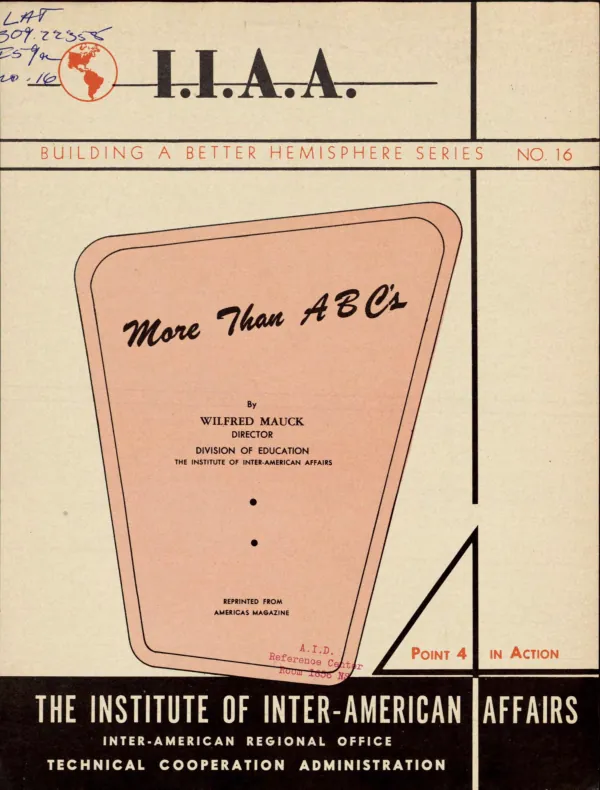
Building a Better Hemisphere Series No. 16: Point 4 In Action
The Institute of Inter-American Affairs, in collaboration with the Bolivian government, has been working to improve rural education in Bolivia.
8 pages
Sign in to readA free account is required to download.
Abstract
The initiative began with the establishment of a central school in the comunidad of Batallas, which is located in the altiplano region of Bolivia. The school was initially small and uncomfortable, with limited resources and a curriculum that was not relevant to the daily lives of the children and their parents. Prior to the arrival of the Institute's staff, the school was struggling to meet the needs of the community. The teachers were hardworking, but the curriculum was based on memorization, and the children were not learning skills that were useful to them in later life. Many children did not attend school at all, as there was not enough room for them, and their parents felt that they could learn more practical skills at home. The Institute's staff, led by Director Wilfred Mauck, worked closely with the Bolivian government and local officials to develop a new approach to rural education. The goal was to create a school that was relevant to the needs of the community, and that would provide children with the skills and knowledge they needed to succeed in life. One of the key innovations of the Batallas school was the inclusion of adults in the learning process. The school was designed to be a community center, where children and adults could come together to learn and work. The adults were encouraged to participate in the school's activities, and many of them attended classes and workshops alongside the children. The school's curriculum was also redesigned to focus on practical skills and knowledge that were relevant to the daily lives of the children and their parents. The children learned about nutrition, agriculture, and other topics that were relevant to their community. The school also established a garden, where children and adults could grow their own food and learn about sustainable agriculture. The results of the Batallas school initiative were impressive. The school became a hub of community activity, and the children and adults who attended it were able to learn and grow in ways that were not possible before. The school's garden provided fresh produce for the community, and the children's agricultural clubs helped to promote sustainable agriculture practices. The success of the Batallas school initiative has been recognized as a model for rural education in Bolivia and beyond. The Institute of Inter-American Affairs has worked with other countries in the region to develop similar programs, and the Batallas school has become a symbol of international collaboration and community development.