GEORGETOWN UNIVERSITY
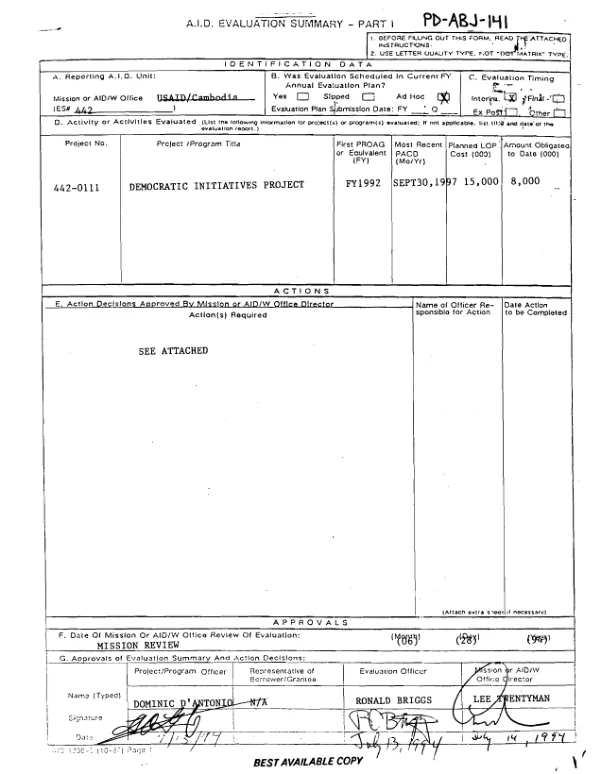
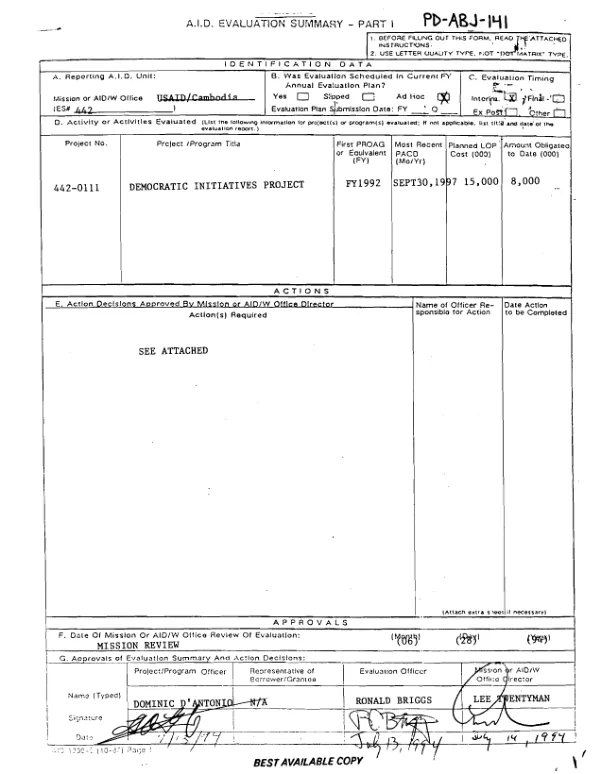
Cambodia/USAID : democratic initiatives project -- a formative evaluation : final
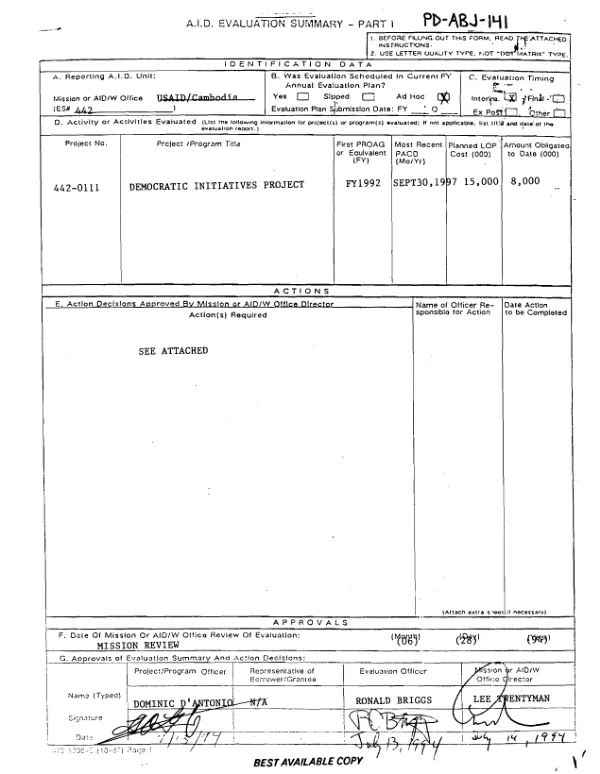
The Democracy Initiatives Project ($15 million) is a major USAID effort to capitalize on the momentum toward democratic process in Cambodia begun with the elections of 1993.
Steinberg, David I. · 1994
Sign in to readA free account is required to download.
Abstract
The project is centered on four grantees: The Asia Foundation, the National Democratic Institute, the International Republican Institute, and the Asian-American Free Labor Institute (AAFLI). All but the first are associated with the National Endowment for Democracy. This evaluation is a collaborative one that effectively focuses on the period since the elections of 5/93. The Foundation programs, after a very troubled first year, have received extensive respect. The Institutes, widely noted as having a very productive period before the elections, have not been as active as their administrative costs would warrant. AAFLI is too new to evaluate. The Foundation has programs in the fields of law, human rights, governance, the legislature, the press, nongovernmental pluralism, and economic liberalization; the Institutes have programs with the political parties; and AAFLI with labor. The evaluation notes that concepts of democracy and law represent core values or aspirations related to power, its organization, and distribution. Foreign aid's possible effects on these fields are limited, although programs are important and should continue. The evaluation cautions that the Cambodian political situation is highly volatile, that power is personalized and hierarchical, and that progress toward democracy is not irreversible. Expectations should not be inflated, progress is likely to be slow, and USAID support needs to continue over a long period. Perhaps the most important avenue toward pluralism, and eventually democracy, is through the NGO community. The evaluation recommends that the project be extended, but that USAID administrative control over all grantees, which has been restrictive, should be liberalized. It recommends that the funding for both Institutes be allowed to run out over the next 6 months and a resident program not be renewed, but reconsidered at an appropriate period before the next election. The evaluation makes specific suggestions for improvement of the operations of USAID and each of the grantees, and draws some general lessons concerning the need for country knowledge and clear administrative authority, together with improved USAID contracting procedures. Noting the importance of the American presence in Cambodia at this time, it warns against complacence in view of the uncertain prospects. It suggests negotiations with the Cambodian government on official recognition of Foundation-supported education programs, and with the French on programmatic rivalries. (Author abstract)