USAID DEC
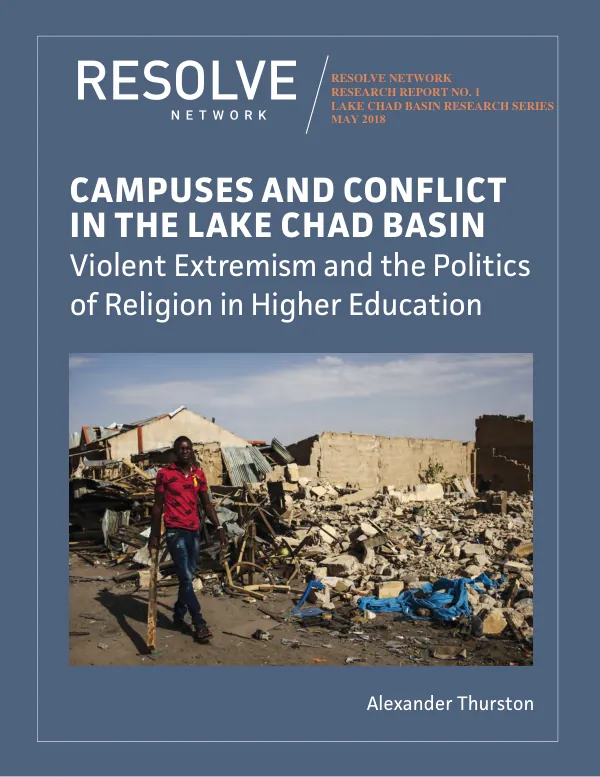
Campuses and Conflict in the Lake Chad Basin: Violent Extremism and the Politics of Religion in Higher Education
Sign inGEORGETOWN UNIVERSITY
Campuses and Conflict in the Lake Chad Basin: Violent Extremism and the Politics of Religion in Higher Education
Higher education plays a significant role in the Lake Chad Basin, particularly in the context of violent extremism.
2018 · 40 pages
Sign in to readA free account is required to download.
Abstract
The region is home to several universities and colleges, including those in northeastern Nigeria, Chad, Cameroon, and Niger. Boko Haram, a violent extremist organization, has its roots in the region and has been known to recruit and radicalize youth from these educational institutions. The relationship between higher education and violent extremism is complex and multifaceted. Existing literature on the subject suggests that different types of educational environments, including Qur'an schools and private religious universities, do not inherently encourage extremism. However, the Lake Chad region is characterized by heated intra- and inter-religious debates, as well as profound uncertainty about the meaning and purpose of education. Colonial and postcolonial legacies have shaped parents' and children's choices about schooling in the region. Many individuals view Western-style education as a threat to their cultural and religious identities, leading to a rejection of this type of education. Boko Haram's ideology is rooted in this rejection, with the group opposing Western-style education and promoting a return to traditional Islamic values. Research has shown that the group's recruitment and radicalization of youth are often linked to socioeconomic and political factors, rather than solely to educational environments. However, the role of higher education in the region remains a critical factor in understanding the dynamics of violent extremism. Universities and colleges in the Lake Chad Basin are often seen as sites of intellectual and cultural exchange, but they can also be breeding grounds for extremist ideologies. The report highlights the need for a more nuanced understanding of the relationship between higher education and violent extremism in the Lake Chad Basin. It suggests that policymakers and researchers should focus on the broader societal attitudes toward Western-style education and the ways in which these attitudes shape individual choices about schooling. By examining the complex interplay between education, culture, and politics, researchers can gain a deeper understanding of the factors that contribute to violent extremism in the region. The report also emphasizes the importance of considering the historical and cultural context of the Lake Chad Basin in understanding the dynamics of violent extremism. The region's complex history of colonialism, postcolonialism, and Islamic revivalism has shaped the ways in which individuals and groups interact with and respond to Western-style education. By taking a more nuanced and contextualized approach to understanding the relationship between higher education and violent extremism, researchers can develop more effective strategies for preventing and countering extremism in the region. In the Lake Chad Basin, universities and colleges are often seen as sites of intellectual and cultural exchange, but they can also be breeding grounds for extremist ideologies. The report highlights the need for a more nuanced understanding of the relationship between higher education and violent extremism in the region. It suggests that policymakers and researchers should focus on the broader societal attitudes toward Western-style education and the ways in which these attitudes shape individual choices about schooling.