USAID. BUR. FOR SCIENCE AND TECHNOLOGY. OFC. OF ENERGY
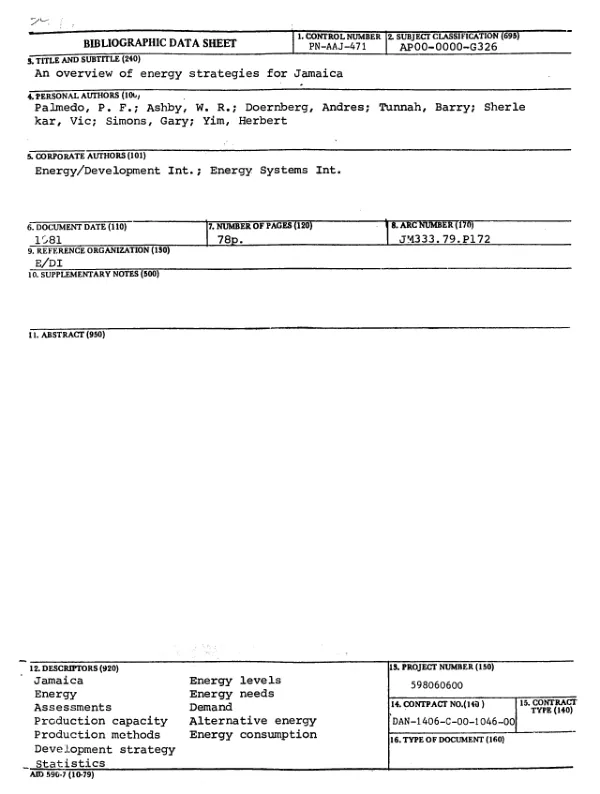
Cane production for sugar and electric power in Jamaica
Recent experiments have indicated that sugar cane can be used to generate electric power as well to produce sugar and molasses.
1984
Sign in to readA free account is required to download.
Abstract
This study analyzes the technical and economic feasibility of using this new technology as a means of revitalizing the Jamaican sugar industry. The report concludes that the cane/energy technology can make the Jamaican sugar industry profitable and proposes that a pilot project be conducted at an existing sugar estate to further test the soundness of the approach. The pilot project will include: designating a 20,000-acre site; initiating a cane planting program on a 500-acre test site where workers and managers will be trained (cane planting will eventually be expanded to the full 20,000 acres); initiating an extension program for farmers; introducing new farming practices to double cane production and new harvesting techniques to recover field wastes for use as boiler fuel; retrofitting and improving milling facilities at the plant to process 4,500 tons of cane per day; and building a high-efficiency 25-45 megawatt power plant, to be fueled by bagasse and field wastes. Financial and economic analyses indicate a potentially high internal rate of return on pilot site investment; the project should increase employment and sugar production, provide large savings in imported oil costs, and generate a significant share of Jamaica"s electricity needs. Six figures, nine tables, and six appendices are included.
Connected topics
Related documents