USAID DEC
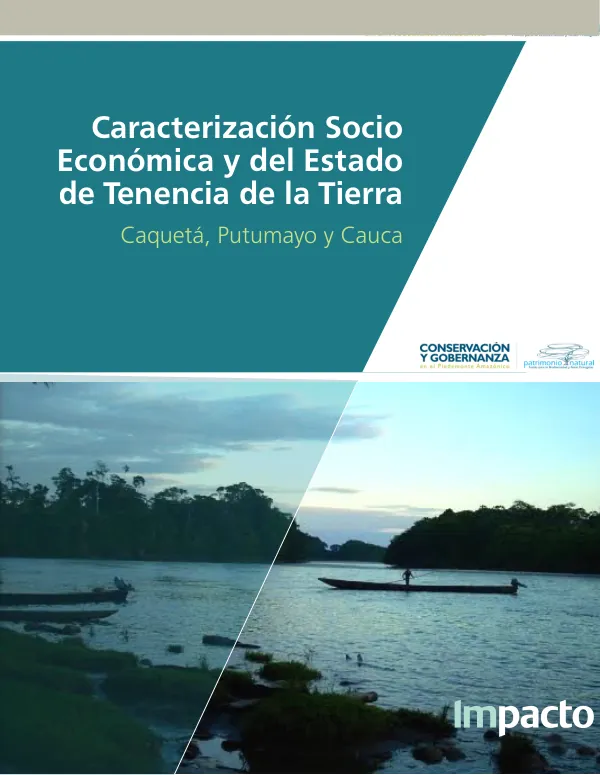
Caracterización Socio Económica y del Estado de Tenencia de la Tierra Caquetá, Putumayo y Cauca
Sign inUSAID DEC
Caracterización Socio Económica y del Estado de Tenencia de la Tierra Caquetá, Putumayo y Cauca
The department of Caquetá, located in the southwestern region of Colombia, is characterized by a diverse socio-economic landscape.
170 pages
Sign in to readA free account is required to download.
Abstract
The municipalities of Albania, Belen de los Andaquíes, San José del Fragua, Piamonte, Mocoa, and Villagarzón are among the most populous areas in the region. According to demographic data, the population of these municipalities is predominantly young, with a significant proportion of individuals under the age of 30. The indigenous population in Caquetá is substantial, with various ethnic groups residing in the region. The Eje socio cultural, or socio-cultural axis, is a critical aspect of the region's identity, with a strong emphasis on community and social organization. The characteristics of the groups in the region are shaped by their cultural heritage, with a focus on traditional practices and customs. Pobreza, or poverty, is a significant issue in Caquetá, with a high percentage of the population living below the poverty line. The region's rural nature and limited access to basic services contribute to this issue. Necesidades básicas insatisfechas, or unmet basic needs, are a pressing concern, with many residents lacking access to healthcare, education, and other essential services. The municipality of Mocoa, in particular, faces significant challenges related to health and education. According to data, the municipality has a high rate of infant mortality and limited access to healthcare services. Education is also a concern, with a significant proportion of the population lacking access to quality educational institutions. The region's infrastructure is also a challenge, with limited access to basic services such as water, sanitation, and electricity. The Sistema vial y de transporte, or road and transportation system, is inadequate, making it difficult for residents to access basic services and economic opportunities. The municipality of Piamonte is characterized by a high level of ruralidad, or rurality, with a significant proportion of the population living in rural areas. The region's geography is also a challenge, with steep terrain and limited access to basic services. In terms of the eje político administrativo, or political-administrative axis, the region is characterized by a complex system of governance. The conflict armado, or armed conflict, has had a significant impact on the region, with many communities affected by violence and displacement. The eje económico, or economic axis, is also a critical aspect of the region's development. The region's economy is primarily driven by extractive industries, including mining and logging. However, this has led to concerns about the environmental impact of these activities and the displacement of local communities. The eje ambiental, or environmental axis, is a critical aspect of the region's development. The region is home to a diverse range of ecosystems, including tropical rainforests and cloud forests. However, the region is also vulnerable to climate change, with rising temperatures and changing precipitation patterns affecting the region's ecosystems and communities. In terms of tenencia de la tierra, or land tenure, the region is characterized by a complex system of land ownership. The Adjudicación de Baldíos, or adjudication of baldios, is a critical aspect of the region's land tenure system, with many communities struggling to access and secure land rights. The region's geography and climate also play a significant role in shaping the tenencia de la tierra. The availability of land productiva, or productive land, is limited, with many areas affected by deforestation and land degradation. The categorías de la tenencia de la tierra, or categories of land tenure, are also complex, with many communities struggling to access and secure land rights. The region's tenencia de la tierra is also shaped by the interests interrelacionados de la tierra, or interrelated interests in land. The region's economy is driven by extractive industries, which has led to concerns about the environmental impact of these activities and the displacement of local communities. In terms of condiciones ambientales vs tenencia de la tierra, or environmental conditions vs land tenure, the region is characterized by a complex relationship between the two. The region's ecosystems are vulnerable to climate change, with rising temperatures and changing precipitation patterns affecting the region's ecosystems and communities. The tenencia de la tierra desde la perspectiva de género, or land tenure from a gender perspective, is also a critical aspect of the region's development. Women play a significant role in the region's agriculture and land management, but often lack access to land rights and other resources. In conclusion, the department of Caquetá is characterized by a complex socio-economic landscape, with a diverse range of communities and ecosystems. The region's geography and climate play a significant role in shaping the tenencia de la tierra, or land tenure, with many communities struggling to access and secure land rights. The region's economy is driven by extractive industries, which has led to concerns about the environmental impact of these activities and the displacement of local communities.
Related documents