CORNELL UNIVERSITY
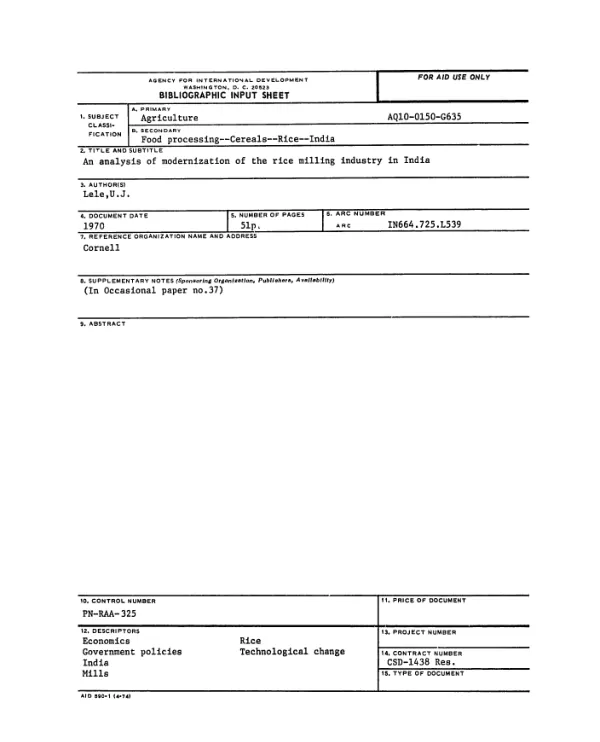
Case study in agricultural marketing : the modern rice mill in India
This case study is an analysis of the establishment and functioning of the first and the largest modern rice mill in India.
Lele, U. J. · 1970
Sign in to readA free account is required to download.
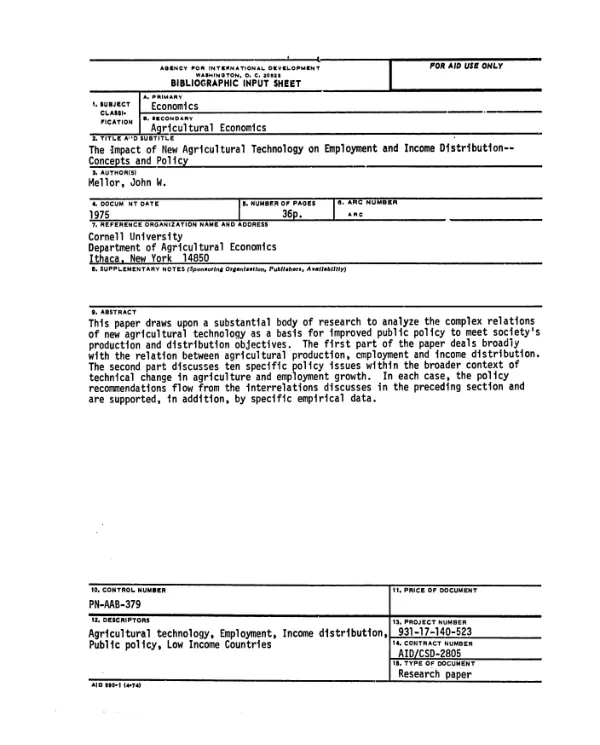
Abstract
It argues that in a low-income country, there exists considerable pressure to develop the cooperative sector. This pressure arises partly from the assumptions of inefficiency and exploitative nature of the private sector and partly on ideological grounds. When the basic assumptions about the functioning of the private sector do not hold, a cooperative enterprise not only finds it difficult to operate at lower costs than its private counterpart, but even incurs additional costs which could be avoided under competition conditions. It illustrates how utilization of capital is adversely affected when public policies encounter a dilemma of whether to subsidize the producer or the consumer and attempt doing both simultaneously. It points out that even within the cooperative sector, as the scale of operation increases, the degree of capitalization may increase more than proportionately with the size of operations. It emphasizes that the conditions in which the first quasi public modern rice mill has been established and operated, constitute a malady of the modernization program and explain at least partially why more dynamic entrepreneurship in the field of rice milling has not evolved in the smaller scale privately operated mills.