FHI 360
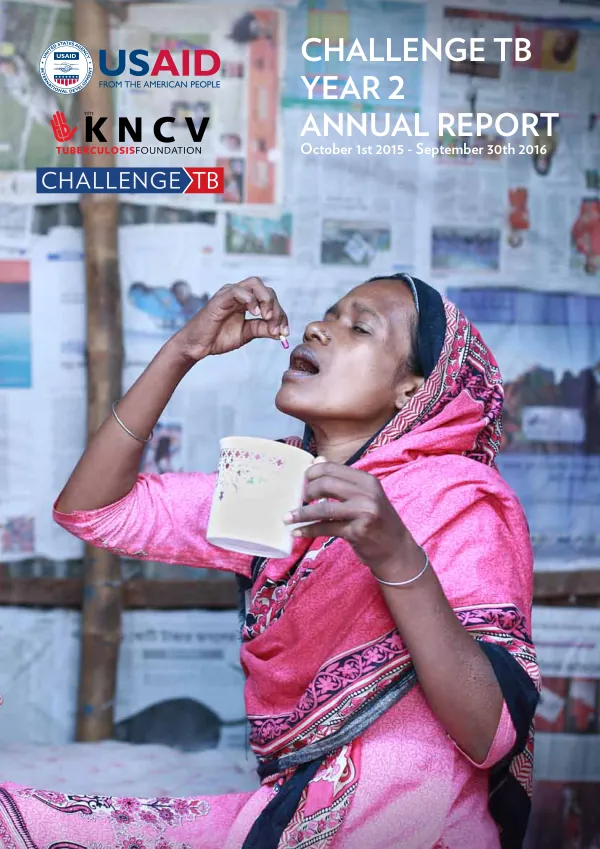
Challenge TB Annual Report Year 2
The Challenge TB project, implemented in 22 countries, continued to contribute to the United States Government's Global TB strategy for TB care and prevention in the second year of the project, October 2015-September 2016.
2016 · 51 pages
Sign in to readA free account is required to download.
Abstract
The project's work was primarily conducted through country-specific projects, with a focus on implementing projects at the country, regional, and international/global levels. Progress was made on selected high-level, overarching indicators in the 22 Challenge TB-supported countries. The estimated number of absolute TB deaths among HIV-negative people decreased between 2014 and 2015 in 11 CTB countries, while the estimated absolute number of TB deaths among HIV-positive people decreased in 14 CTB countries. The proportion of CTB countries in Africa with a serious HIV epidemic is high, and the implementation of TB/HIV collaborative activities is well advanced in most of these countries. Mortality rates decreased globally and in CTB countries, with a 1% reduction in estimated absolute TB deaths among HIV-negative people and an 8% reduction in estimated absolute TB deaths among HIV-positive people. The treatment success rate (TSR) for people newly diagnosed with TB remained high, with 87% of patients successfully completing treatment in 2015, compared to 83% in 2014. The percentage of MDR-TB cases successfully treated increased by 2%, with 50% of cases successfully treated in 2015, compared to 47% in 2014. TB incidence per 100,000 population decreased by 3% in 2015, with 144 cases notified per 100,000 population, compared to 142 cases in 2014. The number of TB cases notified increased by 3% in 2015, with 6,136,321 cases notified, compared to 6,053,436 cases in 2014. The estimated incidence of TB also decreased, with 251 cases per 100,000 population in 2015, compared to 244 cases in 2014. ART coverage for notified TB patients co-infected with HIV increased by 3%, with 77% of patients receiving ART in 2015, compared to 74% in 2014. In 2015, 12 CTB countries were above the global average for coverage of ART for notified TB patients co-infected with HIV. The project implemented innovative approaches, including active case finding and contact investigation, which led to the diagnosis of nearly 2,500 TB cases in CTB-supported areas. GeneXpert MTB/RIF expansion was also implemented, with nine countries testing at least 20% of new bacteriologically positive cases for drug resistance and 12 countries testing more than half of previously treated bacteriologically confirmed TB cases for drug resistance. New drugs and regimens were also introduced, with 489 individuals in 13 countries starting treatment regimens containing Bedaquiline. Country-specific highlights include the implementation of Urban DOTS in Afghanistan, which covered 169 health facilities and identified 59,374 presumptive TB patients and diagnosed 11,458 TB cases. TB screening among child contacts of infectious TB cases became routine practice in Cambodia, with 7,283 children screened and 1,666 (23%) having TB signs and symptoms requiring further investigation.