USAID DEC
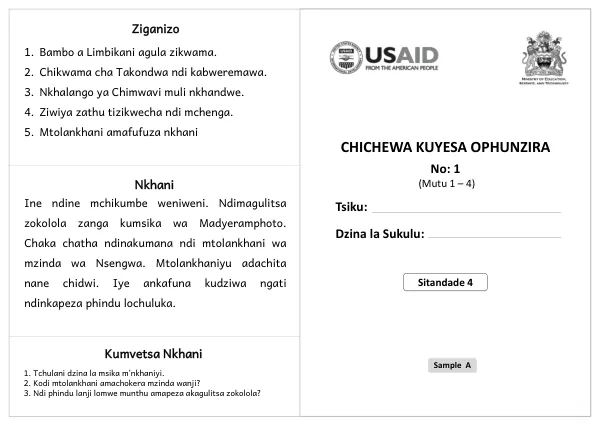
Chicheŵa Kuyesa Ophunzira
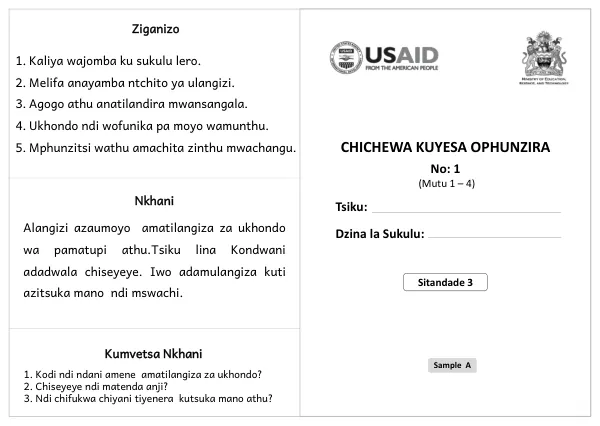
The Chichewa language learning materials consist of a series of samples, labeled as Sample A and Sample B, each with a unique set of stories and comprehension questions.
28 pages
Sign in to readA free account is required to download.
Abstract
The samples are designed to assess the reading skills of learners, including letter names, sounds, syllables, and words, as well as sentence and story reading comprehension. The samples are structured around a series of stories, each with a unique theme and set of characters. The stories are presented in Chichewa, with accompanying comprehension questions to assess the learner's understanding of the material. The comprehension questions are designed to test the learner's ability to recall specific details from the story, as well as to demonstrate their understanding of the plot and characters. The assessment criteria for the samples are based on the learner's ability to read the stories and answer the comprehension questions correctly. The criteria include reading aloud all 10 items in each of the skills, with a minimum of 7 correct items required to demonstrate proficiency. For sentence and story reading comprehension, the learner must read at least 3 out of 5 sentences correctly or read the story without making more than 2 mistakes, respectively. The samples are designed to be used in a classroom setting, with the teacher or instructor providing guidance and support to the learners as they work through the material. The samples can be used to assess the reading skills of learners at various levels, from beginner to advanced. The Chichewa language learning materials are an important resource for learners of the language, providing a structured and comprehensive approach to reading and comprehension. The samples can be used in conjunction with other language learning materials to provide a well-rounded education in the Chichewa language. The assessment criteria for the samples are based on the learner's ability to demonstrate proficiency in reading and comprehension. The criteria include: * Reading aloud all 10 items in each of the skills, with a minimum of 7 correct items required to demonstrate proficiency. * Reading at least 3 out of 5 sentences correctly for sentence reading comprehension. * Reading the story without making more than 2 mistakes for story reading comprehension. * Answering at least 2 out of 3 comprehension questions correctly for story comprehension. The samples are organized into a series of lessons, each with a unique theme and set of stories and comprehension questions. The lessons are designed to build on previous knowledge and skills, with each lesson introducing new vocabulary and concepts to help learners improve their reading and comprehension skills.