USAID DEC
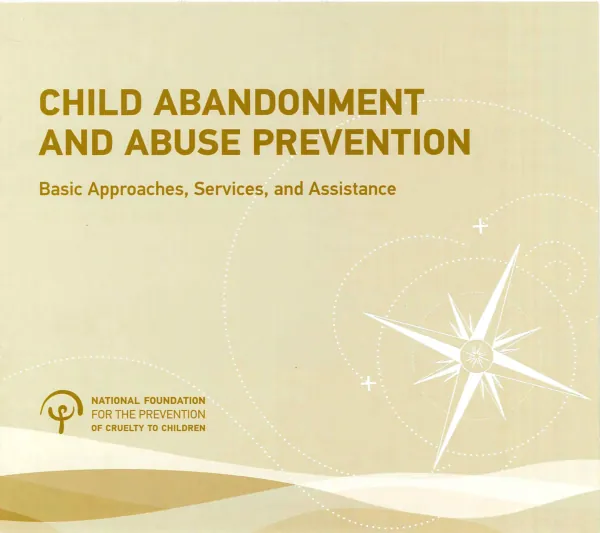
CHILD ABANDONMENT AND ABUSE PREVENTION: Basic Approaches, Services, and Assistance
The Russian Federation acknowledges and guarantees human rights and freedoms according to generally recognized principles and norms of international law.
2012 · 16 pages
Sign in to readA free account is required to download.
Abstract
The Universal Declaration of Human Rights and the UN Convention on the Rights of the Child emphasize that children have the right to special care and assistance. The Russian Federation, having acceded to the Convention, aims to create an environment that is comfortable and benevolent to children, with the interests of the rising generation as the priority in decision-making. The Russian President Vladimir Putin has emphasized the importance of building an effective child welfare system. Under applicable laws, parents or caregivers are responsible for ensuring the protection of rights and legal interests of a child. However, in cases where parents abuse their child, the responsibility to protect the rights of the child is vested in guardianship authorities and the court of law. The law obliges guardianship authorities to take necessary protective measures upon receipt of information about the violation of the rights and legitimate interests of the child. The National Foundation for the Prevention of Cruelty to Children (NFPCC) has developed a Toolkit to increase the effectiveness of measures for the protection of children's rights. The Toolkit contains standards of preventive services, guidelines for their implementation, quality control and assurance, and a feasibility study. The services in the Toolkit are based on the principles of a family-oriented approach, priority to preventive services and early detection of violation of children's rights, and a unified procedure for the protection of every child. Child abuse in families can be caused by a number of factors, including the lack of resources to overcome hardship, poor parenting skills, and stereotypes of parenting through the use of force. The same factors lead to a deeper family crisis and aggravated child abuse. The forms of violence are becoming more traumatic to the child as the result, parents are trying to achieve by violence, is not gained. Instead, the child suffers traumatic consequences, which at first look like a "good behavior"; but later come through fear, poor health, lower educational potential, dependence, avoidance, and so on. The correlation between crisis stages, escalation of violence, and the increasing parental irresponsibility appears. With the gradual reduction of parental care and protection of children, these functions are delegated to state authorities. However, without proper preventive and supportive assistance to families, such governmental interference contributes to further aggravation of symptoms. Parents eventually lose their skills to notice needs of the child and make parenting decisions. The Toolkit provides 26 preventive services and forms of assistance to different target groups. Different target groups require various forms of assistance rendered as services that target prevention, rehabilitation, and socialization. Typically, prevention of child abandonment is ensured by consultations, support-group classes, and patronage that make the basis for the preventive services included in the Toolkit and recommended for implementation. The services in the Toolkit are designed to keep the child in the biological family by correlating crisis stages and family abuse escalation. The services are based on the principles of a family-oriented approach, priority to preventive services and early detection of violation of children's rights, and a unified procedure for the protection of every child. The Toolkit aims to provide contemporary knowledge and approaches to child welfare workers in regions, enabling them to timely deliver services to families and children based on the best national preventive services. The Toolkit has been developed as the result of the selection, review, and consolidation of best Russian practices in child welfare. NFPCC has documented the materials and performed a comprehensive review to select 26 best national preventive services. The Toolkit has been approved by the NFPCC Advisory Council, formed by representatives of the Presidential Administration of the Russian Federation, Council of the Federation, State Duma, and Public Chamber of the RF, UNICEF, and federal executive authorities, and recommended for wide use in Russia.
Related documents