USAID DEC
CIP Slide Training Series: Rapid Multiplication Techniques for Potatoes
The International Potato Center (CIP) Slide Training Series is a comprehensive guide for training individuals involved in the implementation of rapid multiplication techniques for potatoes in developing countries.
2010 · 20 pages
Sign in to readA free account is required to download.
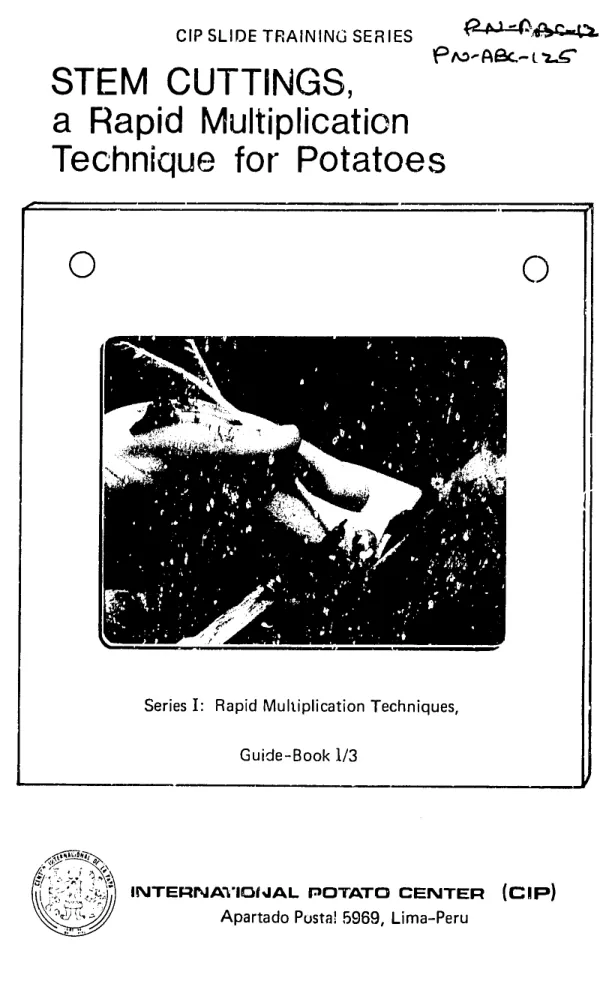
Abstract
The series focuses on four techniques: Sprout Cuttings, Single-Node Cuttings, Stem Cuttings, and Leaf-Bud Cuttings. This summary will concentrate on the Stem Cuttings technique. Stem Cuttings is a rapid multiplication technique that can produce 20 to 60 cuttings from each mother plant. This method breaks contact with tuber- and soil-borne non-systemic diseases and nematodes, effectively eliminating diseases caused by pathogens such as Erwinia spp., Rhizoctonia solani, and Synchytrium endobioticum (wart). The use of stem cuttings stimulates growth from axillary buds at each leaf, resulting in a high yield of tubers. To produce stem cuttings, the best available tuber is used to produce the initial mother plant. The tuber should be well-sprouted to give a maximum number of stems, and green sprouts give fast emergence. Mother plants can also originate from cuttings of any type. When procuring stem cuttings, the objective is to harvest portions of the potato vine. Plants with 3 or 4 stems are desirable for maximum use of plant house space. The procedure for stem cuttings involves removing the apical growing point from young, rapidly growing plants. This stimulates growth of lateral shoots from the axillary buds at each leaf. The apical growing point is removed when 12 to 15 cm long and rooted in coarse, sharp sand. The rooted cuttings are then transplanted to the field, where each cutting yields from 400 to 1000 g of tubers when properly grown under field conditions. To ensure proper growth and development of the mother plant, fertilization is essential. Nitrogen promotes rapidly growing plants and cuttings, while phosphorous is needed for fast root development. Extra liquid fertilizer should be applied after removal of the growing point and after each harvest of stem cuttings. The rooting substrate must be well-drained, with a 5 cm layer of coarse gravel covering the bottom and 10 to 12 cm of finer rooting substrate on top. The rooting substrate should be moistened and compacted prior to planting to prevent cave-in of the planting holes. Sand with a grain size of 1 to 2 mm consistently gives the best results, as it provides adequate contact with roots and prevents water retention, which can eliminate oxygen and inhibit root formation.