USAID DEC
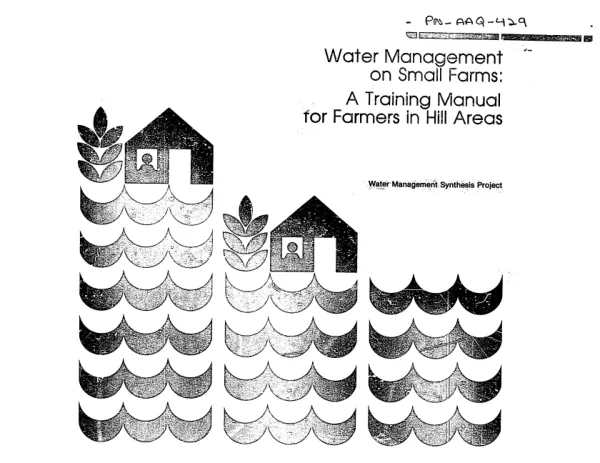
Water Management on Small Farms: A Training Manual for Farmers in Hill Areas Water Management Synthesis Project
Sign inUSAID
Water Management on Small Farms: A Training Manual for Farmers in Hill Areas Water Management Synthesis Project
Water management is a critical component of crop production and soil conservation on small farms in hill areas.
2010 · 90 pages
Sign in to readA free account is required to download.
Abstract
Irrigation is essential for ensuring a good yield, particularly during droughts, and can also enable the harvest of two or more crops each year. Sufficient water throughout the growing season helps to promote healthy crops, which are better equipped to resist insects and disease. The role of water in plant development is multifaceted. Water is necessary for plant growth, as it carries food through the plant and cools the crop during hot weather. However, too much or too little water can result in lower yields. For good production, crops need the right amount of water throughout their development. Irrigation can help to ensure a good yield by providing the crop with its other needs, such as sunlight, nutrients, and air. Irrigation can have both beneficial and harmful effects. On the one hand, it can help to promote healthy crops and increase yields. On the other hand, it can also lead to problems such as root rot, nutrient deficiencies, and water waste. Excessively heavy water applications can wash fertilizers and other nutrients away from the root zone, while more frequent irrigations than necessary can result in a root zone that stays too wet for too long. In addition to these issues, irrigation can also have social and economic implications. For example, some farmers may waste water when they irrigate, which can mean that other farmers may not have enough water for their fields. Careless maintenance of canals can also result in weed, silt, or erosion problems, and not having water where it is needed. To address these challenges, it is essential to adopt effective irrigation management practices. This includes using the right amount of water at the right time, using efficient irrigation systems, and maintaining canals and other irrigation infrastructure. By adopting these practices, farmers can help to promote healthy crops, increase yields, and reduce the risks associated with irrigation. The importance of irrigation management is highlighted by the experiences of farmers in Peru, where irrigation extension personnel have found that training farmers in irrigation management practices can be highly effective. The training program, which included an audiovisual series, a practical hands-on course, a field day, and an evaluation of the farmers' new skills, helped farmers to learn how to use irrigation management practices to promote healthy crops and increase yields. In conclusion, water management is a critical component of crop production and soil conservation on small farms in hill areas. Irrigation is essential for ensuring a good yield, particularly during droughts, and can also enable the harvest of two or more crops each year. However, irrigation can also have harmful effects if not managed properly. By adopting effective irrigation management practices, farmers can help to promote healthy crops, increase yields, and reduce the risks associated with irrigation.
Related documents