USAID DEC
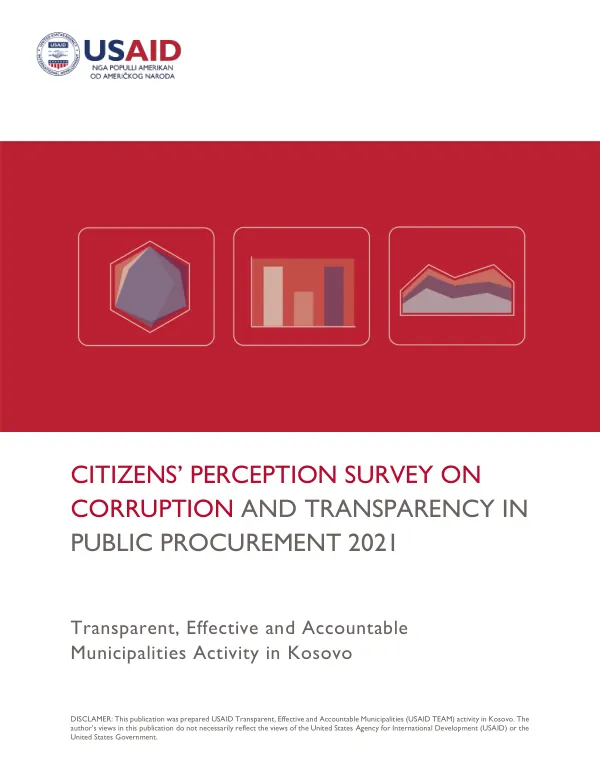
Citizens’ Perception Survey on Corruption and Transparency in Public Procurement 2021
Sign inUSAID
Citizens’ Perception Survey on Corruption and Transparency in Public Procurement 2021
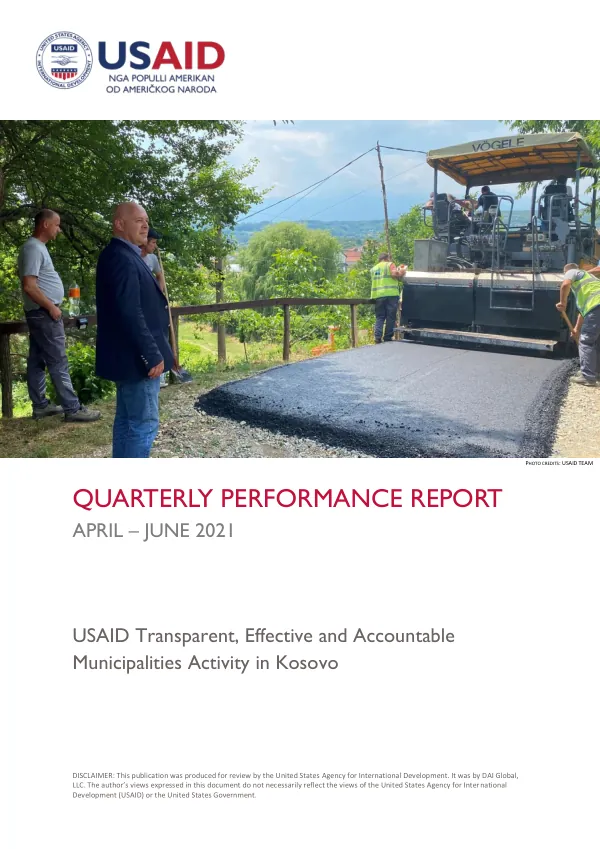
The Citizens' Perception Survey on Corruption and Transparency in Public Procurement 2021 was conducted in Kosovo by the Transparent, Effective and Accountable Municipalities Activity.
2021 · 222 pages
Sign in to readA free account is required to download.
Abstract
The survey aimed to assess citizens' perceptions of corruption and transparency in public procurement practices within municipalities. The survey methodology involved Computer-Assisted Personal Interviewing (CAPI) and Computer-Assisted Telephone Interviews (CATI) with a sample of 1,200 citizens from 30 municipalities in Kosovo. The survey results indicate that citizens' perceptions of corruption and transparency in public procurement practices have remained relatively stable between 2020 and 2021. However, there are some notable trends and findings. In terms of municipal transparency and accountability, the survey reveals that citizens are generally dissatisfied with the level of transparency in municipal services, with only 22% of respondents indicating that they are satisfied with the level of transparency. Furthermore, the survey finds that citizens are not well-informed about municipal documents and reports, with only 15% of respondents indicating that they are informed about the publication of municipal documents. The survey also examines corruption in local government, with respondents indicating that corruption is a significant problem in Kosovo. The survey finds that 71% of respondents believe that corruption is prevalent in the public sector, with the most common forms of corruption being bribery and nepotism. The survey also finds that citizens are not confident in the ability of institutions to prevent and detect corruption, with only 22% of respondents indicating that they trust the Anti-Corruption Agency (ACA) to prevent and detect corruption. In terms of public procurement practices, the survey finds that citizens are generally dissatisfied with the quality of capital investments in their municipalities, with only 15% of respondents indicating that they are satisfied with the quality of capital investments. The survey also finds that citizens are not well-informed about public procurement procedures, with only 12% of respondents indicating that they are informed about public procurement procedures. The survey results also highlight the importance of transparency and accountability in public procurement practices. The survey finds that citizens are more likely to trust institutions that are transparent and accountable, and that citizens are more likely to report corruption when they are confident in the ability of institutions to prevent and detect corruption. The survey results have implications for policymakers and practitioners working to improve transparency and accountability in public procurement practices in Kosovo. The survey highlights the need for increased transparency and accountability in municipal services, as well as the need for improved public procurement procedures. The survey also highlights the importance of building trust and confidence in institutions, particularly in the Anti-Corruption Agency and the Public Procurement Regulatory Commission. The survey results also highlight the need for increased awareness and education among citizens about public procurement procedures and the importance of transparency and accountability in public procurement practices. The survey finds that citizens are not well-informed about public procurement procedures, and that citizens are not confident in their ability to report corruption. Overall, the survey results provide valuable insights into citizens' perceptions of corruption and transparency in public procurement practices in Kosovo. The survey highlights the need for increased transparency and accountability in municipal services, as well as the need for improved public procurement procedures. The survey also highlights the importance of building trust and confidence in institutions, particularly in the Anti-Corruption Agency and the Public Procurement Regulatory Commission.
Related documents