USAID
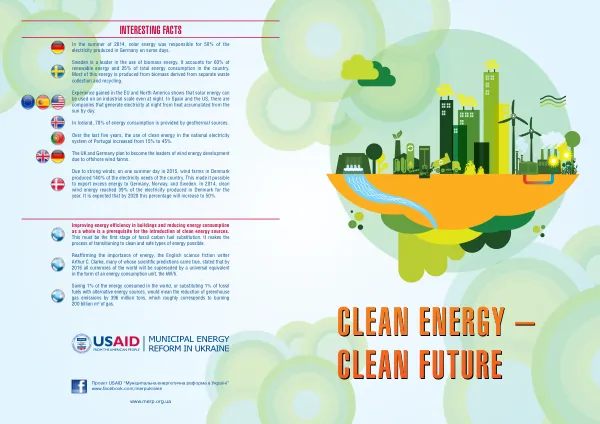
Clean Energy – Clean Future
Improving energy efficiency in buildings and reducing energy consumption as a whole is a prerequisite for the introduction of clean energy sources.
2015 · 2 pages
Sign in to readA free account is required to download.
Abstract
This must be the first stage of fossil carbon fuel substitution, making the process of transitioning to clean and safe types of energy possible. Energy efficiency is crucial for reducing greenhouse gas emissions and mitigating the effects of climate change. According to Arthur C. Clarke, a renowned English science fiction writer, the world will eventually transition to a universal energy consumption unit, measured in kilowatt-hours (kW/h). Saving 1% of the energy consumed globally or substituting 1% of fossil fuels with alternative energy sources would result in a reduction of greenhouse gas emissions by 396 million tons, equivalent to burning 200 billion cubic meters of gas. Several countries have made significant strides in adopting clean energy sources. In Germany, solar energy accounted for 50% of the electricity produced on some days in the summer of 2014. Sweden is a leader in biomass energy, with 60% of its renewable energy and 25% of its total energy consumption coming from biomass. In Iceland, 70% of energy consumption is provided by geothermal sources. Portugal has seen a significant increase in the use of clean energy in its national electricity system, rising from 15% in 2014 to 45% over the last five years. The UK and Germany plan to become leaders in wind energy development, with offshore wind farms playing a crucial role. In Denmark, wind farms produced 140% of the country's electricity needs on one summer day in 2015, allowing for the export of excess energy to neighboring countries. Implementing energy efficiency measures and using renewable energy sources is essential for reducing dependence on imported energy resources, mitigating environmental pollution, and promoting economic security. Renewable energy sources, such as solar, wind, hydro, geothermal, biomass, biofuel, and waste energy, can form the basis of a clean and sustainable energy future. In Ukraine, the government has adopted legislative initiatives to substitute natural gas usage, with the aim of increasing the share of clean energy sources from 5% in 2014 to 11% by 2020. Municipal governments have joined the initiative, with many signing the Covenant of Mayors, a European Union-led initiative to improve energy efficiency and increase the use of renewable energy sources. Biomass and biofuels are recognized as renewable resources, with biomass including organic waste from agriculture, forestry, and the housing and communal services sectors. Wind energy has significant potential, with the potential for wind energy being 50 times more than humanity currently needs. However, wind energy is unreliable and its high price is a major drawback. Solar energy is a clean and safe energy source that can be produced as long as the sun shines. Solar energy plants are noiseless, but they occupy large areas and have a variable energy output. Hydro-energy produces 8% of Ukraine's total energy balance and can be developed in any region with small or large rivers. Geothermal energy is derived from the natural heat of the Earth and can be harnessed in various regions, including the Donets Basin, the Carpathians, and Transcarpathia. Waste energy is another alternative energy source that can be produced from organic residues of animal waste, sewage, biological waste from the food industry, and municipal trash. Biogas plants can extract biogas from solid or liquid waste, which can be used as a fuel to produce heat and electricity. Burning municipal trash directly can also produce steam or hot water that generates electricity or heat.