USAID DEC
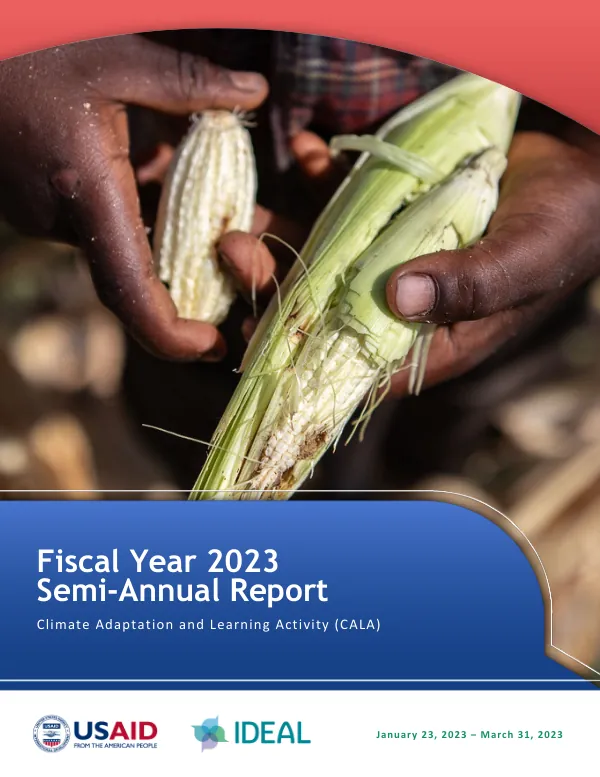
Climate Adaptation Learning Activity (CALA) Associate Award |FY23 Semi-Annual Report: January 23, 2023 – March 31, 2023
Sign inSAVE THE CHILDREN FEDERATION/US
Climate Adaptation Learning Activity (CALA) Associate Award |FY23 Semi-Annual Report: January 23, 2023 – March 31, 2023
Climate Adaptation Learning Activity (CALA) Associate Award | FY23 Semi-Annual Report: January 23, 2023 – March 31, 2023 The Climate Adaptation Learning Activity (CALA) is a USAID-funded initiative aimed at improving the quality and effectiveness of climate adaptation efforts implemented by USAID's Bureau for Humanitarian Assistance (BHA) partners.
2023 · 9 pages
Sign in to readA free account is required to download.
Abstract
The CALA consortium consists of Save the Children (SC), prime award recipient, and the Institute for Development Impact (I4DI), subawardee. The activity focuses on four core objectives: creating a shared understanding of common climate adaptation approaches, fostering knowledge sharing and capturing lessons learned, providing rich insights into effective means of addressing climate risks, and prioritizing key evidence gaps. Inception Meeting with BHA The CALA consortium held an inception meeting with BHA on March 1, 2023, to discuss immediate priorities for the Desk Review and stakeholder engagement and to establish routes of communication. Attendees included representatives from BHA, I4DI, and SC. The meeting marked the beginning of the CALA team's efforts to establish a collaborative framework for the activity. CALA Repository SC and I4DI established the 'CALA Repository' shared drive to facilitate the transfer of USAID data. The repository contains over 290 data files provided by USAID, which I4DI performed initial analysis on. The team worked closely with USAID stakeholders to ensure data quality by co-reviewing transferred data for errors, missing data, and mislabeled categories and files. All individuals with access to the CALA Repository have signed Sensitive Data Nondisclosure Agreements as well as Commitments to Limit Use of Information Received. Inventory of Data The CALA team initiated the organization of these data in the repository by creating a data management template and process. This process required the inventorying of over 5,500 documents within the files shared by USAID. The team ensured data quality and consistency by establishing strict quality control measures and checkpoints. The results of inventory will inform the Inception Report. Desk Review I4DI and SC collaborated to advise USAID on best practices to establish desk review parameters using best practices and initial analysis of information shared by USAID. The CALA team is working to develop a comprehensive understanding of the data and to identify key themes and areas of focus for the Desk Review. CALA Steering Committee SC prepared a scope of work for the CALA Steering Committee (CSC), with input from I4DI, and shared this with BHA for review in late March 2023. The CSC will play a critical role in guiding the activity and ensuring that the CALA team is meeting its objectives. Stakeholder Inventory In consultation with other associate awards under the IDEAL Leader with Associates umbrella, CALA has prepared a list of stakeholders to engage in CALA activities. This list continues to grow as CALA receives recommendations from colleagues and identifies additional stakeholders through searches on LinkedIn, the IDEAL customer relationship management (CRM) software, Devex, and more. The CALA team will engage with stakeholders in various ways, including focus group discussions, key informant interviews, and information sharing. As of March 31, 2023, the CALA team was still in the process of organizing the inventory of award documents for the Desk Review. The team is working to ensure data quality and consistency, and to develop a comprehensive understanding of the data. The CALA team is also preparing for the CALA Steering Committee meeting and is engaging with stakeholders to inform the activity's objectives and outcomes. The CALA activity is expected to have a significant impact on the quality and effectiveness of climate adaptation efforts implemented by USAID's BHA partners. The activity's four core objectives are designed to create a shared understanding of common climate adaptation approaches, foster knowledge sharing and capturing lessons learned, provide rich insights into effective means of addressing climate risks, and prioritize key evidence gaps. The CALA team is working diligently to ensure that the activity meets its objectives and achieves its intended outcomes.
Related documents