CARANA CORPORATION, INC.
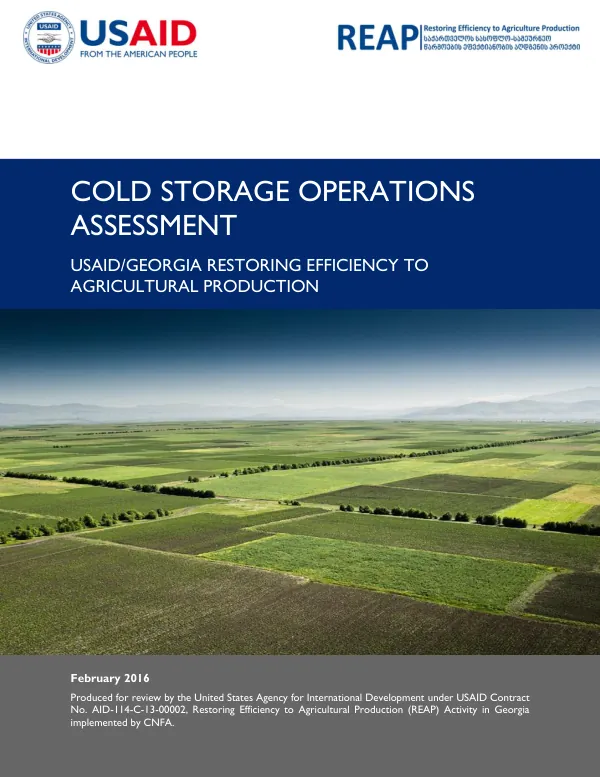
Cold Storage Operations Assessment
The REAP project aims to provide industry expertise and financial assistance to agriculture sector businesses in Georgia.
2016 · 37 pages
Sign in to readA free account is required to download.
Abstract
This assessment focuses on the cold storage companies or "grantees" of the program. The Georgian cold storage operations are relatively new to the food supply chain, with all four operations visited constructed within the past 2-5 years. The assessment reveals a tendency among cold storage companies to implement new technologies but resist maintaining old processes related to the handling of fruits and vegetables in the cold chain. This reluctance leads to a shortening of product shelf life and value. The companies operating the cold storages believe that the building itself will add value to the product simply by being cold, failing to adopt and follow proven product handling processes. The primary concerns among the facilities visited centered around pre-cooling, processing, cold storage operations, and building and equipment management and maintenance. Working with the owners and management of the cold storage businesses to adopt a robust, comprehensive "end to end" strengthening of their cold chain will ultimately provide them and their customers with the products and value they desire. High-quality horticulture value chains are an opportunity market within Georgia, as is the export market for those willing to make the necessary changes. To seize this opportunity, several operational and technical support areas need to be addressed. These include managing and better understanding the harvesting and pre-cooling of product at both the farm and receiving operations area of the cold store facility, understanding the daily responsibility of the building, environmental controls, and product quality, and investing in ethylene removal systems, pre-cooling equipment, and other building materials. Industry associations are strong and knowledgeable supporters of the sector, and the warehouse companies, transportation companies, and other businesses involved in the food supply chains and cold chains should look to be involved with and knowledgeable of various industry associations. These associations can provide training and technical knowledge, aid in the development of marketing and other business materials, and serve as knowledge pools and network links to the global food industry. The REAP project aids agriculture business development and increases opportunities in high potential value chains, including the cold supply chain. The core concepts and recommendations for the cold storage operations include developing plain language guides outlining specific "Do's and Don'ts" for handling and storage of various products, aiding the grantees in sourcing, pricing, and procuring necessary equipment for the warehouses, and selecting a test plot cold storage warehouse to support improvements working through technical experts. A workshop at the test plot facility providing cold storage management operational processes training, as well as product handling and storage recommendations, is also recommended. The ultimate goals are to increase the value of the products stored, increase the shelf life for retailers, and possibly increase the earning potential for farmers interested in learning how they can help increase product value with low and no-cost processes.