USAID. MISSION TO LIBERIA
Commodity import program
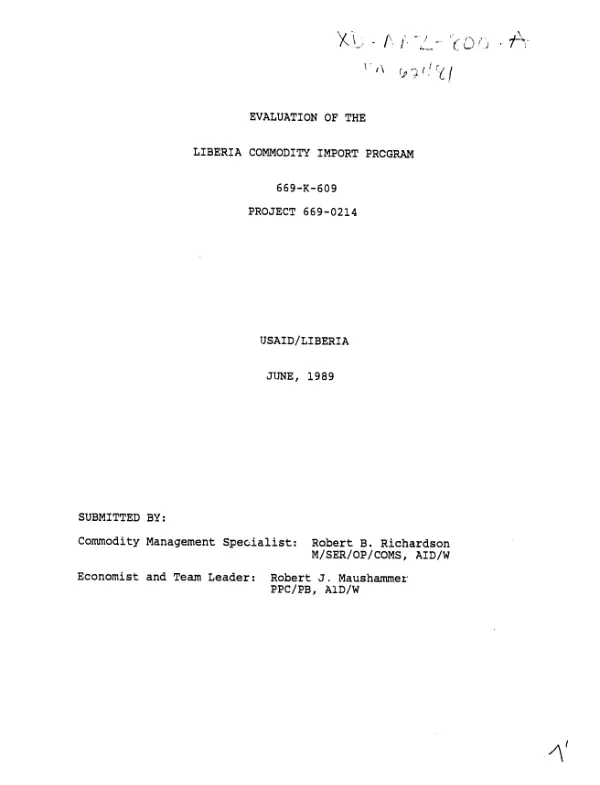
Summarizes final evaluation (XD-AAZ-800-A) of a Commodity Import Program (CIP) to encourage policy reform and promote the private sector in Liberia.
1989
Sign in to readA free account is required to download.
Abstract
The evaluation covered the period FY87-6/89. The centerpiece of the CIP"s macroeconomic reform strategy, the provision of 17 operational experts to various Government of Liberia ministries, was terminated in late 1988, about 6 months after the first CIP disbursement. As a result, USAID/L reduced the CIP level to $5 million. Nonetheless, the program achieved several of its original goals, including providing effective support to the private sector, reducing shortages of foreign exchange, and helping restore the private sector"s confidence in the economy. In terms of macroeconomic effects, the program had a positive impact on production, the public sector revenue base, employment (somewhat), and price stability. In microeconomic terms, the program contributed to more competitive markets among local producers and between local manufactures and imported finished goods. About three-fifths of the imports approved for financing under the CIP probably would not have occurred in the absence of the program. U.S. exports were especially favored by the program, and all commodity sourcing was from the United States. Windfall profits accruing to the imports were small. The program was effectively managed and appropriately administered. Public sector participation was the weakest program component, for two reasons: (1) one of the six public sector institutions approved for participation was slow in providing the local currency required to open its letters of credit and (2) program funds were used by the public sector for purposes not directly related to development (e.g., to provide buses to the University of Liberia and spare parts for garbage trucks for the city of Monrovia). An action decision is to design a new CIP limited to the private sector, with an increase in resources for agricultural production and smaller businesses.
Related documents