ACADEMY FOR EDUCATIONAL DEVELOPMENT, INC. (AED)
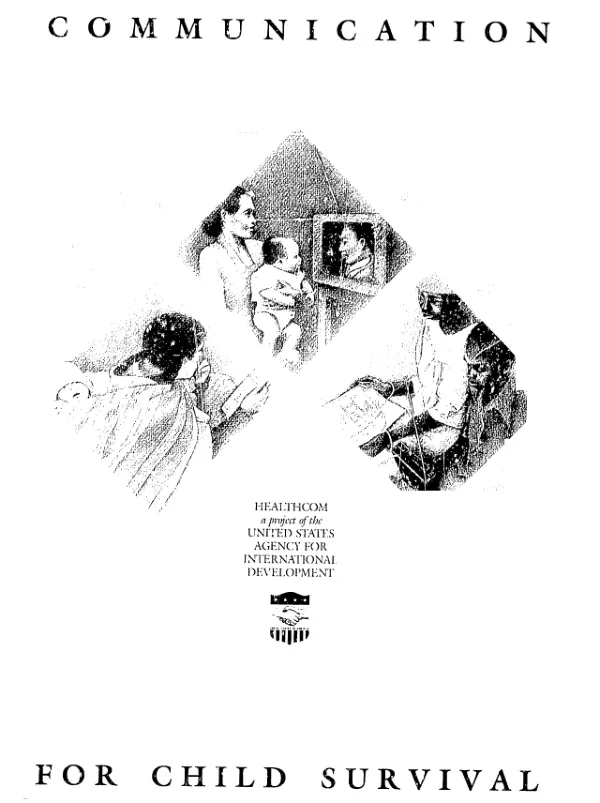
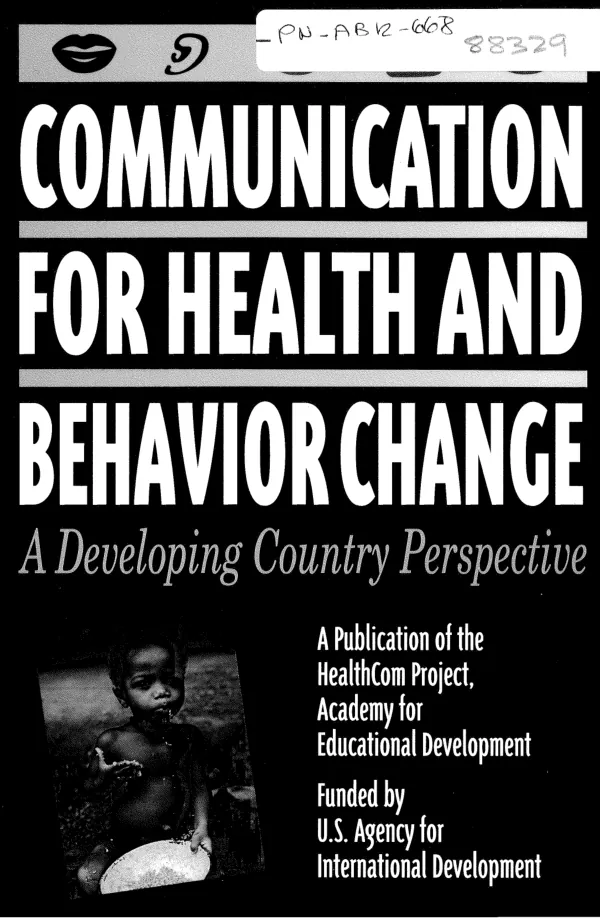
Communication for health and behavior change : a developing country perspective
This book explains behavioral analysis and its application to child survival communication methodology in a way that allows readers to apply general principles to their own work in other health areas or with different target audiences.
Graeff, Judith A.; Elder, John P. +1 more · 1970
Sign in to readA free account is required to download.
Abstract
Chapter 1 reviews high-priority child health issues in developing countries and briefly describes the basic health technologies and communication methodology currently used to respond to those issues. It includes a description of how internationally coordinated work is conducted in child survival, and how the experience of the HealthCom Project formed the basis of the book. Chapter 2 briefly describes some relevant psychological theories as prelude to describing applied behavior analysis and critical behavioral terms and concepts. Chapters 3-7 describe the steps of health communication methodology -- assess, plan, train, monitor, and maintain -- and present the applicable behavioral concepts and tools at each step. Each chapter gives examples of the actual use of these concepts and tools in child survival communication activities. Chapter 3, on behavioral assessment, shows readers how to use behavioral principles to describe the ideal behavior and to determine what behaviors the target audience is already performing, what competing behaviors it might be performing, and what events (antecedents and consequences) influence those behaviors; readers also learn how to employ behavioral observation in the assessment process. Chapter 4, on planning for behavior change, shows how to use the information gained in assessment to select ideal behaviors which are feasible for the target audience, have the most potential impact on health, and approximate existing behaviors. Chapter 5, on skills training, presents five steps necessary for the trainees" mastery of target behaviors: instructions, demonstration, practice, feedback, and homework with feedback. The use of direct behavioral observation is stressed, as well as the importance of constructive and rewarding feedback to trainees; training sessions themselves, it is shown, can function as positive consequences to participants in health communication programs and become a key component to sustaining long-term behavior change. Chapter 6, on monitoring, stresses two points. First, progress toward learning and adopting target behaviors can and should be measured throughout the life of a program via direct observation, the use of clinical and other records, and self-monitoring. Second, monitoring data can function as a positive consequence to participants; e.g., if presented as feedback in a constructive and simple (e.g., visual) form, they can strengthen the very behaviors being measured. Chapter 7 discusses how to use behavioral principles to enlist the support of the target audience"s community, social, and political environment without which it is unlikely that individual health practices -- especially preventive ones -- will be maintained over the long term. Finally, Chapter 8 summarizes lessons learned from the application of behavior analysis in health communication for child survival, and suggests further directions for those working for health behavior change in developing countries. It also discusses implications for work in industrialized nations as the world grows more and more into a global community. A "Communicator"s Toolbox" resource at the end of the book includes many of the instruments -- checklists, forms, scales, etc. -- described in the text. These are to be viewed as examples to be adapted to specific health or cultural contexts. (Author abstract, modified)