USAID. MISSION TO GUATEMALA
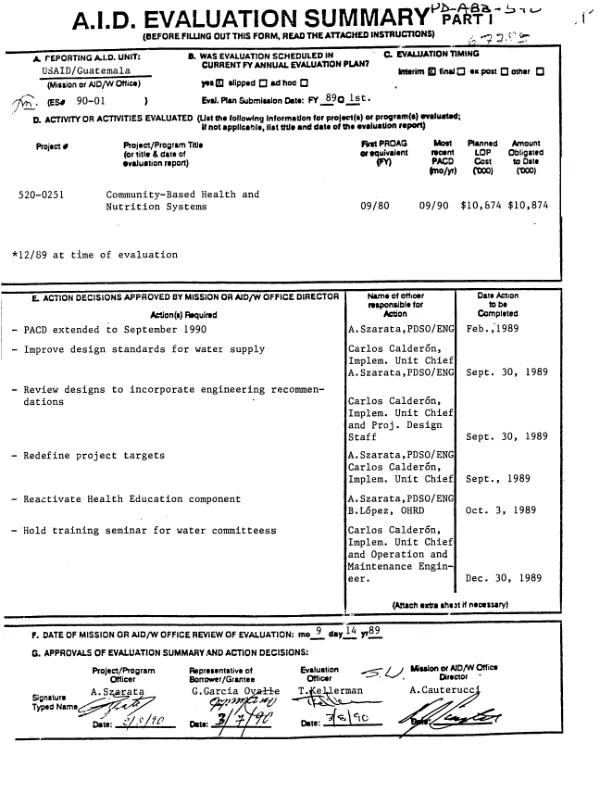
Community-based health and nutrition systems
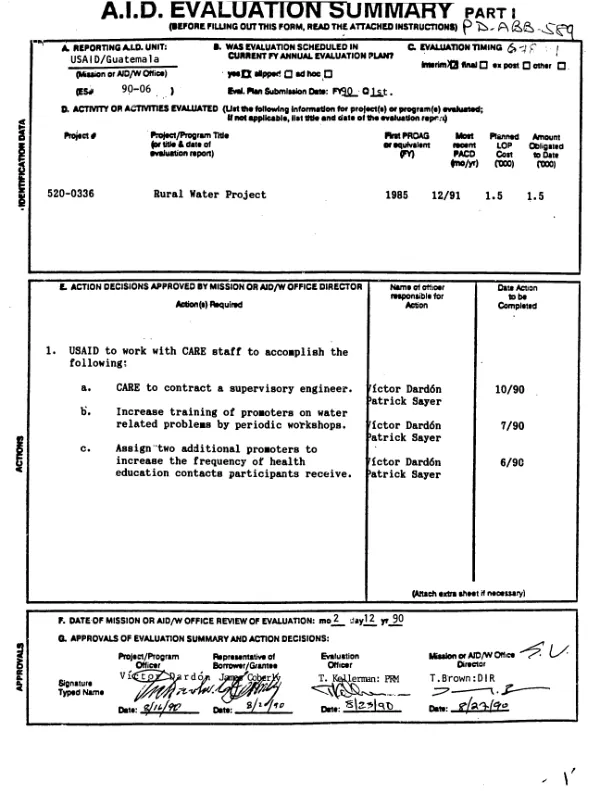
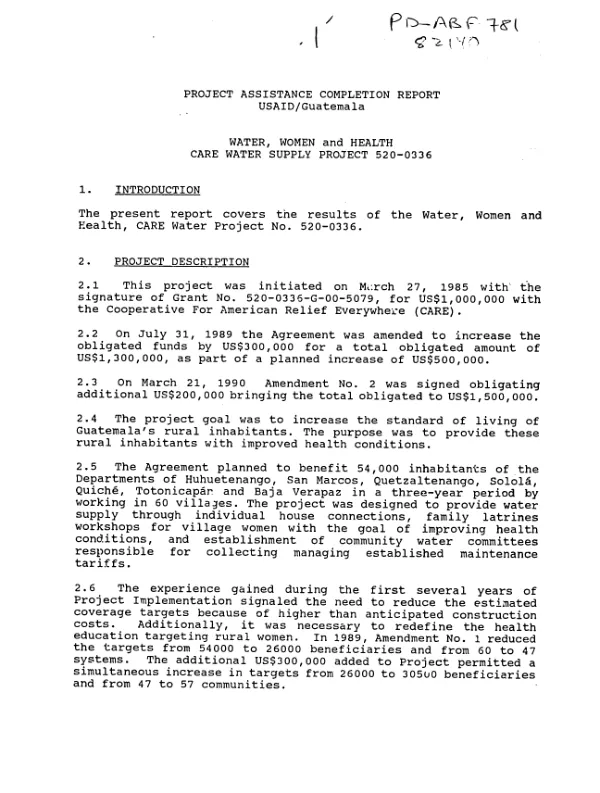
Summarizes interim evaluation (PN-ABC-184) of a project to establish community-based potable water, sanitation, and health education services in six western highland departments of Guatemala.
1990
Sign in to readA free account is required to download.
Abstract
The evaluation covered the period 9/80-2/89. The project continues to consist primarily in designing and constructing water supply systems and latrines. As of 10/88, 168 community water supply systems, the vast majority of them with individual household connections, had been built. The quality of construction has generally been good, though some deficiencies in system design and supervision need correction, and more emphasis should be placed on training the community in system operation and maintenance. A total of 16,000 pit latrines have also been built. Interviews with household users and water committees indicate widespread appreciation of the new facilities. A large majority perceive the water systems as greatly beneficial in terms of convenience for mothers and for child health and hygiene. All users agreed that service interruption was infrequent and that failures such as ruptured pipes were soon repaired. There was no evidence of poor water quality. Some 93% of families pay for their water, and 75% think the price is acceptable. Most (83%) of the latrines are in use and responses were nearly unanimously favorable regarding the benefit of latrines for cleanliness and health. Health education activities have been limited. A KAP survey was not performed and, although several seminars were held in late 1987, these were aimed at upper level personnel instead of field workers or community members. In 1988 a one-page educational calendar was produced, but it was of poor quality and no plans were developed for its distribution or use. The Mission"s Office of Human Resources Development should assume responsibility for this component and develop a participatory strategy to meet hygiene-related goals. A follow-on project is recommended.