USAID. MISSION TO GUATEMALA
Rural water project
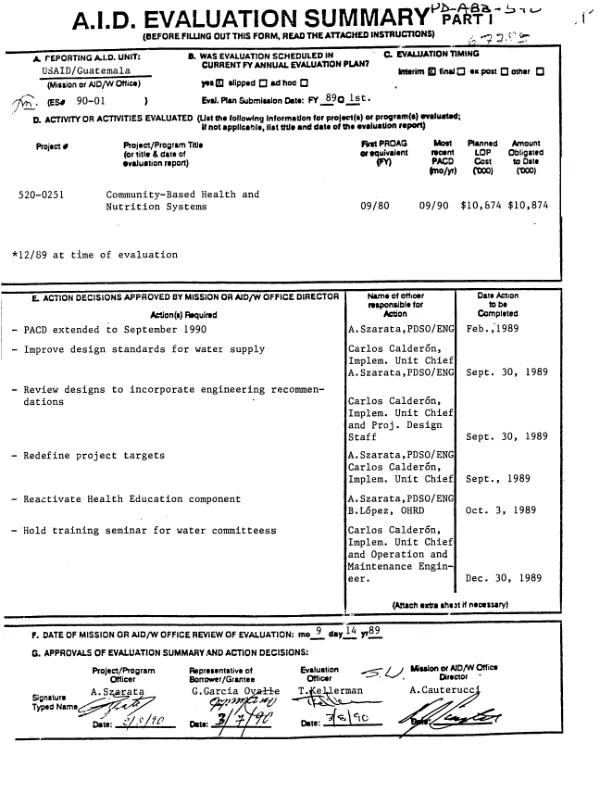
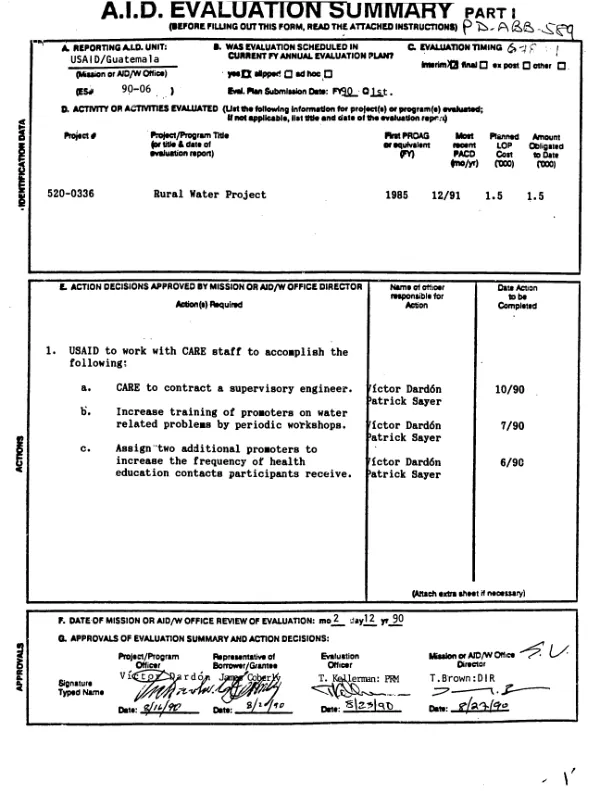
Summarizes mid-term evaluation (XD-ABB-589-A) of a project to provide potable water systems and latrines to 47 (revised target) rural communities in Guatemala.
1990
Sign in to readA free account is required to download.
Abstract
The evaluation covered the period FY85-1/90. CARE, the implementing agency, faced serious managerial problems during the project"s initial stages. CARE"s original counterpart, Desarrollo de la Comunidad, broke its agreement to implement project activities, and lengthy negotiations were required to secure another counterpart, Unidad Ejecutora del Programa de Acueductos Rurales (UNEPAR), a Government of Guatemala institution. Although this resulted in delays in the latrine construction and health education components, since late 1987 the project has been working regularly and has now achieved 100% of the revised targets of 47 water systems and 91.2% of beneficiaries (4,667 house connections and latrines. All objectives should be achieved by the extended PACD of 12/91. The project systems are spring-fed, gravity systems with a tap in the yard and a dry pit latrine at each participating home. Actual costs during 1989 are in the range of U.S.$200-500 per home. The systems are adequately built, although improvements -- in performance or cost control -- could be achieved through minor design changes. The major lesson learned is that community water committees should be involved much more in problem-solving and decisionmaking. In addition, to guard against unplanned project extensions, it should be anticipated at the design stage that all houses in a community, even those which are initially pessimistic, will eventually participate in the water system. Action decisions are to: (1) contract an engineer for construction supervision; (2) conduct periodic workshops for promoters on proper handling and use of drinking water and disposal of used water; and (3) assign two additional promoters to health education activities. (Abstract includes information from XD-ABB-589-A.)
Related documents