USAID DEC
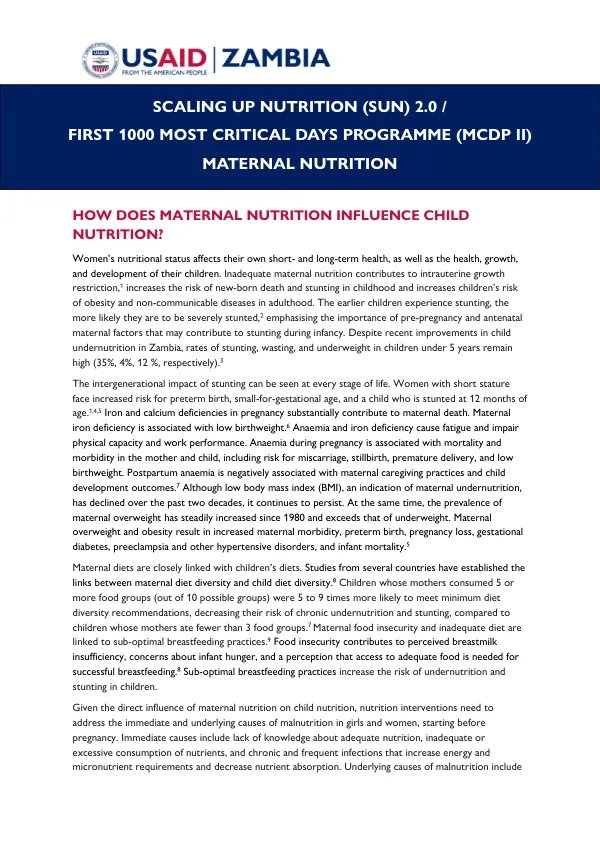
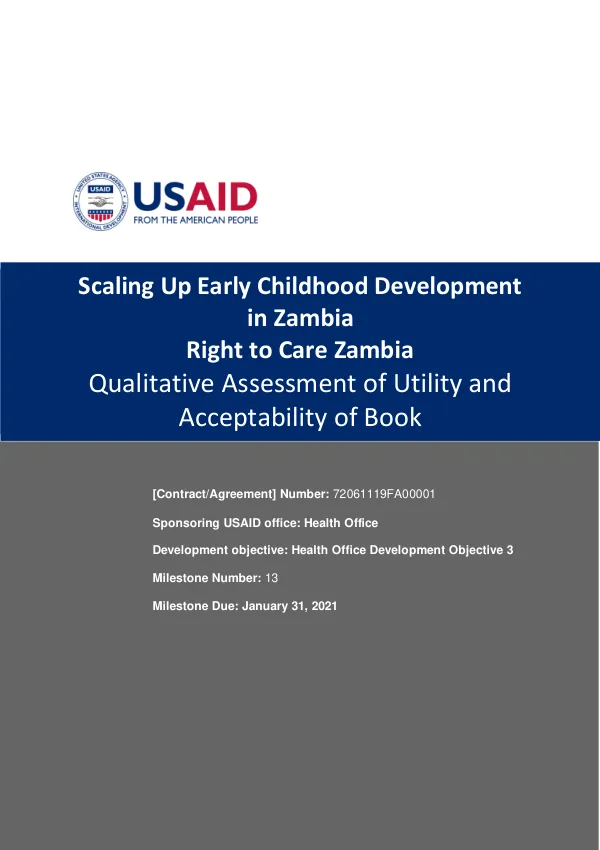
Community-centred approach for assessing social sustainability in mining regions: A case study of Chingola district, Zambia
Sign inUSAID DEC
Community-centred approach for assessing social sustainability in mining regions: A case study of Chingola district, Zambia
The Chingola district in Zambia is a mining region with significant social sustainability challenges.
2023 · 1 pages
Sign in to readA free account is required to download.
Abstract
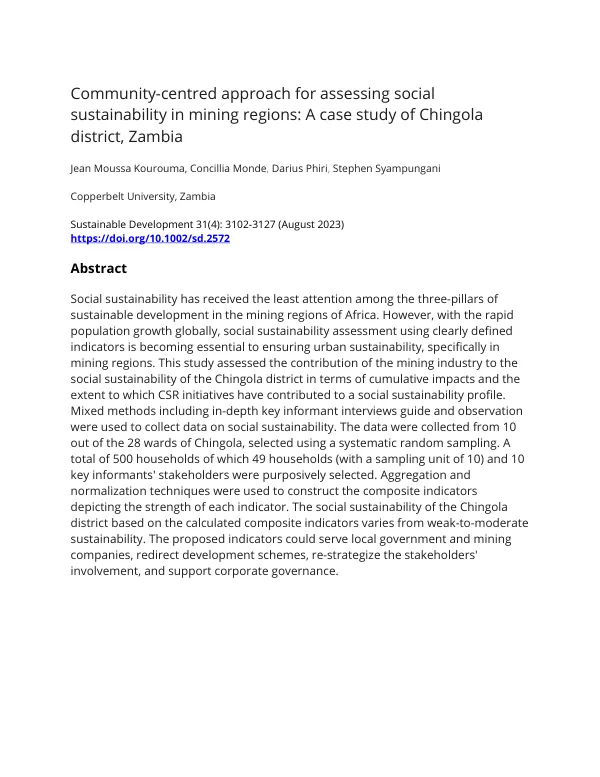
The district's population growth has led to increased pressure on local resources, resulting in a need for a comprehensive social sustainability assessment. This study aimed to evaluate the contribution of the mining industry to the social sustainability of the Chingola district, focusing on cumulative impacts and the effectiveness of corporate social responsibility (CSR) initiatives. A mixed-methods approach was employed to collect data on social sustainability, involving in-depth key informant interviews, observation, and surveys. The data were collected from 10 wards out of 28 in the Chingola district, using a systematic random sampling method. A total of 500 households were surveyed, with 49 households and 10 key informant stakeholders purposively selected for further analysis. The data were analyzed using aggregation and normalization techniques to construct composite indicators depicting the strength of each indicator. The results of the study indicate that the social sustainability of the Chingola district varies from weak to moderate, based on the calculated composite indicators. The study identified several key areas of concern, including limited access to education and healthcare services, inadequate housing, and poor waste management practices. The study also found that CSR initiatives have contributed to a social sustainability profile, but their effectiveness is limited by a lack of coordination and collaboration among stakeholders. The proposed indicators developed in this study could serve as a framework for local government and mining companies to redirect development schemes and re-strategize stakeholder involvement. The indicators could also support corporate governance by providing a basis for evaluating the social sustainability performance of mining companies. The study's findings have implications for policy and practice in the mining industry, highlighting the need for a more comprehensive and integrated approach to social sustainability assessment and management. The study's methodology and findings provide a valuable contribution to the field of social sustainability assessment in mining regions. The use of mixed-methods and composite indicators offers a robust approach to evaluating social sustainability, and the study's results highlight the importance of considering cumulative impacts and CSR initiatives in social sustainability assessments. The study's recommendations for redirecting development schemes and re-strategizing stakeholder involvement offer a practical framework for improving social sustainability in mining regions.
Related documents