USAID DEC
Community Mobile Library Project in Rwanda
The Community Mobile Library Project aims to establish a network of community libraries across Rwanda, with the goal of promoting reading for enjoyment among adults and children.
2 pages
Sign in to readA free account is required to download.
Abstract
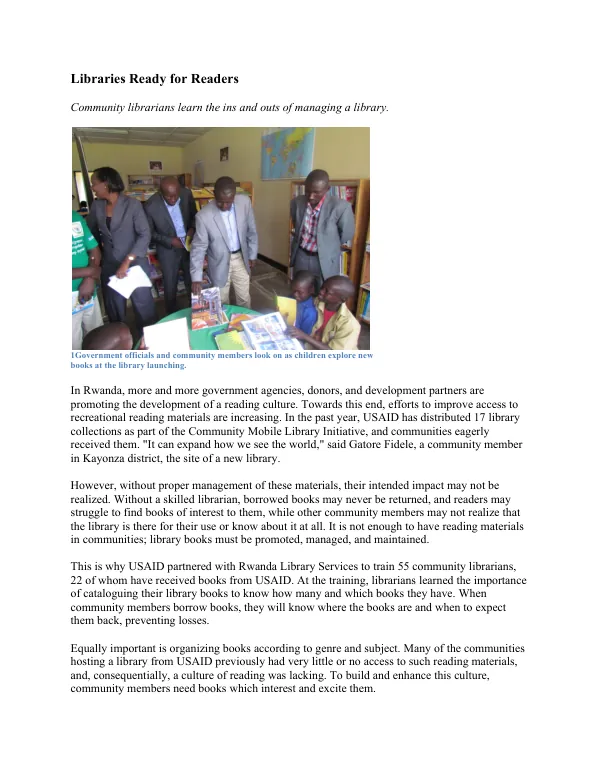
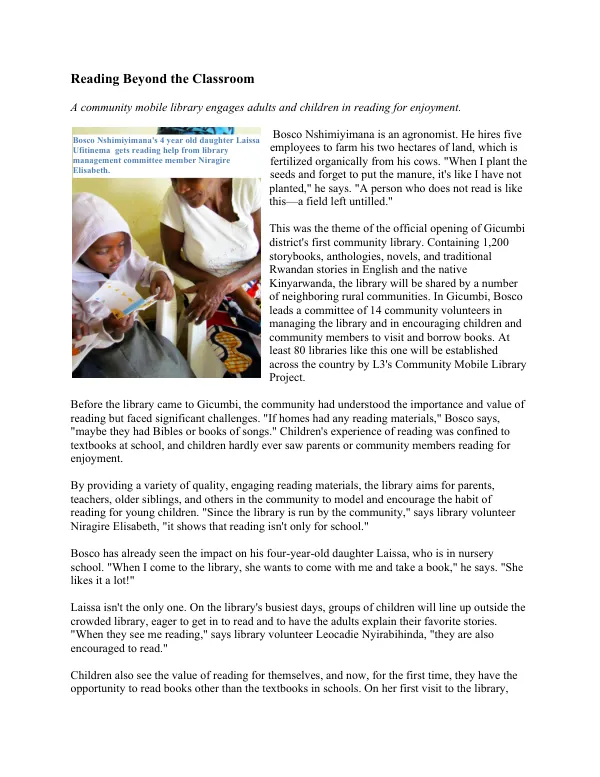
The project is led by L3, a community-based organization, which plans to establish at least 80 libraries across the country. The libraries will be managed by local committees of community volunteers, who will be responsible for maintaining the libraries and encouraging community members to visit and borrow books. The first community library in Gicumbi district was officially opened with a collection of 1,200 storybooks, anthologies, novels, and traditional Rwandan stories in English and Kinyarwanda. The library is shared by several neighboring rural communities, and its opening has been met with enthusiasm from local residents. Community members, including parents and children, are encouraged to visit the library and borrow books, with the aim of promoting a culture of reading for enjoyment. The library's collection includes a wide range of materials, including fiction and non-fiction books, as well as traditional Rwandan stories. The library's management committee, led by Bosco Nshimiyimana, an agronomist and community leader, is responsible for maintaining the library and promoting reading among community members. The committee consists of 14 community volunteers, who are committed to ensuring that the library is a valuable resource for the community. The library's impact is already being felt, with children and adults alike showing a renewed interest in reading. Bosco's four-year-old daughter, Laissa, is one example of the library's success, as she has developed a love of reading and now insists on accompanying her father to the library. Other children, such as primary 2 student Divine Uwimana, are also showing a keen interest in reading, with some even expressing a desire to read with their older siblings. The library's success is attributed to its community-based approach, which has encouraged community members to take ownership of the library and promote reading among their peers. The library's management committee is committed to ensuring that the library remains a valuable resource for the community, and its impact is likely to be felt for many years to come. As one library volunteer, Niragire Elisabeth, noted, "Since the library is run by the community, it shows that reading isn't only for school."