TIPPETTS-ABBETT-MCCARTHY-STRATTON (TAMS)
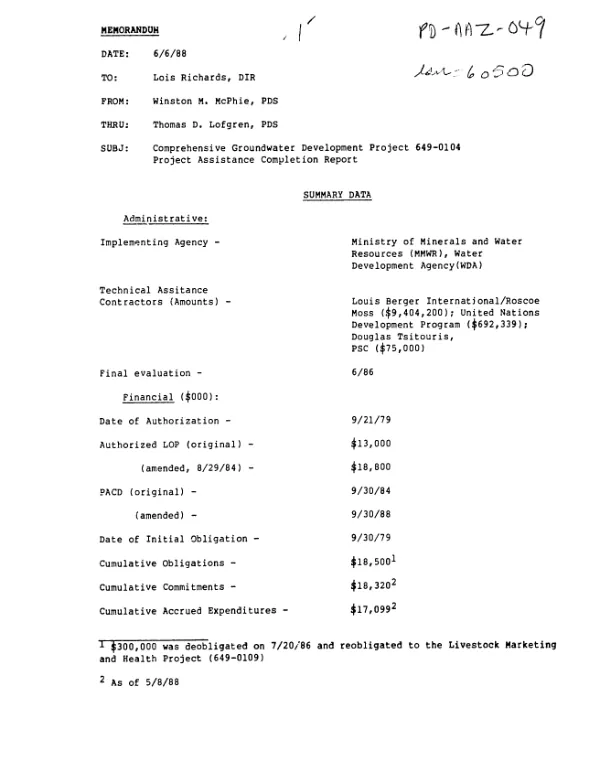
Comprehensive groundwater development project 1979-1986 : final evaluation
Presents external final evaluation of a 1979-86 project to establish an institutional capability in the Somali Water Development Agency (WDA) to plan and carry out ground and surface water development projects in rural areas.
Cremer, Allan C.; Turner, William M. · 1986
Sign in to readA free account is required to download.
Abstract
No methodology is indicated. Results were mixed in this project, in which USAID/S and WDA perceptions of what was needed seem to have diverged considerably. The Project Paper focused on upgrading WDA"s professional capabilities (although 130 WDA staff members were trained, few improvements were made in WDA"s institutional capacity) and on acquiring new equipment for providing water to two integrated agricultural development projects. WDA probably wanted a program of equipment rehabilitation, standardization, maintenance, and material support. WDA preferences were accepted in one key area, however - the acceptance of 8" casing and screen for all wells and the later selection of a highly sophisticated drilling rig ill suited to 8" casing. This mismatch, which was noted both by the contractors and by two evaluation teams, was a major factor in the unreasonably high cost of the wells. A program proposed by one of the contractors to rehabilitate wells using private contractors would have been far less costly. On the positive side, benefits to the 100,000 people in the communities where wells were completed were real and included increases in water quality and in access to water; freeing of time (especially women"s) for more productive work; reduced livestock losses; stabilization of agro-pastoral and sedentary populations, resulting in increased food production; and increased government ability to provide social services. Recent changes in the two top positions at WDA make it possible to be even more optimistic about the project"s continuing benefits. Nonetheless, several areas of concern remain. The ability of WDA"s regional offices to maintain and repair the wells is marginal at best. The project did not address this issue. Particularly worrisome is the increase in village populations resulting from the practice of building wells with large production capabilities. Well failure could result in severe dislocation. Also, the fact that no one seems to know what becomes of villagers" water fees is having a very corrosive effect on WDA-villager relationships. Other troublesome issues are whether WDA is able to maintain project-funded equipment and vehicles and whether it recognizes the need to collect socioeconomic, geohydrological, and equipment data systematically. Recommendations are provided for future groundwater projects in general and for follow-on work in the present project in particular.