USAID DEC
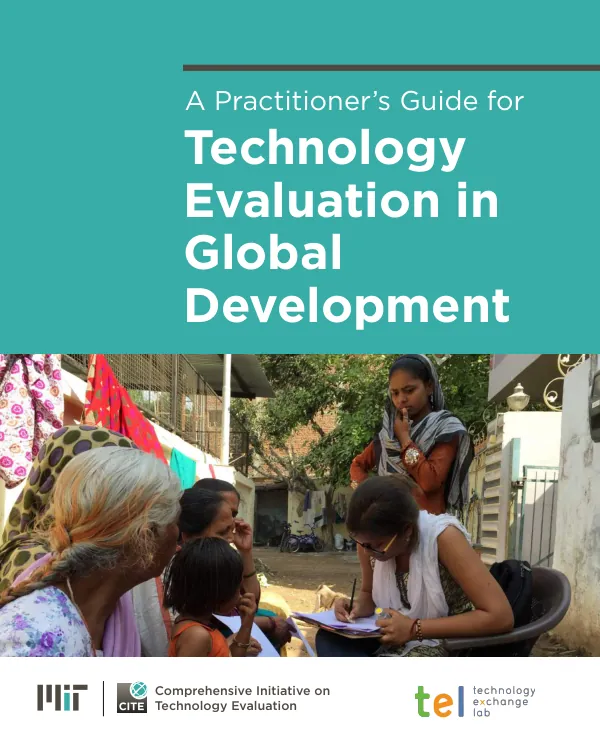
Comprehensive Initiative on Technology Evaluation: A Practitioner’s Guide for Technology Evaluation in Global Development
Sign inMASSACHUSETTS INSTITUTE OF TECHNOLOGY D-LAB
Comprehensive Initiative on Technology Evaluation: A Practitioner’s Guide for Technology Evaluation in Global Development
The Comprehensive Initiative on Technology Evaluation (CITE) is a program dedicated to developing methods for product evaluation in global development.
43 pages
Sign in to readA free account is required to download.
Abstract
Led by an interdisciplinary team at the Massachusetts Institute of Technology (MIT), CITE draws upon diverse expertise to evaluate products' suitability, scalability, and sustainability. The program aims to develop a deep understanding of what makes products successful in emerging markets. CITE is dedicated to bringing communities out of poverty by driving the adoption of innovative, cost-effective, and sustainable solutions that improve the lives of the least economically advantaged members of society. The Technology Exchange Lab (TEL) hosts a crowdsourced database of over 650 innovations to connect practical solutions to the people who need them most. TEL works with international non-governmental organizations (iNGOs) and community-based organizations to identify, evaluate, and implement locally appropriate solutions through co-designed development programs. The Practitioner's Guide for Technology Evaluation in Global Development is a resource designed for individual practitioners, iNGOs, development agencies, community-based organizations, and donors looking to implement innovative solutions. The guide provides a framework for conducting comparative product evaluations, which involve identifying challenges, assessing needs, selecting products, developing evaluation criteria, conducting a scoping study, collecting data and testing products, analyzing data, and reporting results. The guide emphasizes the importance of understanding the needs, priorities, and motivations of the audience and stakeholders involved in the evaluation process. It also highlights the need to consider the context-specific factors that drive product adoption and performance. By following the guide, practitioners and development organizations can efficiently gather data to drive evidence-based decisions on how to approach their challenge area, identify potential solutions, and comparatively evaluate them around relevant and context-specific criteria. The first step in conducting a comparative product evaluation is to have a well-articulated problem statement. This involves identifying the challenges faced by stakeholders and the opportunities for introducing new products or technologies to help solve these challenges. Practitioners may already have a full understanding of the challenge at hand, but for those new to a specific sector or geography, it is crucial to determine the context in which new products and technologies will be implemented. To identify challenges and assess needs, practitioners can conduct a baseline needs assessment by interviewing key informants and experts, along with potential beneficiaries. This can involve conducting a focus group, which is a group discussion with a moderator that allows participants to interact with each other and the moderator through various activities. The goal of a focus group is to gather qualitative and quantitative data to understand the needs and preferences of the target community. By following the Practitioner's Guide, practitioners and development organizations can leverage innovative products and technologies to achieve better development outcomes. The guide provides a flexible and adaptable methodology that can be tailored to the specific needs and context of each organization.
Related documents