USAID DEC
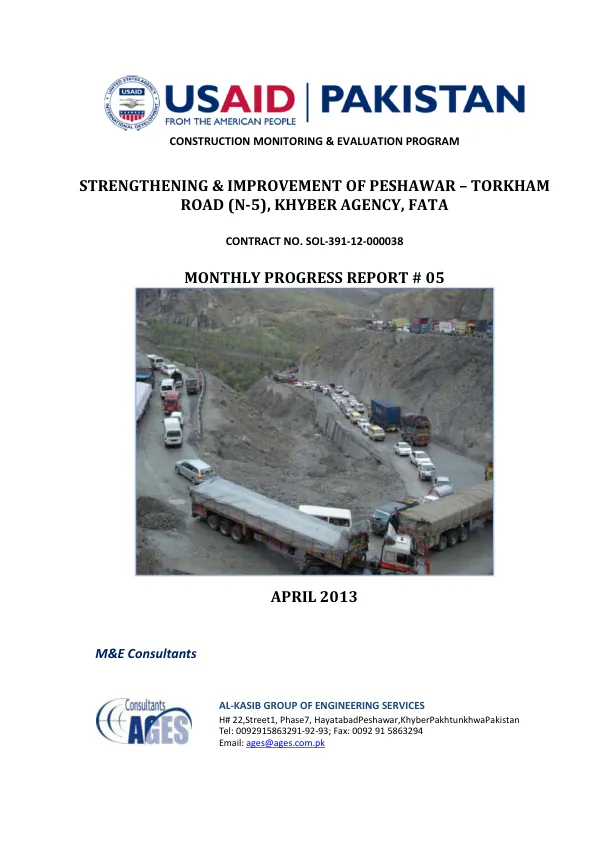
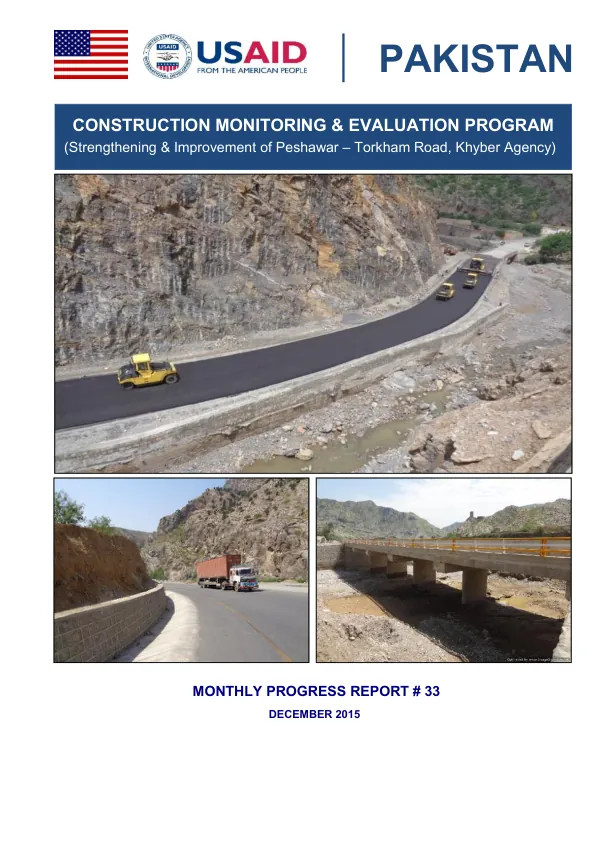
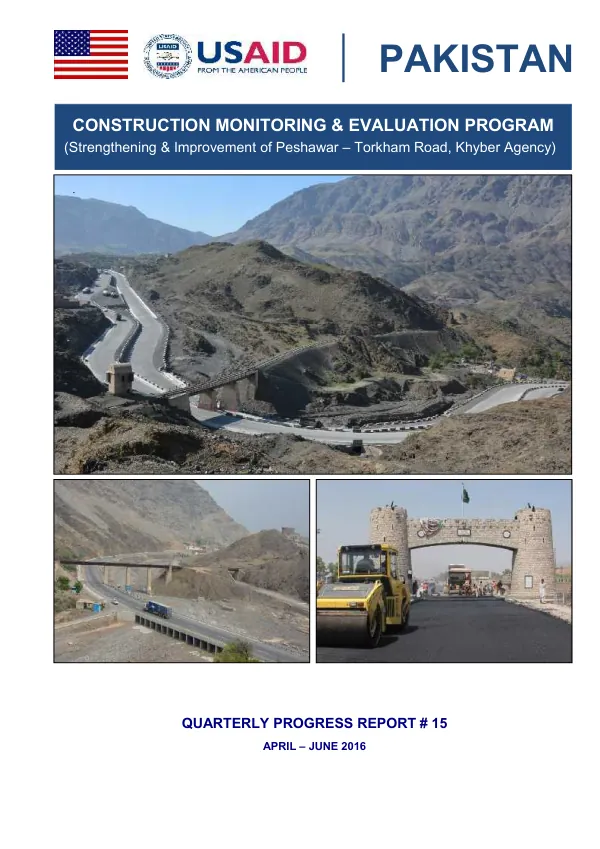
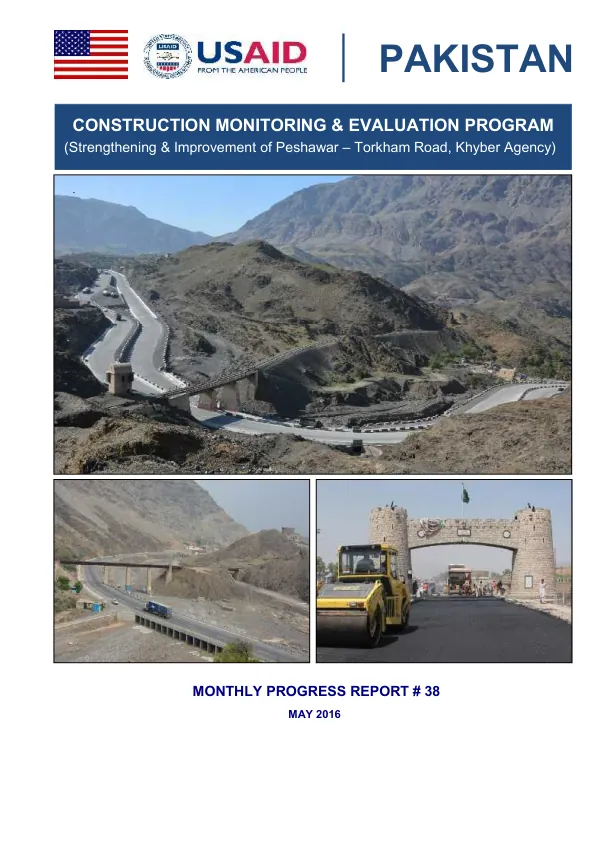
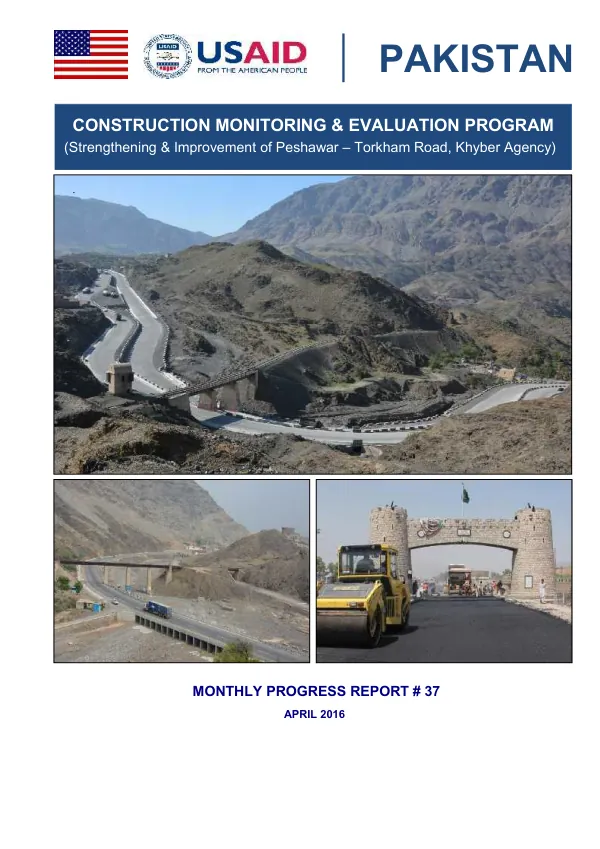
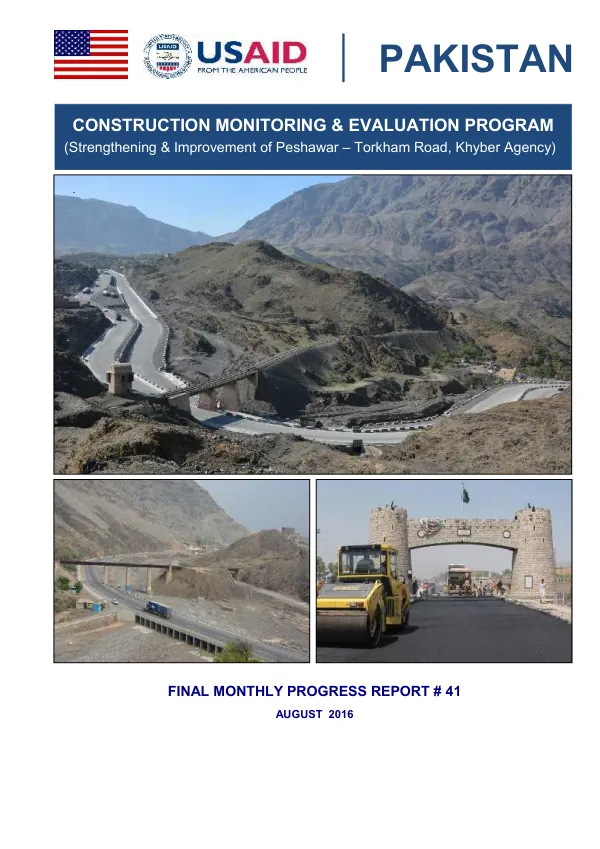
Construction Monitoring & Evaluation Program (Strengthening & Improvement of Peshawar – Torkham Road, Khyber Agency)
Sign inUSAID DEC
Construction Monitoring & Evaluation Program (Strengthening & Improvement of Peshawar – Torkham Road, Khyber Agency)
The Peshawar-Torkham Road (PTR) project is a vital infrastructure development initiative in Pakistan, connecting the country with Afghanistan at the Torkham border.
2016 · 22 pages
Sign in to readA free account is required to download.
Abstract
The project is part of the National Highway (N-5) and plays a crucial role in economic activities and providing logistical support to security agencies in Khyber Agency. The project was funded by the United States Agency for International Development (USAID) with an initial allocation of US$ 67 million, later increased to US$ 87 million. The project was implemented by the FATA Secretariat and executed through the Frontier Works Organization (FWO) under the FARA contracting mode of USAID. FWO was responsible for the design and construction of the project, conforming to the National Highway Authority's (NHA) specifications and standard engineering practices. NESPAK provided design and control services to FWO, while AGES Consultants was entrusted with the Construction Monitoring and Evaluation Services, including Quality Assurance and Environmental Monitoring of the project on behalf of USAID. The PTR project was divided into nine sections, each with its own scope of work and allocated amount. The project timeline was split into several Payment Installments (PILs), with each PIL having its own expiry date and allocated amount. The project completion date was set for September 30, 2016. The project was completed with a total amount of US$ 85,856,983, exceeding the initial allocation of US$ 87 million. The project's physical progress was monitored and evaluated by the Construction Monitoring and Evaluation Program (CMEP) office, which reported on the project's progress in the monthly progress reports. The CMEP office was responsible for ensuring that the project was completed in accordance with the agreed-upon specifications and standards. The office was headed by a Project Manager, who was assisted by a team of professionals, including a Manager Finance, Admin Officer, Reporting Specialist, Assistant Accountant, and drivers, cooks, and office boys. The project's financial progress was also closely monitored, with the CMEP office reporting on the accrued expenditure and milestones certified. The project's financial performance was satisfactory, with all milestones certified and the project completed within the allocated budget. The PTR project has significant implications for the economic development of Pakistan and the region. The project has improved the connectivity between Pakistan and Afghanistan, facilitating trade and commerce between the two countries. The project has also provided employment opportunities for local communities and has contributed to the economic growth of the region. The project's completion has also led to the transfer of USAID assets to the Pakistan Ministry of Communications, which will be responsible for the maintenance and upkeep of the project. The project's completion has also marked the end of the Construction Monitoring and Evaluation Program, which was responsible for ensuring that the project was completed in accordance with the agreed-upon specifications and standards. The PTR project is a testament to the successful collaboration between the Government of Pakistan, USAID, and other stakeholders in implementing a large-scale infrastructure development project. The project's completion has demonstrated the commitment of all stakeholders to improving the economic development of Pakistan and the region.
Related documents