INTERNATIONAL STATISTICAL INSTITUTE
Contraceptive practice
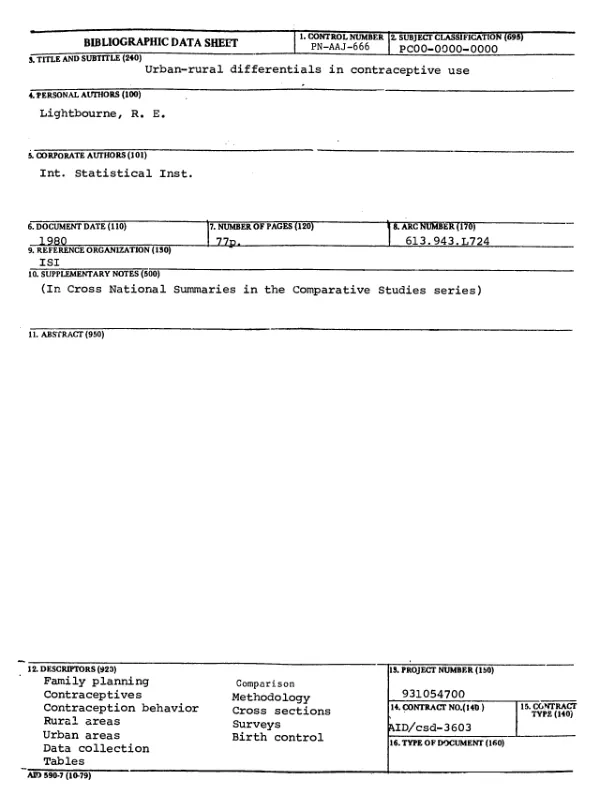
As part of a series of comparative international studies, this report describes similarities and differences in levels and patterns of contraceptive use in 19 countries.
Carrasco, Enrique · 1970
Sign in to readA free account is required to download.
Abstract
To make these comparisons, only contraceptive use, demographic, and control variables are used. Both ever-use (use at any time) and current use of contraceptives are assessed and a distinction is made between efficient (i.e., sterilization, IUD) and inefficient (i.e., rhythm, withdrawal) contraceptive methods. The demographic variables include the age of respondents and the number of living children, while control variables refer to four control groups of women: ever-married (includes "ever in union"); currently married; fecund (currently married women who are physiologically capable of having children, or who are pregnant, or who have been sterilized for contraceptive purposes); and exposed (all fecund women except those who are pregnant). Information for the tables and graphs was collected through questionnaires designed to ascertain knowledge and ever-use of contraceptive methods in Bangladesh, Fiji, Indonesia, Jordan, Republic of Korea, Malaysia, Nepal, Pakistan, Philippines, Sri Lanka, Thailand, Colombia, Costa Rica, Dominican Republic, Guyana, Jamaica, Mexico, Panama, and Peru. Generally speaking, the Asian and Pacific countries reveal lower percentages of ever-use than the Latin American and Caribbean countries, where contraceptive programs began earlier and are already highly developed in several countries. However, Asian and Pacific countries tend to be skipping the stage where inefficient methods predominate, as the ever-use of efficient methods is surprisingly higher. The pill is the most frequently reported method in all countries except Sri Lanka (rhythm), and the Philippines and Peru (rhythm and withdrawal). Tables and charts are provided for ever-use and current-use by type of method and individual methods. Eight references (1980) are listed along with the statistical tables.
Related documents