U.S. DEPT. OF AGRICULTURE. FOREST SERVICE. FOREST PRODUCTS LABORATORY
Corrugated medium from mixed tropical hardwood semichemical pulps
Describes the pilot-scale manufacture of corrugated paper from mixtures of tropical hardwoods.
Laundrie, James F.; Fahey, D. J. +1 more · 1970
Sign in to readA free account is required to download.
Abstract
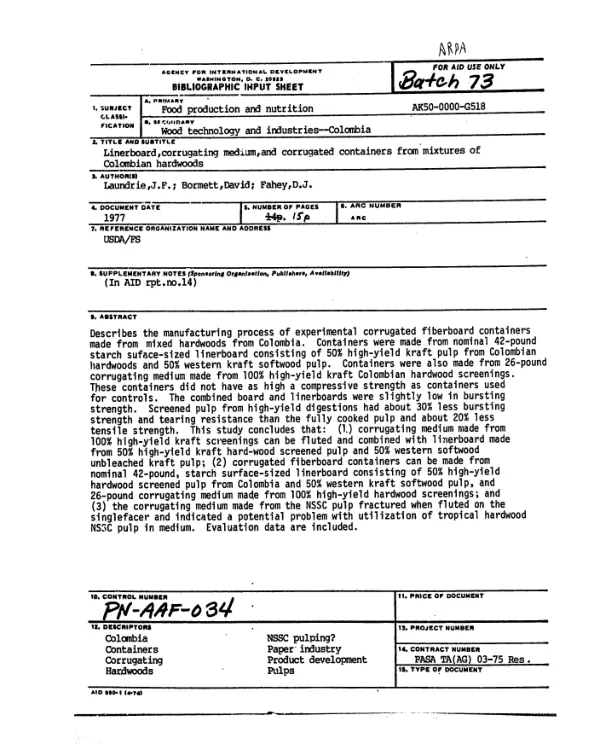
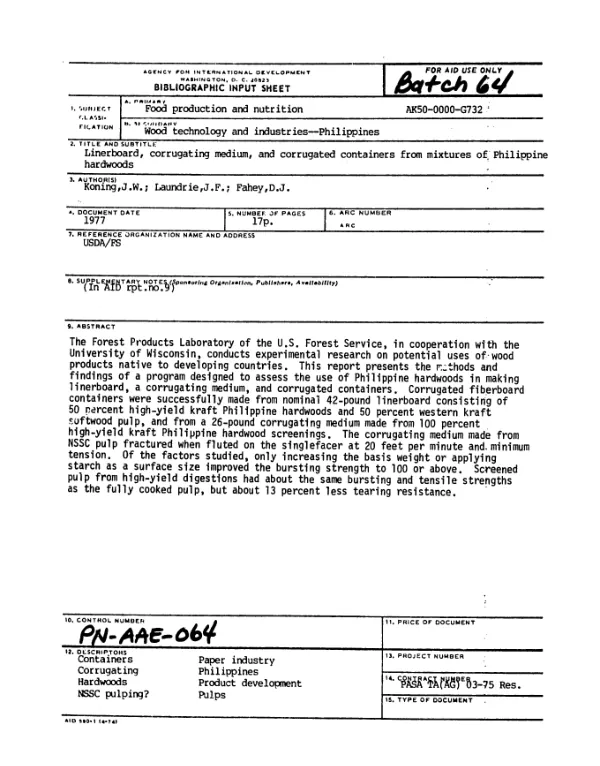
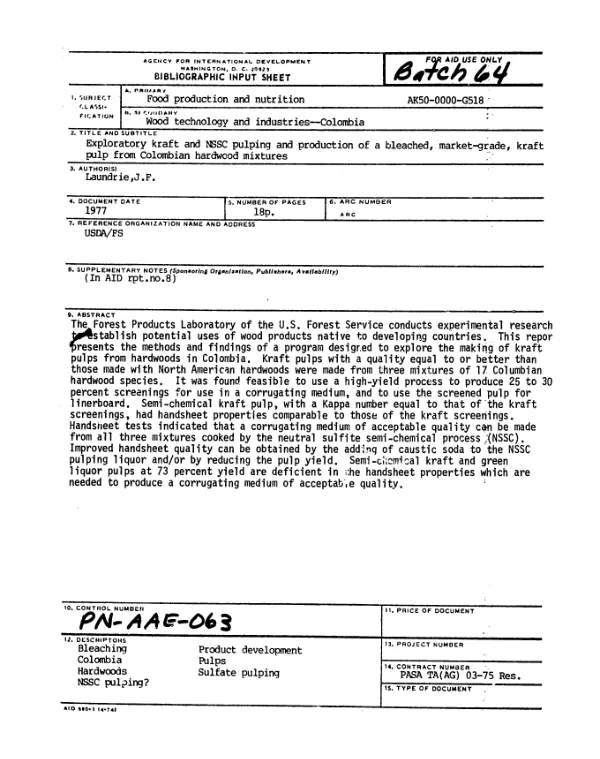
Semichemical pulps were made by the neutral sulfite, kraft, green liquor, and soda-carbonate processes. These pulps were converted into nominal 26-pound-per-1,000-square-foot corrugating medium. Most mediums failed to corrugate at less than 20 feet per minute with a minimum of sheet tension. Decreasing the neutral sulfite pulp yield, refining the pulp for better bonding, lowering the papermachine headbox consistency, and increasing the sulfidity of the kraft pulping liquor were all found to be ineffective in improving runability through the corrugator. Effective methods of overcoming the runability deficiency of tropical hardwood corrugating mediums were adding oleic acid to the papermachine furnish to act as a lubricant and passing the medium over polyethylene bars as it was being fed to the corrugator. This study concluded that: (1) corrugating mediums with good quality can be made from mixed tropical hardwood semichemical pulps using either the neutral sulfite, kraft, green liquor, or soda-carbonate pulping processes; (2) a severe problem exists in running these mediums through the corrugator which can be overcome by the addition of a lubricant; (3) further research is needed to identify the cause of poor runability performance of these mediums; and (4) further research is needed to develop better test methods for predicting the runability of corrugating mediums. Composition and evaluation data are included.