USAID DEC
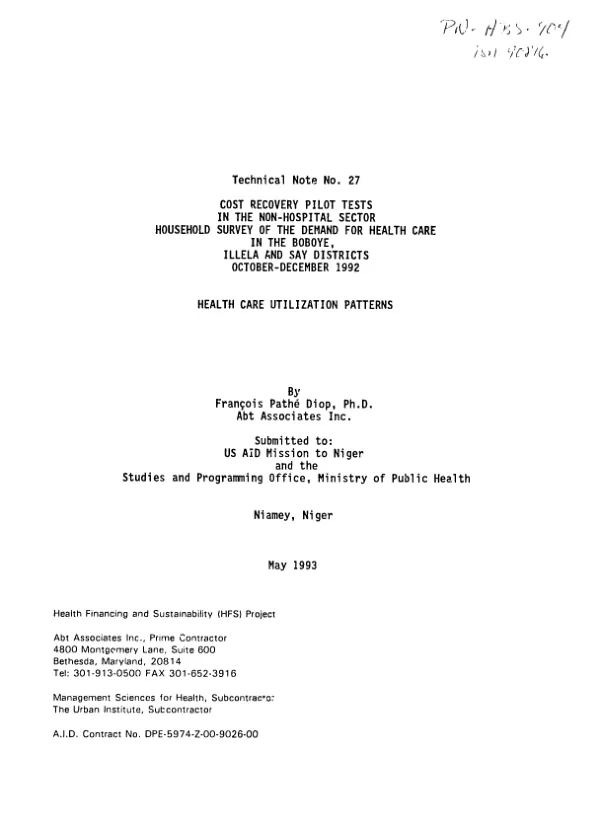
Cost recovery pilot tests in the non-hospital sector : household survey of the demand for health care in the Boboye, Illela and Say Districts, October-December 1992 -- health care utilization patterns
Sign inABT ASSOCIATES, INC.
Cost recovery pilot tests in the non-hospital sector : household survey of the demand for health care in the Boboye, Illela and Say Districts, October-December 1992 -- health care utilization patterns
The Ministry of Public Health of Niger has been implementing cost recovery pilot tests within the non-hospital sector since April 1992.
Diop, Francois Pathe · 1993
Sign in to readA free account is required to download.
Abstract
Through applied research activities, two cost recovery systems for non-hospital services are being tested. This report contains the initial results of the baseline survey conducted between October and December 1992 in the framework of the cost recovery pilot tests. It describes the methodology used for the baseline survey and the types of demand for health care in the three districts of Boboye, Say, and Illela. Some 600 households were surveyed in each district. The information obtained on what 2,800 sick persons did to get over their illness constitutes the basis for the analysis contained in this report. Analysis of types of demand for health care reveals that in the period prior to the start of cost recovery and before the improvement in the availability of medicine in public health facilities, the inhabitants of the Say, Boboye, and Illela districts mainly relied on household remedies to get over their illness at home. The informal market, represented largely by street vendors, has become the main source of medicine for the poorest households in rural areas. The frequency with which health care is administered at home and the large sums spent on it suggest that poor households in the three districts of Boboye, Illela, and Say devote a large share of income to health. The little use made of public health facilities suggests that people have lost confidence in non-hospital health centers. Given the lack of organized private sector health care in the rural areas where 80% of the population live, rehabilitation of public health facilities in the non-hospital sector is a prerequisite for any effort to improve the health of the majority of the people of Niger. (Author abstract)
Related documents