USAID DEC
Coverage, compliance, acceptability and feasibility of a program to prevent pre-eclampsia and eclampsia through calcium supplementation for pregnant women: an operations research study in one district of Nepal
Sign inJOHNS HOPKINS UNIVERSITY BLOOMBERG SCHOOL OF PUBLIC HEALTH/INFO PROJECT
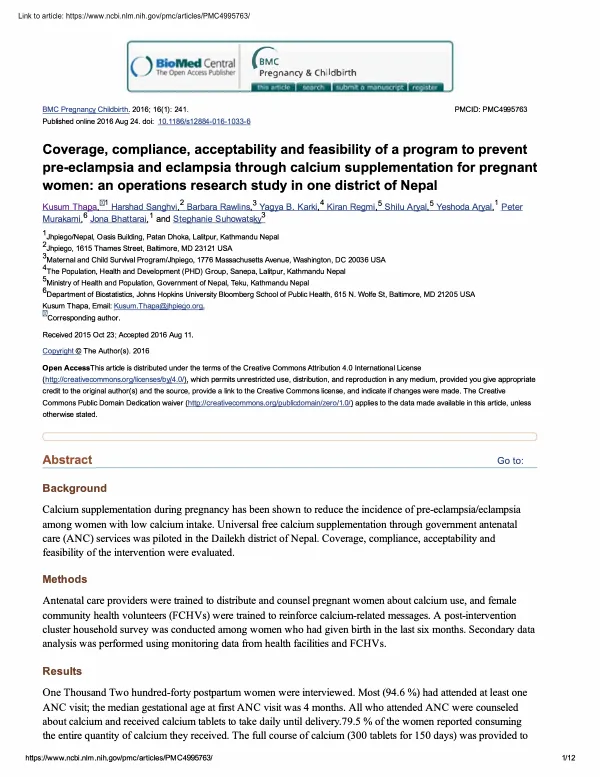
Coverage, compliance, acceptability and feasibility of a program to prevent pre-eclampsia and eclampsia through calcium supplementation for pregnant women: an operations research study in one district of Nepal
Calcium supplementation during pregnancy has been shown to reduce the incidence of pre-eclampsia/eclampsia among women with low calcium intake.
2016 · 12 pages
Sign in to readA free account is required to download.
Abstract
Universal free calcium supplementation through government antenatal care services was piloted in the Dailekh district of Nepal. The intervention aimed to evaluate coverage, compliance, acceptability, and feasibility of the program. Antenatal care providers were trained to distribute and counsel pregnant women about calcium use, and female community health volunteers (FCHVs) were trained to reinforce calcium-related messages. A post-intervention cluster household survey was conducted among women who had given birth in the past six months. Secondary data analysis was performed using monitoring data from health facilities and FCHVs. The survey included 1,240 postpartum women. Most (94.6%) had attended at least one antenatal care visit, with a median gestational age of 4 months at the first visit. All women who attended antenatal care visits were counseled about calcium and received calcium tablets to take daily until delivery. A significant proportion (79.5%) of the women reported consuming the entire course of calcium they received. The full course of calcium, consisting of 300 tablets for 150 days, was provided to pregnant women. The program's acceptability and feasibility were evaluated through monitoring data from health facilities and FCHVs. The results of the study provide insights into the effectiveness of universal free calcium supplementation in reducing the incidence of pre-eclampsia/eclampsia among pregnant women in Nepal. The study's findings suggest that the program achieved high coverage and compliance rates among pregnant women in the Dailekh district. The majority of women attended antenatal care visits and received calcium supplementation, indicating a strong foundation for the program. The program's acceptability and feasibility were also evaluated through monitoring data from health facilities and FCHVs. The results of the study provide valuable information for policymakers and program managers seeking to implement similar interventions in other districts in Nepal. The study's findings highlight the importance of universal free calcium supplementation in reducing the incidence of pre-eclampsia/eclampsia among pregnant women in Nepal. The program's success can be replicated in other districts, with modifications to suit local needs and contexts. The study's methodology and results have implications for the implementation of similar programs in other low- and middle-income countries. The program's focus on universal free calcium supplementation, combined with counseling and reinforcement by FCHVs, demonstrates a promising approach to reducing the incidence of pre-eclampsia/eclampsia among pregnant women. The study's findings can inform the development of similar programs in other countries, with a focus on improving maternal and child health outcomes.
Related documents
Documents in this collection
 2021
2021USAID DEC
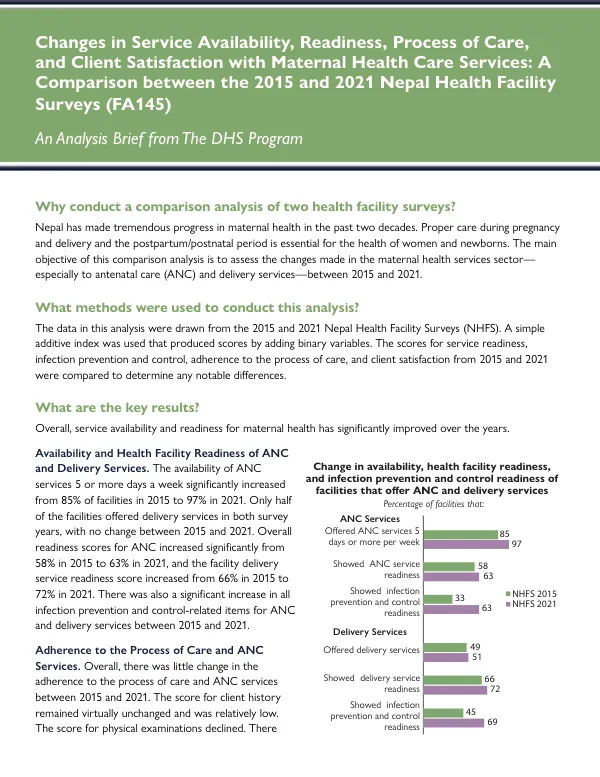
Changes in Service Availability, Readiness, Process of Care, and Client Satisfaction with Maternal Health Care Services: A Comparison between the 2015 and 2021 Nepal Health Facility Surveys (FA145) - Analysis Brief
Open record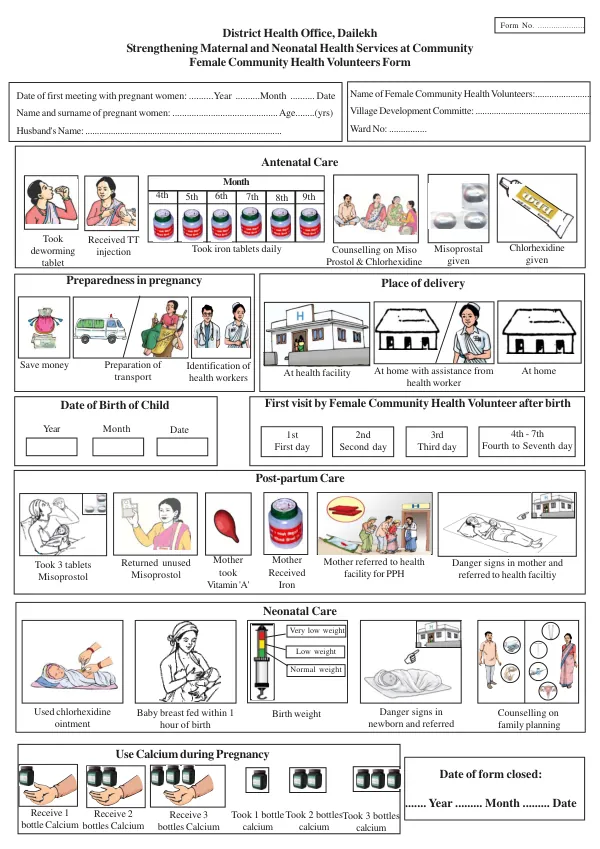
USAID DEC
Strengthening Maternal and Neonatal Health Services at Community Female Community Health Volunteers Form
Open record