LABAT-ANDERSON, INC.
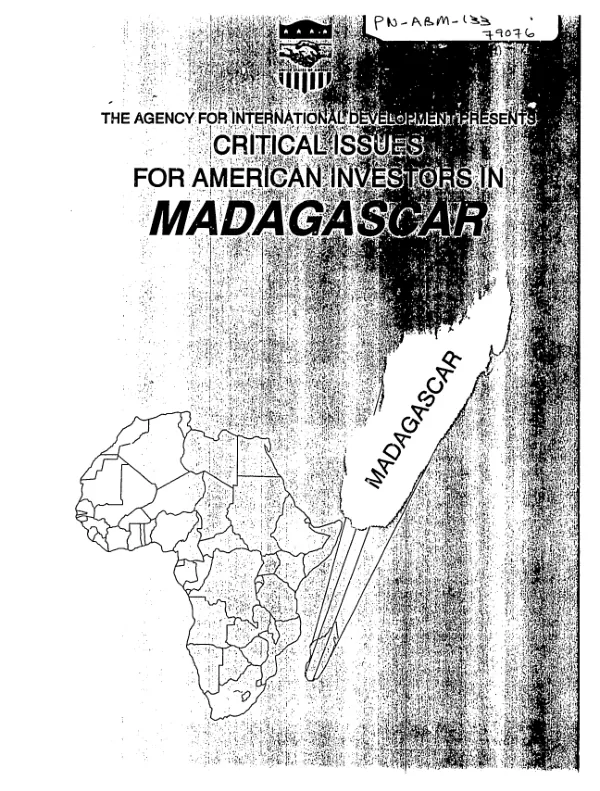
Critical issues for American investors in Madagascar
After a generation of pseudo-socialist policies which left it one of the world"s poorest countries, Madagascar began in the late 1980"s to promote economic liberalization and the earnest pursuit of foreign investment.
1991
Sign in to readA free account is required to download.
Abstract
This report appraises the investment environment in Madagascar for U.S. investors. On the negative side, continuing political instability is the major disincentive to investors; other negatives include an economy that is still basically agricultural and low-tech, an undeveloped private sector, primitive infrastructure, an enormous external debt, inefficient government, an unsteady financial sector, and, possibly, a cultural bias against rapid change ("muramu"), which may translate into a lack of entreprenurialism. Madagascar"s assets include abundant and untapped natural resources; the government"s genuine openness to investment in any sector; unrestricted access to European and U.S. markets; and a low-cost and productive labor force. Construction, mining, food processing, tourism, and pharmaceuticals are identified as the most promising sectors for investment. Practical constraints to conducting business in Madagascar include serious bureaucratic corruption and red tape, a shortage of trained indigenous managerial talent, a heavy emphasis on personal contacts, and domination of the culture by French language, business codes, and practices. Annexes summarize business and trade statutes relevant to foreign investors.
Related documents