LABAT-ANDERSON, INC.
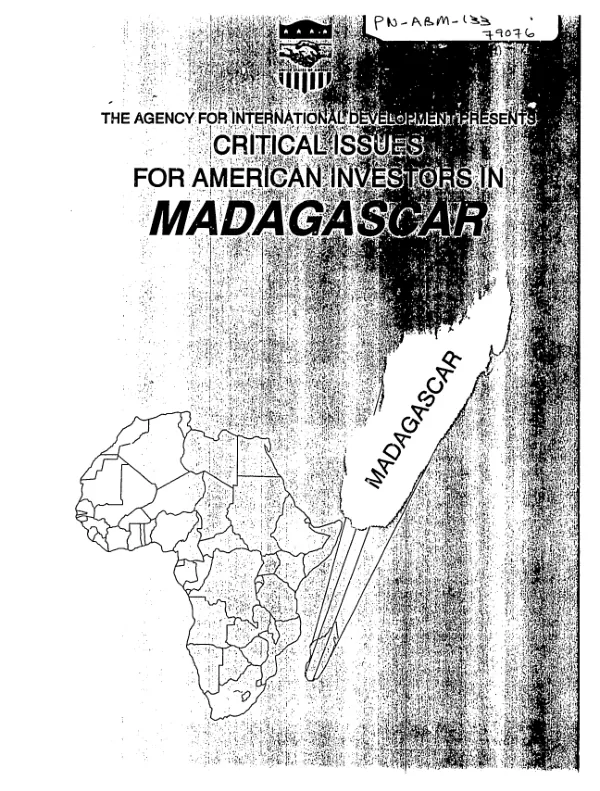
Critical issues for American investors in Zambia
Recent and ongoing reforms in Zambia may generate a favorable investment climate for U.S.
1992
Sign in to readA free account is required to download.
Abstract
investors, according to this report. Measures already in place which would be attractive to foreign investors include: (1) economic deregulation, including lifting of price controls on most items; (2) a lengthy list of corporate tax exemptions for investments in new or existing enterprises; (3) generous rules governing the remittance of earnings, dividends, royalties, etc.; (4) actions to improve the stability and convertibility of the Zambian currency; (5) open general licensing for cross-border trade; (6) a one-stop Investment Center to expedite approval of new investments; (7) simplified reporting and accounting for foreign-owned businesses; and (8) assurances against the nationalization of foreign-owned businesses. Other measures in process address improvement of the financial and investment services sectors -- including the creation of a stock market -- and privatization of major parastatals. Zambia also offers a number of inherent attractions, including rich natural resources, a large pool of inexpensive and literate, albeit untrained, English-speaking workers, an excellent geographic location, and privileged access to markets in Europe and Africa. On the negative side, Zambia presents several challenges to the conduct of business. (1) The depth and breadth of reforms introduce an element of uncertainty for investors. (2) A chronic shortage of foreign exchange makes it difficult to remit capital and profits, despite liberal investment laws. (3) Zambia"s infrastructure requires major rehabilitation. (4) Perhaps most importantly, Zambia"s enormous external debt burden presents a continuing drag on economic recovery and growth. Appendices describe business-related regulations, laws, and other points of interest.
Related documents