DEVELOPMENT ASSOCIATES, INC.
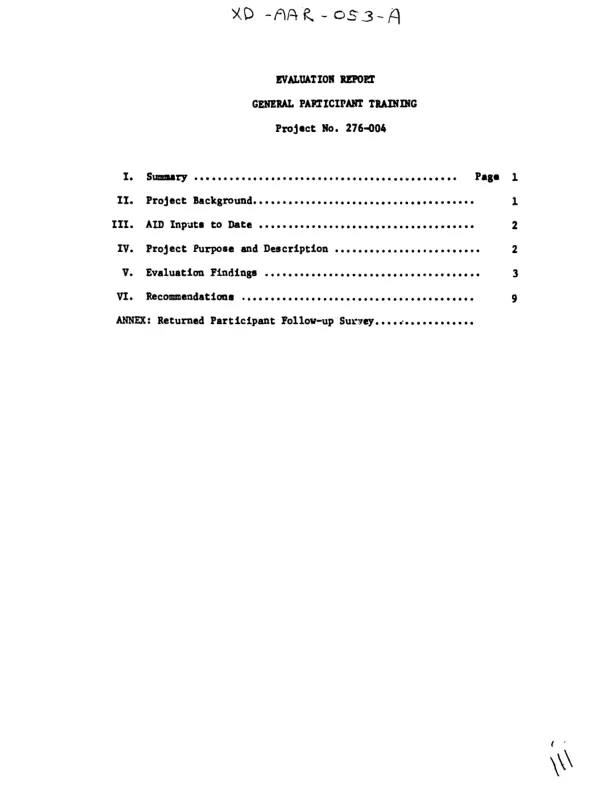
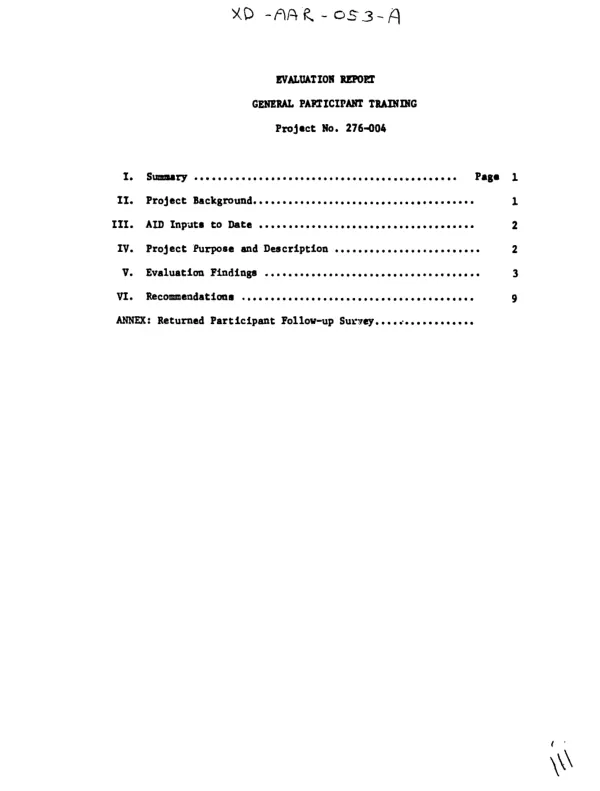
Cross - sectoral participant training evaluation
An evaluation of the Cross Sectoral Participant Training Program in Yemen was conducted for the USAID Mission in Yemen.
1988
Sign in to readA free account is required to download.

Abstract
Over 100 interviews were conducted, including a sample of 45 returned participants. The program is highly regarded by both Yemen Arab Republic Government (YARG) officials and participants. YARG officials expressed a preference and a need for more U.S. training, and rated it higher in quality than Soviet Bloc and other European or third country training. YARG officials interviewed were enthusiastic and cooperative, providing significant input to various evaluation issues such as selection, placement, monitoring, and follow-up, in addition to training needs assessment, policy, and planning. It is clear that YARG officials view U.S. participant training as an important component of human resource development. The participants also praised the USAID participant training program and had very positive experiences during their study at U.S. institutions. The majority of those sampled had taken BS and MS degrees in education, engineering, economics, and public administration, with the largest proportion in education and engineering. Other fields of study included city planning, social sciences, health, and the physical sciences. Short-term technical training covered a variety of professional fields, but emphasized management and administration. The participants were for the most part satisfied with their academic training, with over 85% expressing a positive experience. Moreover, most said they would recommend their training program to colleagues. Participants who studied in the United States not only learned academic and technical skills but also felt they experienced attitudinal and behavioral changes critical to their personal development as well as job performance. For example, the majority said that one of the most important skills they gained was the ability to analyze problems and propose practical solutions. A second major skill learned was the ability to plan and organize, as well as new attitudes toward thinking about and approaching problems. These abstract skills were seen by most participants to be as or more important in bringing about change than their academic and technical training. The question of U.S. training versus third country training is primarily one of cost, assuming that the quality is at least on a par with U.S. institutions. In cases where adequate training could be provided in Arabic-speaking countries, it would be more cost effective to place participants in Middle East programs (in Egypt and Jordan), particularly for selected agricultural and public administration training. Overall, the program is a good one which is meeting Yemen"s needs in various sectors, including education, agriculture, and in general participant programs such as the National Institute for Public Administration and the National Water and Sewerage Authority. However, there are critical areas in which improvement is needed, especially with regard to improved coordination and planning with YARG ministries to identify national priorities. Another key area to examine is the provision of English language training to participants through the Yemen American Language Institute. Also, YARG officials differ somewhat with USAID on the focus of academic training in terms of BS and graduate degrees. YARG wishes to emphasize developing a critical mass of trained manpower while much of USAID"s strategy is to support upper level graduate training to strengthen Sanaa University. The Mission is well aware of the issues and problems in participant training and is moving aggressively to resolve them. A major recommendation of the evaluation team is to centralize authority and responsibility by appointing a coordinator for participant training. The purpose of identifying a key person is to establish high level dialogue with YARG officials on training policy, strategy, planning and operations. Major functions of this position would be external coordination and planning, as well as internal planning and coordination within USAID and the various development sectors. USAID has already begun to move in this direction and is looking at options to develop a new major participant training policy and initiative. (Author abstract, modified)
Related documents
Documents in this collection
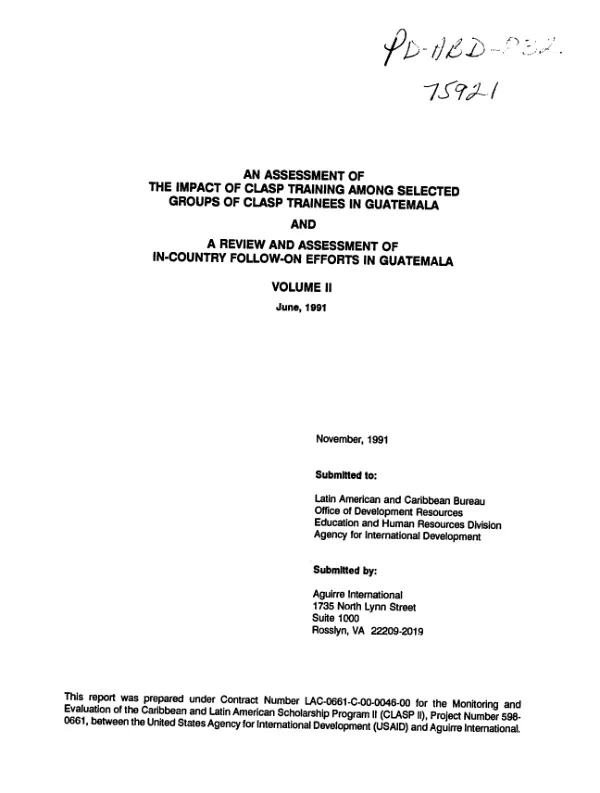
 1991
1991USAID DEC
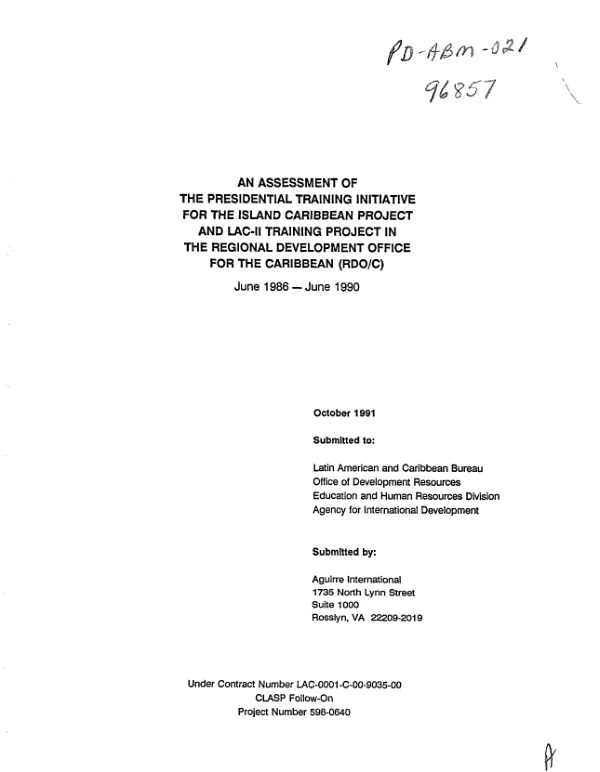
Assessment of the presidential training initiative for the Island Caribbean project and LAC-II training project in the Regional Development Office for the Caribbean (RDO/C), June 1986-June 1990
Open record 1991
1991USAID DEC