USAID. MISSION TO SYRIA
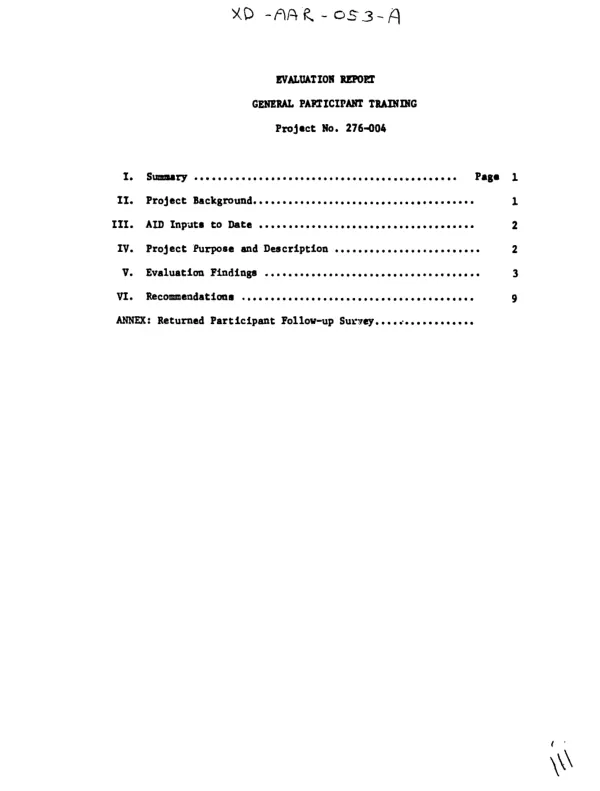
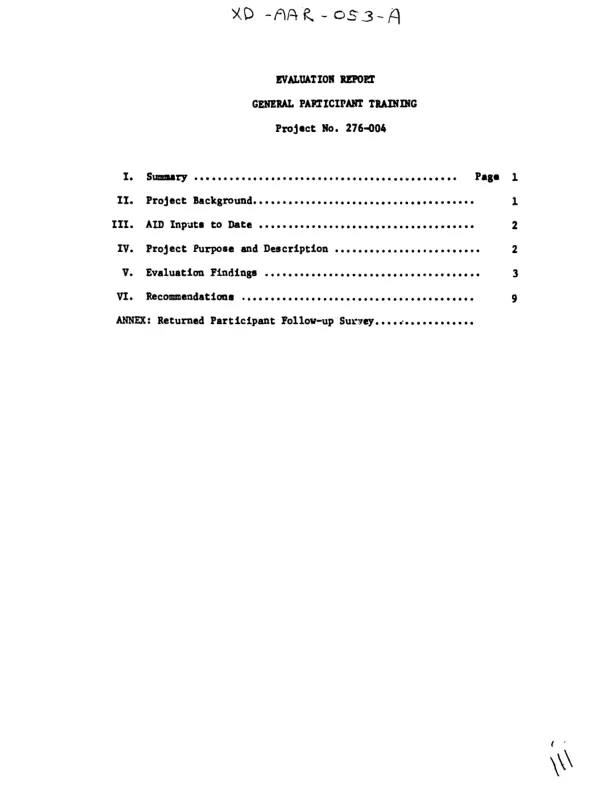
Evaluation report : general participant training
Evaluates project to provide specialized U.S.
Sign in to readA free account is required to download.
Abstract
training for key Syrian technicians and Government of Syria (GOS) officials and academic development-related training to faculty of Syrian universities. Special evaluation covers the period 2/75-9/79 and is based on review of USAID/S project records and of the 145 responses received from 270 questionnaires sent to returned participants. Of some 475 participants financed during FY75-79 (57 for postgraduate academic training and 418 for technical training), 325 have departed and 273 have returned. For the most part, participants' responses were favorable to the project and their criticisms constructive. Of the 145 questionnaire respondents, 102 indicated that the training program had been well arranged; 33% stated that they used their training regularly, while 45.5% said they used it occasionally. Language problems were the most frequently encountered difficulty. Gaps or failure in U.S. support services - particularly the availability of housing and transportation and the receipt of stipends - were a problem for some. An unexpected effect of the project has been increased good will between the United States and Syria; only 8 respondants cited any problems with Americans, and none of these problems were serious. The project has shown that: (1) host country governments can upgrade the technical/managerial capabilities of government personnel through relatively short-term overseas training; (2) unspecified broader benefits - in this case improved U.S.-Syrian relations - can result from participant training projects; and (3) priority development needs must be enforced in selecting participants to ensure that Syria will benefit upon their return. Recommended project changes are improved training, cultural orientation, and participant inputs from USAID/Syria and improved AID/W backstopping. Additionally, greater measures should be taken in the future to ensure that training addresses Syria's priority development needs, particularly health, education, and agriculture. (Near East abstract, modified)
Related documents