USAID
Decodable Readers (Standard 1 and 2)
The Decodable Readers program is a supplementary reading initiative for students in Standard 1 and 2.
2 pages
Sign in to readA free account is required to download.
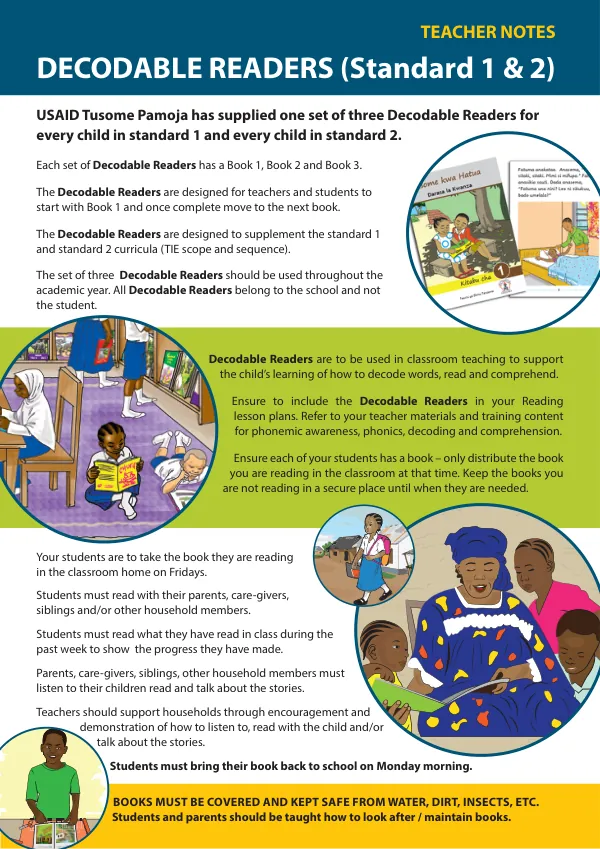
Abstract
The program provides one set of three Decodable Readers for every child in these standards, consisting of Book 1, Book 2, and Book 3. These readers are designed to support the standard curriculum and are intended to be used throughout the academic year. The Decodable Readers are designed to help students learn to decode words, read, and comprehend. They are meant to be used in conjunction with the standard curriculum and are not intended to replace it. Teachers are expected to incorporate the Decodable Readers into their reading lesson plans and use them to support phonemic awareness, phonics, decoding, and comprehension. Each set of Decodable Readers belongs to the school and not the student. The books are to be used in the classroom and should be kept in a secure place when not in use. Students are expected to take the book they are reading in class home on Fridays to practice reading with their parents, caregivers, siblings, or other household members. Parents and caregivers are encouraged to read with their children, listen to them read, and discuss the stories. Teachers are expected to support households by demonstrating how to listen to, read with, and talk about the stories. Students are expected to bring their books back to school on the following Monday, covered and kept safe from damage. The Decodable Readers are designed to be used in a sequential manner, with students starting with Book 1 and progressing to Book 2 and Book 3 once they have completed the previous book. The program aims to support students in developing their reading skills and comprehension abilities.