JOHNS HOPKINS UNIVERSITY BLOOMBERG SCHOOL OF PUBLIC HEALTH/INFO PROJECT
Demand Generation for 13 Life-Saving Commodities: A Synthesis of the Evidence
The use of chlorhexidine for umbilical cord care has been identified as a critical intervention to prevent neonatal tetanus and other infections.
2013 · 2 pages
Sign in to readA free account is required to download.
Abstract
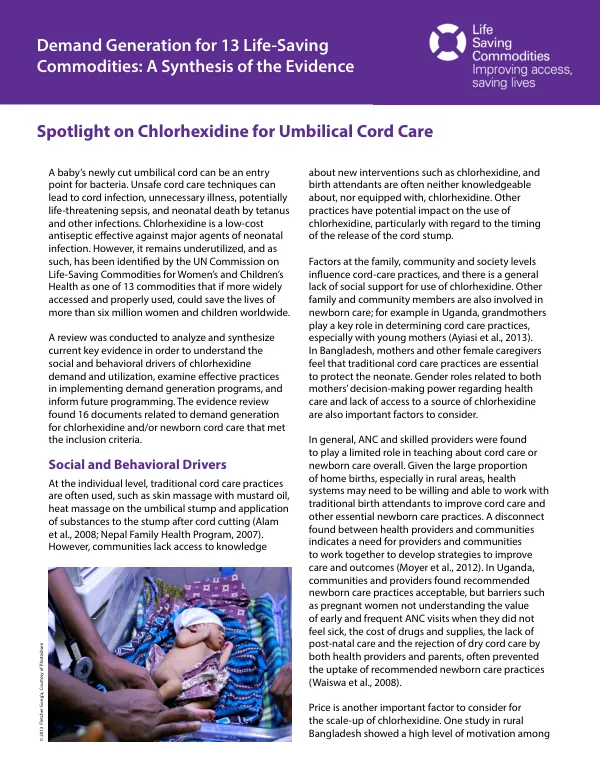
Chlorhexidine is a low-cost antiseptic effective against major pathogens responsible for neonatal infections. However, its utilization remains limited, and it has been recognized by the UN Commission on Life-Saving Commodities for Women's and Children's Health as one of 13 commodities that could save the lives of over six million women and children worldwide if more widely accessed and properly used. Traditional cord care practices, such as skin massage with mustard oil and heat massage on the umbilical stump, are often used, but communities lack access to information about new interventions like chlorhexidine. Birth attendants may not be knowledgeable about or equipped with chlorhexidine, and factors at the family, community, and societal levels influence cord-care practices. There is a general lack of social support for the use of chlorhexidine, and other family and community members, such as grandmothers, play a significant role in determining cord care practices. Studies have shown that ANC and skilled providers play a limited role in teaching about cord care or newborn care overall. Given the high proportion of home births, especially in rural areas, health systems may need to work with traditional birth attendants to improve cord care and essential newborn care practices. A disconnect between health providers and communities indicates a need for collaboration to develop strategies to improve care and outcomes. The formulation of chlorhexidine in a form that is acceptable to users is also an important consideration. Studies in Nepal have shown that chlorhexidine in the form of a gel, liquid, or lotion is most acceptable to users. There is a lack of guidance and training on how to use chlorhexidine, and the World Health Organization (WHO) recommendations from 1998 focus on dry cord care, except in unhygienic conditions where antiseptics like chlorhexidine are recommended. Interventions to increase demand for chlorhexidine have been reported, including making it available at both community and health-facility levels. Increasing demand and use of chlorhexidine by including it in clean delivery kits for skilled birth attendants or caretakers in low-resource settings has been shown to be effective. Comprehensive community outreach efforts to improve newborn care have also been recommended. Studies related to community-based use of chlorhexidine for newborn cord care have been conducted in four countries: Nepal, Bangladesh, India, and Bangladesh. Individual countries will need to find culturally relevant strategies to increase chlorhexidine use according to internationally recognized guidelines. Recommendations moving forward include studying local cord care beliefs and practices at the community level, designing and implementing demand generation programs in different settings, considering integration of chlorhexidine into existing intrapartum/neonatal programs and services, and providing a consistent supply of an acceptable form of chlorhexidine to relevant personnel.