FAMILY HEALTH INTERNATIONAL
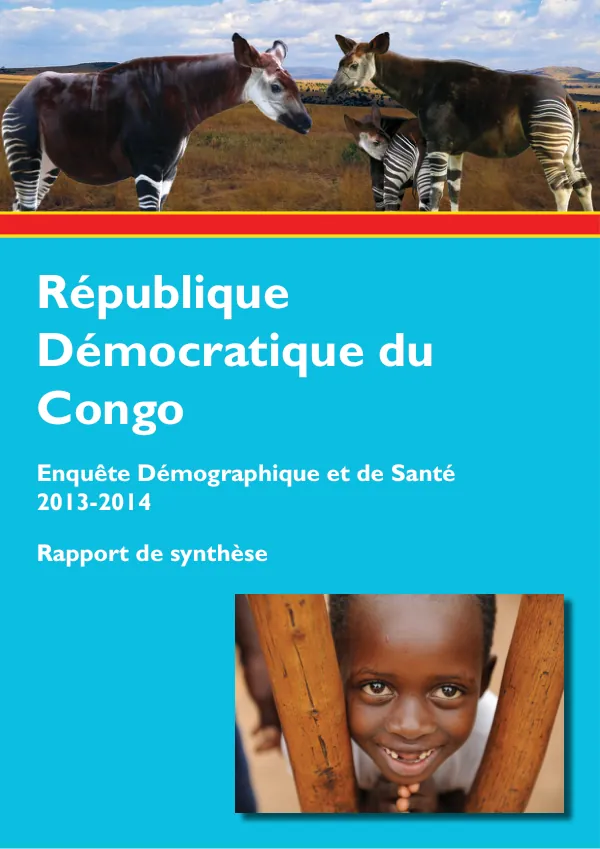
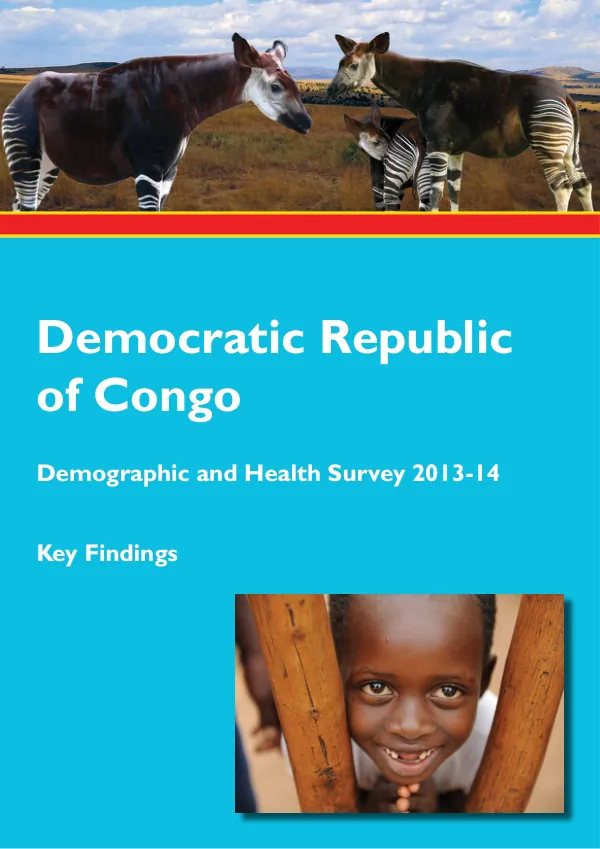
Democratic Republic of Congo Demographic and Health Survey 2013-14: Key Findings
The Democratic Republic of Congo Demographic and Health Survey 2013-2014 provides data on fertility, sexual activity, and knowledge of family planning.
2014 · 24 pages
Sign in to readA free account is required to download.
Abstract
The survey was conducted from January to February 2014, with 18,827 women aged 15-49 and 8,656 men aged 15-59 participating. The survey aimed to provide data on fertility, maternal and child health, HIV/AIDS, and the use of mosquito nets to prevent malaria. The survey found that women in the Democratic Republic of Congo will have an average of 6.6 children, with fertility varying from 5.4 children per woman in urban areas to 7.3 in rural areas. Fertility also varies by province, ranging from 4.2 children per woman in Kinshasa to 8.2 in Kasaï Occidental. Women with more than secondary education have an average of 2.9 children, compared to 7.4 among those with no education. Teenage fertility is nearly three times higher among young women living in the poorest households (42%) than among those living in the wealthiest households (15%). Adolescent fertility also varies by province, with 13% of young women in Kinshasa having begun childbearing and 41% in Orientale. The median age at first birth is 19.9 years among women aged 25-49, with a range of 19.2 years in Katanga to 22.1 years in Kinshasa. The survey also found that women in the Democratic Republic of Congo initiate sexual intercourse at a younger age than men, with half of women aged 25-49 initiating sex by age 16. Women with no formal education initiate sex more than three years earlier than women with more than secondary education. Polygamy is most common in Kasaï Oriental and Kasaï Occidental, with 31% of women in these provinces reporting being in a polygamous union. The ideal family size desired by Congolese men is 7 children, while women would like 6 children. Women's ideal family size decreases as their level of education increases, with women with no education wanting 7.2 children and those with more than secondary education wanting 4.3 children. Knowledge of family planning is high, with 88% of women and 95% of men knowing at least one modern method of contraception. However, only 20% of married women are using any method of contraception, and 8% are using a modern method. The most widely known method of contraception is the male condom. The survey highlights the need for increased access to family planning methods and education on the importance of family planning. It also emphasizes the importance of addressing the high levels of teenage fertility and the need for education on the importance of delaying childbearing.
Related documents